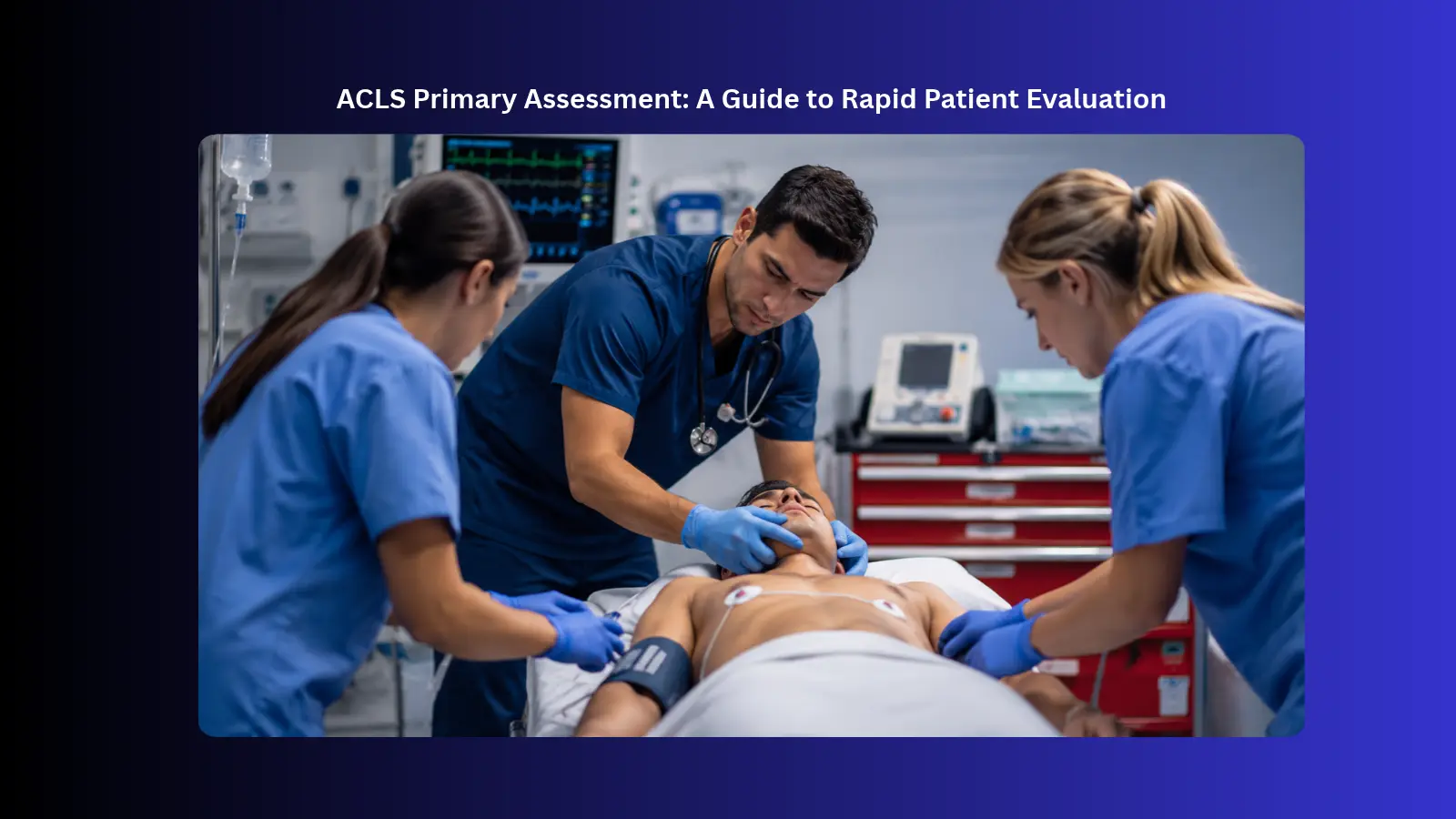

The ACLS primary assessment uses the ABCDE approach to quickly identify urgent problems involving the airway, breathing, circulation, neurological status, and exposure. A structured approach helps healthcare professionals prioritize immediate interve...
Read More ›When a patient goes into cardiac arrest or stops breathing, the certification in your pocket determines how confidently you respond. Two certifications define emergency care training: ACLS (Advanced Cardiovascular Life Support) and PALS (Pediatric Ad...
Read More ›ACLS Certification in Ohio is an essential qualification for healthcare professionals who are responsible for managing life-threatening cardiovascular emergencies. In high-pressure clinical settings, the ability to respond quickly and follow advanced...
Read More ›Advanced Cardiovascular Life Support (ACLS) is an evidence-based program for healthcare professionals who manage life-threatening cardiovascular emergencies. It builds on CPR and BLS skills, emphasizing cardiac rhythm recognition, airway management, ...
Read More ›If you’re a healthcare provider, mastering ACLS (Advanced Cardiac Life Support) isn’t just a credential; it’s a lifesaving skill. Whether you’re a nurse, paramedic, or physician, ACLS training ensures you’re ready to respond confidently in ...
Read More ›If you’re wondering how many Continuing Education Units (CEUs) you can earn from an ACLS card or its renewal, the answer is typically 2 to 3 CEUs through the American Heart Association (AHA). This applies to both initial ACLS courses and renewal pr...
Read More ›