
Understanding CPR guidelines is crucial for anyone who might respond to a medical emergency. In Pennsylvania, these guidelines follow nationally recognized standards, while state laws shape how they apply in schools, healthcare facilities, workplaces, and public safety settings. Understanding these rules and how they relate to CPR training helps people and organizations act quickly and confidently when it matters most.
This guide walks you through Pennsylvania’s current CPR guidelines, highlights state-specific requirements, explains course expectations, and shows how proper training can boost safety across the community.
Trusted Sources for Pennsylvania CPR Guidelines
The American Heart Association (AHA) provides the evidence-backed recommendations that form Pennsylvania’s CPR guidelines. These guidelines are updated regularly to reflect the latest research and advances in resuscitation science.
Healthcare organizations, employers, and training providers across the state follow AHA-aligned standards to make sure CPR is delivered effectively and consistently, whether in professional settings or in the community.
Essential CPR Steps
CPR is made up of two main actions: chest compressions and, when needed, rescue breaths.
Chest compressions keep oxygen-rich blood flowing to the brain and vital organs, while rescue breaths supply oxygen to the lungs if the responder is trained and the situation calls for it.
Current guidelines highlight:
- Compress at a rate of 100-120 per minute
- Push firmly and allow the chest to fully recoil
- Keep interruptions to a minimum
- Use an AED as soon as it’s available
For untrained bystanders helping an adult in cardiac arrest, hands-only CPR, focusing solely on chest compressions, is recommended to encourage more people to step in and help.
Pennsylvania CPR Requirements You Should Know
While CPR techniques are largely consistent across the U.S., Pennsylvania has specific rules and legal considerations that influence how training and emergency response are carried out.
1. CPR Training in Pennsylvania Schools
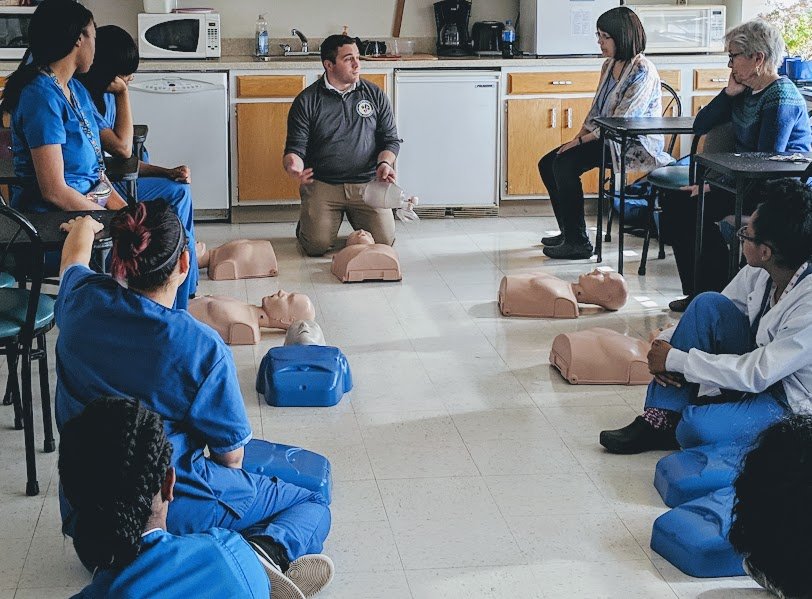
Pennsylvania law requires secondary schools to teach CPR and AED use as part of health education before graduation. Students learn to recognize cardiac arrest, call 911, perform chest compressions, and operate a defibrillator. This requirement aims to increase bystander intervention and improve survival rates across the state.
2. Legal Protections for Those Performing CPR
The state’s Good Samaritan laws protect anyone who provides emergency care, including CPR and AED use, as long as it’s done in good faith and without expecting payment. These protections reduce hesitation and encourage prompt action, though proper training remains crucial for safe and effective response.
3. AED Use and State Expectations
Pennsylvania emphasizes early defibrillation and recommends or requires AEDs in key locations:
- Schools: Many institutions install defibrillators to offer rapid assistance during heart emergencies.
- Fitness Centers: Life-saving devices are recommended on-site to address sudden cardiac events promptly.
- Large Workplaces: Employers often must provide defibrillators, improving survival chances during workplace incidents.
- Public Facilities: Public buildings are encouraged to make AEDs accessible to anyone experiencing cardiac arrest.
State CPR guidelines stress that combining high-quality chest compressions with early defibrillator use gives the best chance of survival during sudden cardiac arrest.
Who Must Take CPR Training in Pennsylvania
In Pennsylvania, some individuals are required to maintain CPR training to be prepared for emergencies. This includes people who support the safety and well-being of others every day.
- Healthcare Professionals: Doctors, therapists, and other medical staff must be trained in CPR to protect their patients.
- Firefighters: CPR skills enable them to respond immediately during critical situations.
- Athletic Coaches and Trainers: Being CPR-trained allows them to act quickly if an athlete is injured.
- Nurses and Nursing Assistants: They provide care and respond to sudden medical issues.
- Teachers and School Staff: CPR knowledge ensures students’ safety while at school.
How BLS, ACLS, and PALS Support and Relate to CPR
Here’s a clear breakdown of how BLS, ACLS, and PALS support and relate to CPR:
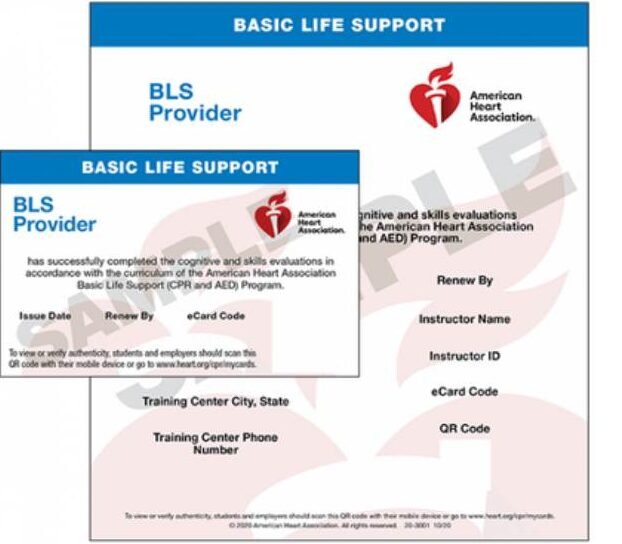
1. BLS (Basic Life Support)
- Purpose: BLS is the foundational level of life-saving skills for adults, children, and infants in cardiac arrest, respiratory arrest, or airway obstruction.
- Focus:
- High-quality CPR (chest compressions and rescue breaths)
- Use of AED (Automated External Defibrillator)
- Basic airway management
- Relation to CPR:
- BLS is the core training for CPR. Anyone performing CPR without advanced tools is practicing BLS-level care.
- Emphasizes rapid recognition of cardiac arrest and immediate initiation of CPR.
2. ACLS (Advanced Cardiovascular Life Support)
- Purpose: ACLS builds on BLS for healthcare professionals dealing with adult cardiac emergencies, including arrhythmias, myocardial infarction, and stroke.
- Focus:
- Advanced airway management (intubation, ventilation)
- IV/IO access and medications (epinephrine, amiodarone)
- Cardiac rhythm recognition and advanced interventions
- Team-based resuscitation strategies
- Relation to CPR:
- ACLS incorporates BLS CPR as the foundation, but adds advanced interventions to increase survival in complex cardiac arrest.
- Focuses on optimizing CPR quality and coordinating advanced treatments during resuscitation.
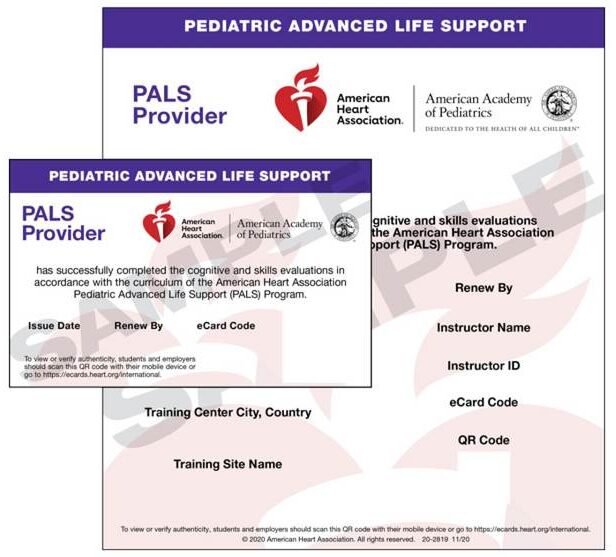
3. PALS (Pediatric Advanced Life Support)
- Purpose: PALS is a specialized ACLS for infants and children. Pediatric cardiac arrest often stems from respiratory failure, shock, or congenital conditions rather than primary cardiac events.
- Focus:
- Pediatric-specific CPR (different compression depth and rate)
- Airway and breathing support for children and infants
- Recognition and management of shock, arrhythmias, and respiratory emergencies
- Team-based approach tailored to pediatric patients
- Relation to CPR:
- PALS ensures CPR is effective for children, addressing their unique physiology.
- Builds on BLS principles but adds advanced pediatric interventions.
All three programs, BLS, ACLS, and PALS, are connected through CPR. BLS provides the essential life-saving foundation for anyone to perform CPR, ACLS builds on this for advanced adult interventions, and PALS adapts both BLS and ACLS principles for pediatric patients, ensuring effective resuscitation across all ages.
CPR Instructions: Step by Step
Quick action can save a life. Follow these guidelines if someone needs CPR:
Step 1: Ensure Safety and Check Responsiveness
Make sure the environment is safe, look out for traffic, fire, or other dangers. Gently tap the person and call their name. If they don’t respond, act immediately.
Step 2: Call for Help
Call 911 right away. If you are alone, place the call first and put it on speaker so your hands are free. In Pennsylvania, Good Samaritan laws protect people who give emergency aid in good faith.
Step 3: Check Breathing
Look for normal breathing. If the person is not breathing or is only gasping, start chest compressions right away.
Step 4: Hand Placement
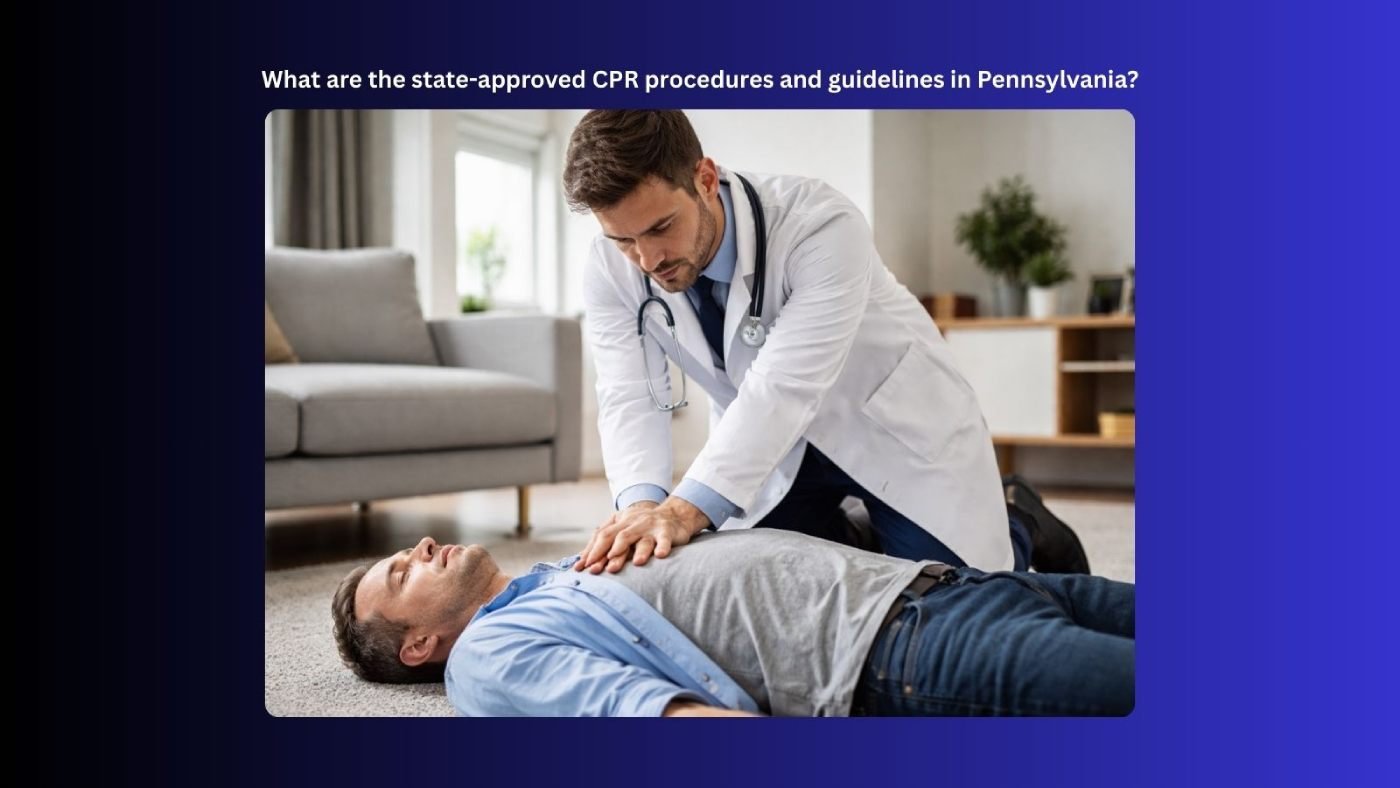
Place the heel of one hand in the middle of the chest (between the nipples) and put your other hand on top, interlocking your fingers. Keep your arms straight and shoulders aligned over your hands.
Step 5: Perform Chest Compressions
Push hard and fast, about 2 inches deep, at a rate of 100–120 compressions per minute. Allow the chest to fully rise after each push.
Step 6: Rescue Breaths (if trained)
After 30 compressions, tilt the head back, lift the chin, pinch the nose, and give two slow breaths. If you’re not trained or prefer not to give breaths, continue with compressions only.
Step 7: Continue Until Help Arrives
Repeat the cycle of 30 compressions and 2 breaths until:
- Emergency personnel arrive
- An AED is ready for use
- The person starts breathing normally
- You are physically unable to continue
Tip: Use an AED as soon as one is available. In Pennsylvania, they can often be found in colleges, malls, hospitals, government buildings, and sports venues. Follow the device’s voice instructions; it can save a life.
Why Regular CPR Card Renewal Is Important
CPR guidelines are updated as new research becomes available, affecting factors like compression depth and speed, AED use, and how teams work together.
Regularly renewing your CPR provider card and practicing your skills helps to:
- Keep your technique accurate and effective
- Ensure you follow the most current procedures
- Maintain confidence in emergencies
Relying on outdated CPR knowledge can reduce its effectiveness and increase the risk of harm.
The Benefits of CPR Training for Pennsylvania Communities
CPR training strengthens public safety and health across Pennsylvania. When more people are trained:
- Lives Are Saved: Immediate CPR can double or triple survival chances during cardiac arrest. Trained bystanders can provide critical care before EMS arrives.
- Quicker Emergency Response: Communities with widespread CPR knowledge respond faster, reducing delays and improving outcomes while waiting for professional help.
- Confident Residents: Training empowers Pennsylvanians to act effectively in high-pressure situations.
- Greater Health Awareness: Familiarity with CPR and AED use promotes safer environments in schools, workplaces, public areas, and homes.
- Legal Assurance: Understanding state Good Samaritan laws gives residents confidence that providing CPR in good faith is protected, encouraging timely intervention.
Why CPR Knowledge Matters in Pennsylvania
Knowing and following states CPR guidelines can save lives. By understanding chest compressions, rescue breaths, and AED use, residents can act quickly and confidently in emergencies. Colleges, universities, workplaces, and public spaces that promote CPR training help create safer communities. Regular practice and card renewal keep skills sharp, and Good Samaritan protections provide peace of mind for anyone stepping in to help.
At Bayside CPR in Pennsylvania, we make learning lifesaving skills simple. Our programs are for everyone, from healthcare professionals to students, parents, and coaches. Start with an online course at your convenience, then complete a short 30-minute hands-on session at one of our four locations. Our AHA-approved courses, including CPR, First Aid, BLS, ACLS, and PALS, fit your schedule and learning style. Upon completing both parts, you’ll receive your official course completion card, ready for immediate use.
Practice consistently, stay informed, and know your legal protections, so you can confidently step in to help others and make your community safer. Sign up today to gain the skills and confidence to save a life.