
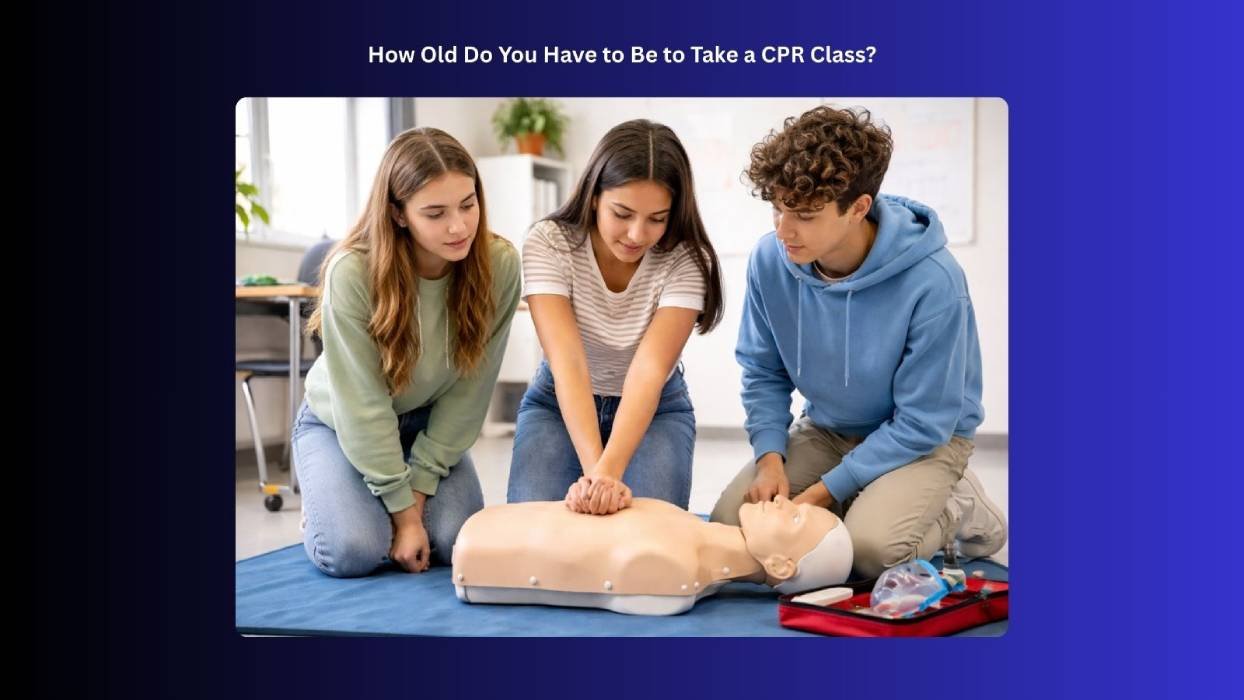
Learning CPR (Cardiopulmonary Resuscitation) is one of the most important skills you can have. It can save lives during emergencies like sudden cardiac arrest or choking. If you’re thinking about taking a CPR class, you might wonder: “How old do I have to be?” Officially, there’s no minimum age, but children as young as 4 years old can start learning CPR basics.
The focus of CPR training isn’t strictly on age, it’s on whether a person can understand the instructions, follow the steps, and perform the skills safely and effectively. In this guide, we’ll cover everything you need to know about age and CPR, including the types of classes available, how young children can start learning, and what to expect in real-life situations.
Is There a Minimum Age for CPR Training?
The AHA does not require learners to be a certain age. The focus is on whether a person can understand the training and perform the skills, not their date of birth.
CPR involves physical actions like chest compressions, requiring enough strength to push deeply enough to be effective. It also demands mental focus to follow instructions and respond quickly in an emergency.
CPR Skills by Age
Learning CPR is a life-saving skill anyone can start early. Kids and teens can build confidence step by step as they grow.
| Age Range | Skills Children/Teens Can Learn |
| 4–5 years | Recognize an emergency, call 911, stay calm, and understand what CPR is |
| 6–9 years | Practice basic CPR steps with guidance, and understand choking response |
| 10–11 years | Perform full chest compressions on a manikin, and practice rescue breaths |
| 12–18 years | Master full CPR skills, use an AED, and apply knowledge confidently in real situations |
Recommended AHA Options for Children
The AHA provides several courses and resources suitable for young learners aged 9-10 years old.
1. Family & Friends CPR
- Audience: General public, including children with adult supervision.
- Skills Taught: Hands-Only CPR, child CPR with breaths, AED (Automated External Defibrillator) use, infant CPR, and choking relief.
- Format: Interactive, practice-focused, video-based sessions.
- AHA Provider Card: Does not provide a professional completion card.
- Why It’s Suitable: Prepared for community members, making it ideal for young learners to gain practical experience in a safe environment.
2. CPR Anytime Training Kit
- Audience: Children and families who want self-guided CPR practice.
- Skills Taught: Adult, child, and infant CPR; choking response.
- Format: Home-based kit with instructional videos and a practice manikin.
- AHA Provider Card: Not included.
- Why It’s Suitable: Flexible, self-paced learning that allows children to practice CPR skills repeatedly at home.
Teaching Kids CPR
Children can start learning lifesaving skills at a very young age. In fact, research supported by the AHA shows that even kids as young as 4 years old can learn the basics of CPR.
1. What Young Children Can Learn
Young learners may not have the strength to perform full chest compressions, but they can learn essential skills like:
- Recognizing an emergency
- Calling 911
- Staying calm in a crisis
- Understanding what CPR is and why it is important
- These skills lay the foundation for full CPR training later.
2. When Kids Can Perform Full CPR
- Around age 10, many children have enough strength to practice chest compressions effectively on training mannequins.
- Middle school and high school students (ages 12 to 18) can typically learn and remember full CPR skills.
- Early training builds confidence and increases the likelihood that children will respond in real emergencies as they get older.
Why Age Is Not the Main Factor
CPR training focuses on skills and confidence rather than age. Here’s why:
- Chest compressions require physical strength.
- Students need the ability to follow steps in order.
- Confidence and willingness to act are more important than being a certain age.
This approach allows children, teens, and adults to learn CPR, as long as they can demonstrate the required skills.
Common Myths About Age and CPR
Myth 1: You must be a certain age to learn CPR
Fact: The AHA focuses on ability and readiness, not age. Anyone can learn CPR if they are capable of performing the skills.
Myth 2: Kids under 12 cannot learn CPR
Fact: Many children can learn emergency awareness and basic CPR steps. By age 10, many students can perform full chest compressions.
Myth 3: Only adults can earn CPR course completion card
Fact: Students of any age who demonstrate the required skills can receive a completion card. Age is not a barrier.
Key Takeaways
- The AHA does not set a minimum age for CPR training.
- Physical ability and understanding matter more than age.
- Children as young as 4 can start learning lifesaving skills.
- Full chest compressions may be performed around age 10.
- AHA CPR provider card depends on skill demonstration, not age.
- CPR training is valuable for children, teens, and adults alike.
Begin CPR Training Now and Gain Lifelong Skills
In summary, learning CPR is something anyone can start, no matter their age. Even young children can pick up important skills like staying calm, calling 911, and recognizing emergencies. As kids grow, they gain the strength and confidence to perform full CPR and use an AED. What matters most is the ability to follow steps and act in an emergency. Starting early builds knowledge, confidence, and readiness, making it possible for children, teens, and adults to save lives when it matters.
Ready to move forward? Bayside CPR makes learning lifesaving skills simple and confidence-boosting. Our courses meet AHA guidelines, including ACLS, BLS, PALS, CPR, and First Aid, and are designed to fit your schedule. First, complete the online session, then visit one of our CPR Verification Stations for a brief 30-minute hands-on practice. With over 60 locations across the U.S., you’ll walk away with your official AHA course completion card, ready to use immediately. Sign up today and gain the skills and confidence to make a difference in an emergency.