
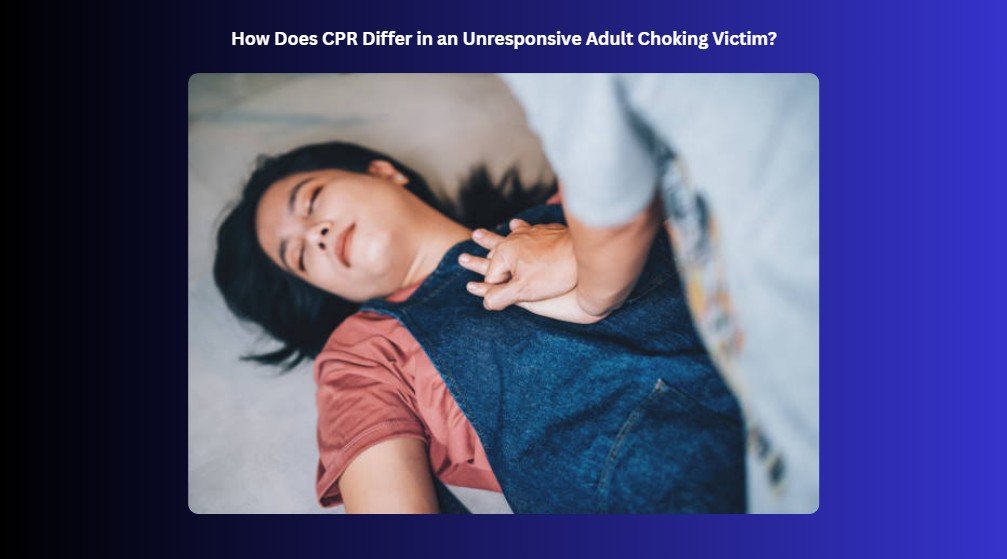
When an adult suddenly becomes unresponsive because they are choking, CPR (cardiopulmonary resuscitation) changes a bit. First, you call for help right away. Before giving breaths to an unresponsive choking person, it’s important to check their mouth and remove any visible blockage. Then, instead of just giving breaths and chest compressions, you focus on airway management, making sure the airway is clear and open before continuing CPR. You start with chest compressions to try to push the object out while keeping the person’s blood moving. After each set of compressions, you check the mouth again and remove anything you see. This way, you’re helping both their breathing and circulation until professional help arrives.
Comparison of Responsive Vs Unresponsive Adult Choking Victim
Here’s a clear table comparing CPR for a responsive choking adult versus an unresponsive choking adult.
| Step | Responsive Choking Adult | Unresponsive Choking Adult |
| Check Responsiveness Breathing | Person is awake but choking | The person is unresponsive and not breathing |
| Encourage Coughing | Ask them to cough forcefully | Not possible |
| Give Back Blows & Abdominal Thrusts | Perform until the object is cleared or the person becomes unresponsive | Not done, go straight to CPR |
| Call for Help | Call if choking persists or worsens | Call emergency services immediately |
| Start CPR | Not performed while responsive | Begin chest compressions and rescue breaths |
| Check Mouth | Encourage them to clear their blocked airway by coughing | After compressions, look and remove the object if visible |
| Rescue Breaths | Not typically given while responsive | Give breaths after compressions if the airway is clear |
| Continue Until | Object is out or, help arrives | Person responds, or help arrives |
Choking Signs In An Unresponsive Victim
When someone is choking and becomes unresponsive, their body shows clear signs that something is wrong. Knowing these signs helps you act quickly and keep them safe until help arrives.
1. Silent Choking: Silent choking means the person can’t make any noise because their airway is blocked. Even though they aren’t coughing or speaking, their bodies are struggling to get air, and they need help right away.
2. Pale or Bluish Skin: When a person’s skin looks pale or turns a bluish color, it means their body isn’t getting enough oxygen. This is a serious sign that they need help immediately to start breathing normally.
3. No Coughing: If a person can’t cough at all, it means they’re experiencing an airway obstruction, a complete blockage that prevents air from passing through. Without the ability to cough, they can’t clear it on their own and need immediate help.
4. Gasping Irregularly, or No Breathing: Gasping, uneven breathing, or no breathing shows that the person is struggling to get enough air. This is a serious warning that they need help right away to start breathing properly again.
How to Perform CPR on an Unresponsive Adult Choking Victim?
Here’s a simple step-by-step guide for giving CPR to an unresponsive adult who is choking. Remember to stay calm and keep going; your actions can save a life.
Step 1: Assess and Get Help
If the person is not awake, call for emergency help right away. If someone else is with you, ask them to call 911 and bring an automatic external defibrillator (AED) if available. If you’re alone, shout for help and start CPR while you call.
Step 2: Check Breathing
Look at the chest to see if it’s moving and listen for breath. If there is no breathing or only tiny gasps, start chest compressions right away. If you see a clear object in the mouth and you can remove it without pushing it deeper, do it.
Step 3: Start Chest Compressions
Put the heel of one hand in the center of the chest and place the other hand on top. Keep your arms straight and your shoulders over your hands. Press hard and fast, about 100 to 120 pushes each minute, and press about 2 inches deep. Let the chest come back up after each push. To make your compressions as effective as possible, minimize interruptions — this keeps the blood flowing and maintains a high chest compression fraction.
Step 4: Rescue Breaths If You Can
If you are trained, tilt the head back a little and lift the chin. Pinch the nose shut, seal your mouth over theirs, and give two breaths that last about one second each. Watch the chest go up as you breathe.
Step 5: Handle a Possible Airway Problem
If the person starts coughing or can speak, they may be able to clear the blockage. If they become unresponsive again, start CPR with chest compressions.
Step 6: Use the AED
Get the AED as soon as it’s ready. Turn it on and follow the prompts. Put the pads on the person as shown, one on the upper right chest and the other on the lower left. If a shock is advised, stay clear and shock, then resume CPR right away.
When to Switch From CPR to Other Techniques
Sometimes chest compressions might not clear the object from the airway. Knowing what to do next can keep the person safe and help you act confidently.
- If Chest Compressions Fail to Dislodge the Object: Continue CPR cycles, but if after several attempts the airway is still blocked, consider carefully:
Finger sweep only if the object is visible. Never blindly sweep; this can push it deeper.
Do not alternate back blows with CPR in an unresponsive adult; CPR remains the priority. - Re-Evaluate the Airway After Each CPR Cycle: Open the mouth and check for visible obstructions after compressions and rescue breaths
- Calling EMS / Advanced Help: If the obstruction persists despite CPR, professional intervention is critical. EMS providers may use advanced airway tools.
- Do Not Stop CPR Prematurely: Only pause to attempt a finger sweep if you can clearly see the object. Continuous compressions are crucial for maintaining circulation.
Recovery Position / Post-Rescue Care
After helping someone who was choking, it’s important to keep them safe and comfortable. Knowing how to position them and watch their breathing can make a big difference.
- Ensure the Airway Remains Open: Once the object is dislodged and the victim regains consciousness or breathing, tilt the head slightly back and lift the chin to keep the airway clear.
- Place in the Recovery Position If Unresponsive but Breathing: Lay the person on their side, with the top knee bent for stability. This helps prevent choking on vomit or secretions.
- Monitor Breathing and Responsiveness: Continuously check for normal breathing and alertness. If breathing stops again, be ready to restart CPR.
- Call or Keep EMS Involved: Even if the victim seems fine, emergency responders should evaluate them. Complications like airway swelling, internal injury, or aspiration can occur.
- Avoid Giving Food or Drink Immediately: After choking, swallowing might still be unsafe until a professional assessment is done.
Key Safety Tips and Common Mistakes to Avoid
Performing CPR on someone who is choking but unresponsive can be scary, but knowing some simple safety tips can help you stay calm and confident. Avoiding common mistakes makes it easier to give the right help.
- Never try to reach inside the person’s mouth with your fingers unless you can see something blocking their airway. Blind finger sweeps can push the object deeper and make it harder for them to breathe.
- Keep your chest compressions steady and strong without stopping for too long. This helps keep blood flowing to their brain and heart, giving them the best chance to recover.
- Stop doing CPR only if the person starts to breathe or move on their own, or when trained emergency helpers arrive to take over. Knowing when to pause can make a big difference in their care.
Why Do These Differences Matter?
Different CPR steps are needed for an unresponsive choking victim because their body can’t help clear the blockage anymore. When someone is still awake and choking, they can usually cough or get help by themselves, so you focus on helping them remove the object with back blows and abdominal thrusts. But when they lose consciousness, their airway is completely blocked, and they can’t breathe or cough at all. In this case, you have to start chest compressions to keep blood flowing and try to push the blockage out from inside. Before giving rescue breaths, check their mouth carefully to make sure the airway is clear, and also understand the situations in which rescue breaths are needed, so you act appropriately. These changes in CPR help give the person the best chance to breathe again and stay alive until medical help arrives. Learn about the indications for mouth-to-mouth rescue breaths.
Legal & Ethical Considerations
When performing CPR on an unresponsive choking victim, remember that laws often protect you if you try to help, even when the person can’t give consent. Always prioritize your safety, respect their dignity, and report what happened to the appropriate authorities afterward.
- Good Samaritan laws protect people who help others in emergencies, so you won’t usually get in trouble for trying to save a life. These laws encourage you to act without fear, as long as you do your best and don’t cause harm on purpose.
- If a person is unconscious or unable to respond, it’s okay to help because the law assumes they agree to receive care. This idea, called implied consent, lets you act quickly to keep them safe when they can’t give permission themselves.
- You have a kind choice to help someone in need, but it’s also important to keep yourself safe first. Helping others is good, but you shouldn’t put yourself in danger while doing it. Also, understand what you are legally required to do before you touch a person when responding to an emergency.
- After helping someone, it’s important to write down what you did and what happened to keep a clear record. Sharing this information with medical staff helps them give the best care and protects you if questions come up later.
- If someone is choking and unresponsive, you should try to clear their airway to help them breathe, even if they have a Do Not Resuscitate order. DNR orders usually apply to CPR, but saving a choking person’s life by opening their airway is still important.
Key Takeaway: Helping an Unresponsive Choking Adult
In summary, knowing how CPR changes when an adult becomes unresponsive from choking is important. In this situation, you shift your focus from helping them cough out the blockage to carefully clearing their airway and keeping their blood moving. CPR maintains circulation when normal breathing stops with chest compressions. Checking the mouth often and giving rescue breaths only when the airway is clear can make a big difference in saving their life. Staying calm and following the right steps helps you provide the best care until emergency responders arrive. Remember, your quick actions can give someone the best chance to breathe again and recover safely.
To feel even more prepared for real emergencies, consider joining Bayside CPR’s where we offer flexible, time-saving training that combines a brief online course with a 30-minute hands-on session at over 60 locations. Earn your AHA Standard certification in ACLS, BLS, PALS, CPR, or First Aid and leave with your certification card in hand.