
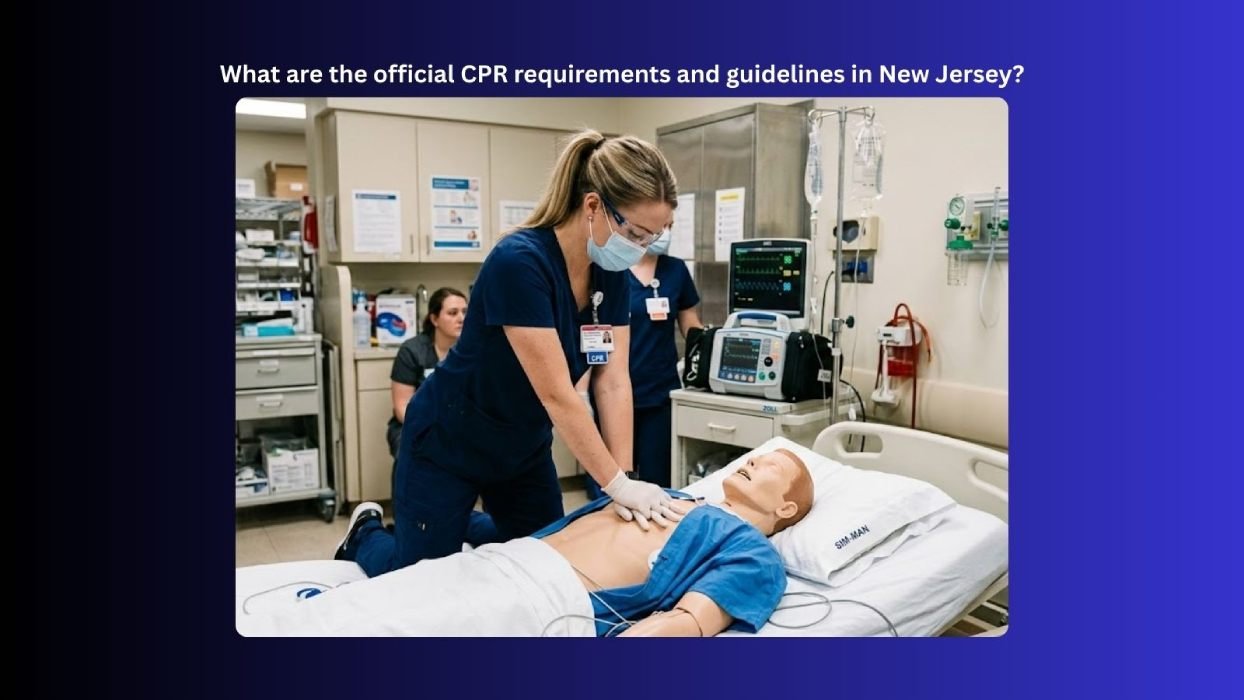
Understanding CPR guidelines is vital for anyone who might need to act in a medical emergency. In New Jersey (NJ), CPR practices follow nationally established standards while also reflecting state laws that influence schools, healthcare facilities, workplaces, and public safety systems. Recognizing how these guidelines apply and how they relate to CPR course completion card requirements in NJ ensures that both individuals and organizations are ready to respond when time is critical.
This guide outlines the current CPR guidelines in NJ, highlights important state-specific considerations, reviews card requirements, and explains how proper training contributes to a safer, more prepared community.
The Source of CPR Guidelines
CPR guidelines in New Jersey are largely grounded in evidence-based recommendations from the American Heart Association (AHA). These standards are regularly updated to incorporate the latest advances in resuscitation science and clinical research.
Across New Jersey, training providers, employers, and healthcare institutions rely on AHA-aligned guidance to ensure CPR is delivered correctly and consistently in both professional and community settings.
CPR Guidelines in New Jersey: Key Distinctions
Although CPR techniques are generally standardized across the country, New Jersey has unique requirements and legal factors that shape how CPR training and emergency response are implemented.
1. CPR Instruction in New Jersey Schools
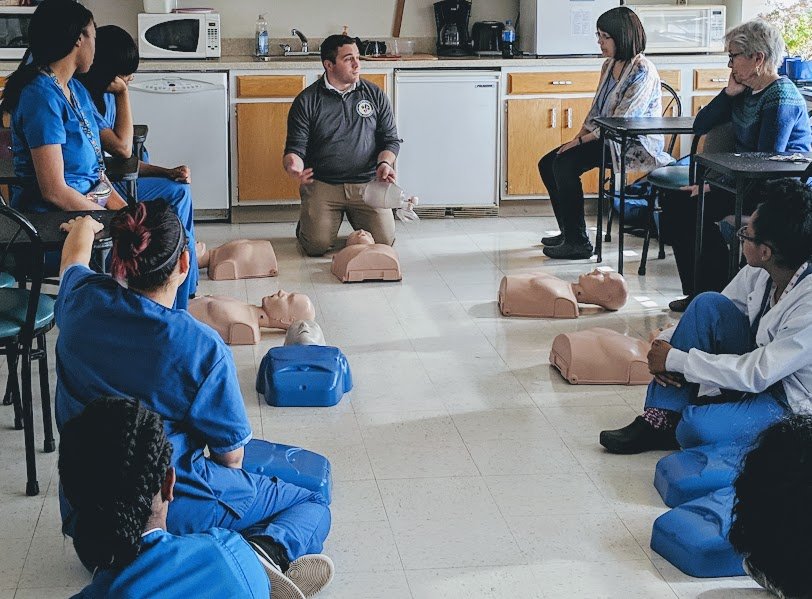
State law mandates that students receive education in cardiopulmonary resuscitation (CPR) and AED awareness as part of middle and high school health curricula. Students learn to identify cardiac arrest, dial 911, perform chest compressions, and understand how to use an AED.
This statewide initiative aims to strengthen bystander intervention and improve survival rates within local communities.
2. Legal Safeguards for CPR Responders
Under New Jersey’s Good Samaritan laws, individuals who provide emergency care, including CPR and AED assistance, in good faith and without compensation are protected from liability.
These legal safeguards are meant to ease concerns and promote swift action in critical moments. Even so, proper CPR training remains essential to ensure accuracy, effectiveness, and confidence during an emergency.
3. AED Standards and Recommendations
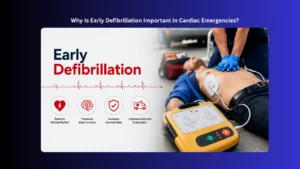
New Jersey places strong emphasis on early defibrillation. AEDs are required or encouraged in various public settings, such as:
- Schools
- Fitness centers
- Large workplaces
- Government and public buildings
State CPR guidelines highlight the importance of rapid AED use alongside high-quality chest compressions to increase survival chances during sudden cardiac arrest.
Who Is Required to Take CPR Classes in New Jersey
In New Jersey, certain individuals are required to complete CPR training to help maintain safety in their communities. These groups develop lifesaving skills they may need to use at any time.
- Healthcare Professionals: Doctors, nurses, and other medical personnel rely on CPR to assist patients during critical situations. Ongoing practice ensures they can respond quickly and effectively.
- Caregivers and Childcare Providers: Those who care for children or dependent adults are trained in CPR to respond immediately if someone stops breathing or loses a pulse.
- Assisted Living and Elder Care Staff: Employees in senior care facilities use CPR skills to protect residents during medical emergencies, helping safeguard vulnerable populations.
- Educators and Students: Teachers, and in many cases students, receive CPR instruction so they can respond appropriately to emergencies that occur on school grounds.
- Public Safety and Designated Occupations: Law enforcement officers, firefighters, and other emergency personnel apply CPR in urgent situations, often before advanced medical teams arrive.
- Workplace First Responders: Employees assigned as workplace responders complete CPR training to assist coworkers during sudden health emergencies, ensuring a safer work environment.
How BLS, ACLS, and PALS Connect to CPR
Here’s a simplified explanation of how BLS, ACLS, and PALS relate to CPR and to each other:
1. Basic Life Support (BLS)
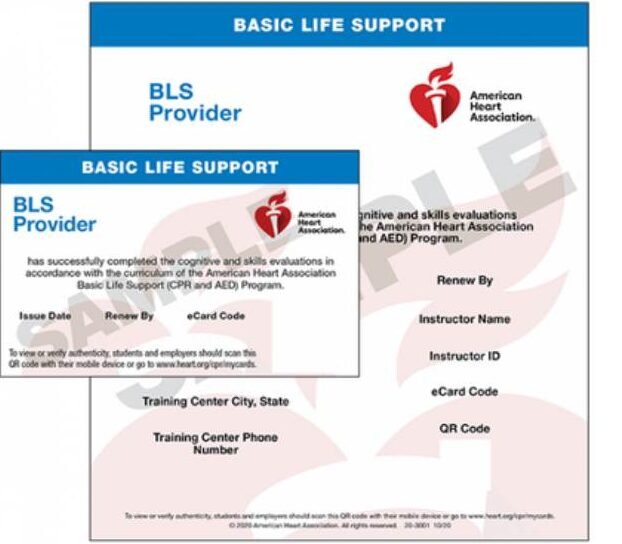
BLS is for healthcare professionals, first responders, and sometimes trained laypeople. It emphasizes recognizing cardiac arrest and delivering high-quality CPR, which includes chest compressions, rescue breaths, and using an AED (Automated External Defibrillator). The focus is on quick recognition and immediate action during cardiac emergencies. For instance, BLS is used when an adult suddenly collapses in a hospital or public place, requiring immediate CPR and defibrillation.
2. Advanced Cardiovascular Life Support (ACLS)
ACLS expands on BLS and CPR by offering advanced care for adults in cardiac emergencies. It covers advanced airway techniques, ECG interpretation, IV/IO medications, use of resuscitation algorithms, and leadership in emergencies. ACLS is typically taken by physicians, critical care or ER nurses, and paramedics. In relation to CPR, ACLS integrates high-quality CPR and BLS with advanced adult cardiac emergency management.
3. Pediatric Advanced Life Support (PALS)
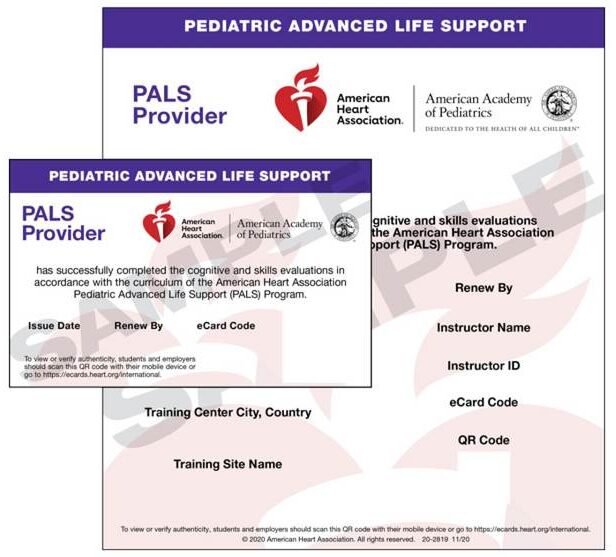
PALS focuses on emergency care for infants and children, building on CPR and BLS but tailored to pediatric needs. It includes child-specific CPR techniques, management of pediatric cardiac and respiratory crises, weight-based medication dosing, and pediatric resuscitation algorithms. PALS is usually taken by pediatricians, pediatric nurses, ER staff, and paramedics. Regarding CPR, PALS combines modified pediatric CPR with advanced pediatric emergency interventions.
How to Perform CPR on an Adult
Act quickly, starting CPR immediately can greatly increase the chances of survival during a cardiac emergency.
Step 1: Ensure Safety
Before approaching, make sure the area is safe from hazards such as traffic, fire, or other dangers.
Step 2: Check Responsiveness
Gently tap the person and shout to see if they respond. If there is no response, treat it as a potential cardiac emergency.
Step 3: Call 911
Dial 911 immediately or ask someone nearby to do it. Using speakerphone allows you to begin CPR while listening to dispatcher instructions.
Step 4: Assess Breathing
Observe whether the person is breathing normally. If they are not breathing or are only gasping, start CPR right away. Note that gasping does not count as normal breathing.
Step 5: Start Chest Compressions
Place the heel of one hand on the center of the chest, and the other hand on top, interlocking your fingers.
- Keep your arms straight and shoulders aligned over your hands.
- Compress the chest about 2 inches (5 cm) deep at a rate of 100–120 per minute.
- Allow the chest to fully rise between compressions and minimize interruptions.
- Hands-only option: If you are untrained or uncomfortable with rescue breaths, perform chest compressions only.
Step 6: Give Rescue Breaths (If Trained)
After 30 compressions, provide 2 slow breaths:
- Tilt the head back, lift the chin, pinch the nose, and cover their mouth with yours.
- Continue cycles of 30 compressions followed by 2 breaths.
Step 7: Use an AED as Soon as Possible
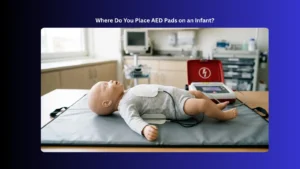
Turn on the Automated External Defibrillator (AED) and follow its voice prompts. Early use greatly improves survival chances.
Step 8: Continue Until Help Arrives
Keep performing CPR until:
- Emergency personnel take over
- The person shows clear signs of life
- You become too exhausted to continue
Why It’s Important to Stay Up to Date
CPR guidelines are regularly revised as new research emerges. These updates can change recommendations for compression depth and rate, AED use, and team coordination during resuscitation. By keeping your CPR course completion card current and practicing your skills regularly, you can:
- Apply proper and effective techniques
- Stay informed about the latest guidelines
- Respond to emergencies with greater confidence
Using outdated CPR methods can make your efforts less effective and increase the chance of causing unintended harm
The Impact of CPR Training in New Jersey
CPR class is crucial for enhancing public health and safety across NJ. When more people receive training:
- Lives Are Saved: Immediate CPR can double or even triple survival chances for someone experiencing cardiac arrest. Trained bystanders can provide critical care before emergency responders arrive.
- Quicker Community Response: In communities where CPR knowledge is widespread, people can act fast, reducing delays and improving survival rates while waiting for professional help.
- Greater Confidence: CPR training equips New Jersey’s citizens with the skills and assurance to handle emergencies calmly and effectively.
- Enhanced Health Awareness: Learning CPR and AED use contributes to safer schools, workplaces, public spaces, and homes.
- Legal Assurance: Understanding New Jersey’s Good Samaritan laws reassures residents that providing CPR in good faith is legally protected, encouraging timely action.
The Significance of CPR Guidelines in New Jersey
Knowing and adhering to New Jersey’s CPR guidelines can be life-saving. Mastering chest compressions, rescue breaths, and AED operation equips you to act confidently during emergencies. Regular practice and keeping your American Heart Association (AHA) course completion card current ensure your skills remain sharp. Additionally, Good Samaritan laws offer protection when you assist.
At Bayside CPR in New Jersey, we provide flexible, AHA-approved courses in CPR, First Aid, BLS, ACLS, and PALS for both healthcare professionals and the general public. Complete the online portion at your own pace, attend a short in-person skills session, and receive your official course completion card. Enroll now to build the confidence and skills needed to save lives.