
Choking is a serious safety concern that can happen in an instant, often when least expected, like during a family meal or snack time. While it may seem minor at first, a blocked airway can quickly become life-threatening, which is why understanding the risks and taking simple precautions is so important.
Some people are more vulnerable than others. Infants and toddlers are at high risk because their chewing and swallowing skills are still developing. Older adults can also face challenges due to dental issues, slower swallowing reflexes, or certain medical conditions that affect muscle control.
The good news is that many choking incidents are preventable. With awareness, careful preparation of foods, and mindful eating habits, caregivers and adults can significantly reduce the risk, keeping mealtimes safe and worry-free.
What Makes a Food a Choking Hazard?
Not all foods carry the same risk. Factors that make certain foods dangerous include:
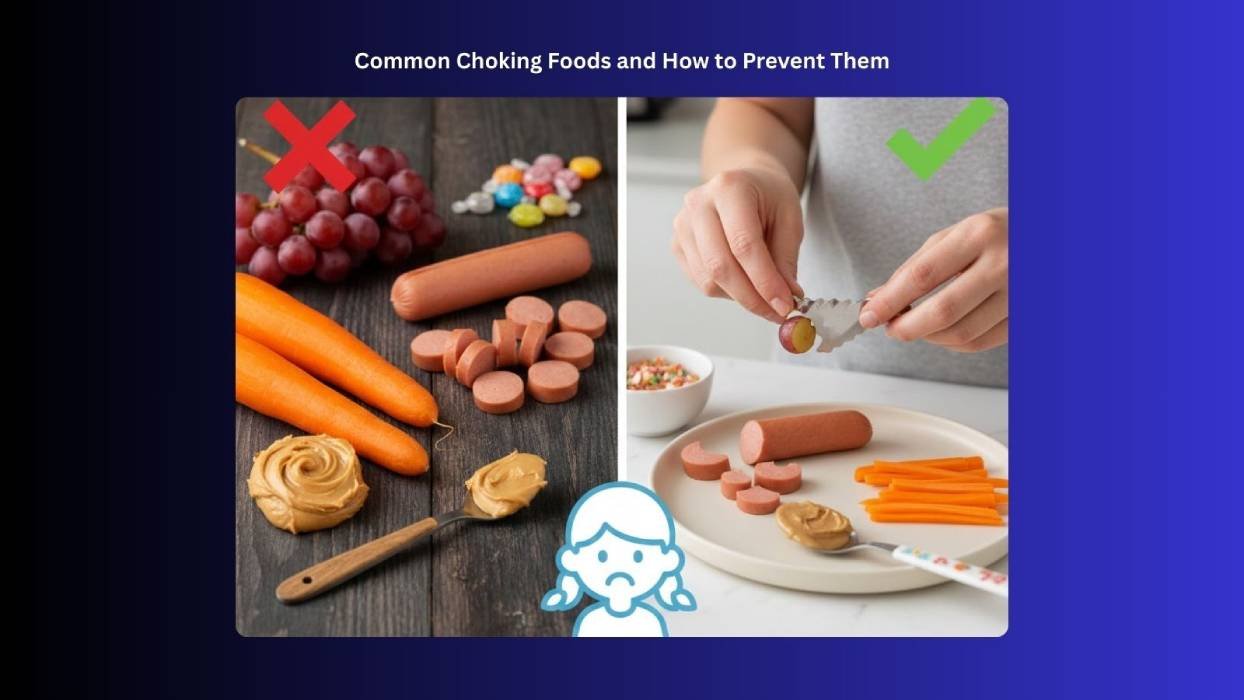
- Size and Shape: Small, round, or cylindrical foods can slip into the airway (e.g., grapes, cherry tomatoes, hot dogs).
- Texture: Hard, sticky, or compressible foods may be difficult to chew or cling to the throat (e.g., nuts, thick nut butter, bread).
- Swelling or Expansion: Dry foods like cereal or beans can expand when moistened, creating an obstruction risk.
Common Choking Foods for Infants & Toddlers
Young children are especially vulnerable because their chewing and swallowing skills are still developing.
| Food Type | Why It’s Risky | Prevention Tip |
| Whole grapes/cherry tomatoes | Round, smooth, can lodge in the throat | Cut lengthwise into quarters |
| Nuts/seeds | Hard to chew completely | Avoid under age 4 |
| Popcorn | Hard, irregular shapes | Avoid under age 4 |
| Thick nut butters | Sticky, cling to the mouth | Spread thin or mix into soft foods |
| Marshmallows / chewy candies | Sticky and difficult to chew | Avoid until older |
| Raw vegetables / firm fruits | Tough to chew | Cook or finely chop |
| Hot dogs | Round and compressible | Cut into strips, not rounds |
| Meat chunks | Hard or dry | Shred or cut into small pieces |
Common Choking Foods for Older Children & Adults
Choking is not just a child’s concern. Older children and adults can also be at risk, especially when eating quickly or distracted.
| Food Type | Why It’s Risky | Prevention Tip |
| Hot dogs | Round, compressible | Cut into strips |
| Steak / large meat bites | Tough or dry | Slice small, chew thoroughly |
| Hard candies | Can lodge in the airway | Avoid or chew carefully |
| Gum | May be swallowed accidentally | Don’t chew while active; keep away from young children |
| Ice cubes | Hard and slippery | Encourage small sips or chew carefully |
High-Risk Foods by Shape & Texture
Some foods are more dangerous not just because of what they are, but because of their shape and texture, which can make them easier to inhale or lodge in the airway. Understanding these characteristics helps caregivers and adults prevent choking incidents.
1. Coin-Shaped Foods
Round, flat foods, such as grapes, cherry tomatoes, or slices of hot dogs, can pose a significant choking hazard because, if swallowed whole, they can create a perfect seal in the airway. To reduce this risk, it is important to cut these types of foods into small, elongated pieces, making them easier and safer to swallow.
2. Compressible Foods
Foods that are compressible, like bread, large chunks of meat, or cooked marshmallows, can more easily mold to the shape of the throat and block airflow. Serving these foods in small, manageable portions can help prevent choking and make them safer to eat, especially for children.
3. Dry Foods That Swell When Wet
Certain dry foods, including some cereals, rice cakes, or beans, tend to swell when they come into contact with moisture in the mouth or throat if they are not chewed thoroughly. Encouraging careful chewing and supervising children while they eat these types of dry foods can significantly reduce the risk of choking.
Key Takeaway:
By paying attention to shape, texture, and compressibility, you can make smarter food choices and cut foods in ways that minimize choking risks. Combining this awareness with safe eating habits and supervision creates a much safer mealtime environment.
How to Prevent Choking at Mealtimes
Preventing choking often comes down to safe food preparation, mindful eating habits, and proper supervision. Small changes in how foods are served and eaten can dramatically reduce risks for children and adults alike.
1. Safe Food Preparation
- Cut round foods into long strips
- Cook or soften hard foods
- Serve small, manageable bites
2. Safe Eating Practices
- Sit upright while eating
- Avoid distractions such as TV or playing
- Chew slowly and mindfully
3. Supervision Tips
- Offer age-appropriate foods
- Actively watch toddlers and infants while eating
- Discourage eating while walking or running
Introducing Solids to Babies
When babies are learning to eat:
- Offer soft, easy-to-grasp foods cut into thin strips.
- Gradually increase firmness as chewing skills develop.
- Avoid high-risk foods under age 4: whole grapes, nuts, hard candies, hot dogs (unless cut), large raw vegetables.
Emergency Guidance
Even with the best precautions, choking can still occur. Recognize the warning signs early:
- Inability to speak or cry: The person may be silent or struggling to make noise.
- Coughing or gagging: Forceful or weak coughs may indicate partial obstruction.
- Clutching the throat: Often a universal sign of choking.
- Difficulty breathing or blue lips/skin: This is a serious warning that requires immediate action.
– Key Tip: If the person cannot breathe, speak, or cough effectively, act immediately. For infants under 1 year, use back blows and chest thrusts. For children over 1 and adults, perform abdominal thrusts (Heimlich maneuver).
Keeping Mealtimes Safe: Preventing Choking
In short, choking can happen in a flash, but taking simple steps makes a big difference. Cutting foods into safe shapes, offering small bites, and encouraging slow, mindful chewing can protect both children and adults. Staying alert during meals and choosing age-appropriate foods keeps everyone safe and confident while eating. By practicing these habits, mealtimes can stay enjoyable and worry-free for the whole family.
Ready to be prepared for any emergency? Bayside CPR offers quick and convenient lifesaving training. Get your AHA CPR provider card by completing a brief online course, followed by a 30-minute hands-on session at one of our 60+ locations. Walk out with your official card the same day, fully prepared to act confidently in an emergency. We also offer other courses, including BLS, ACLS, PALS, CPR, and First Aid.