
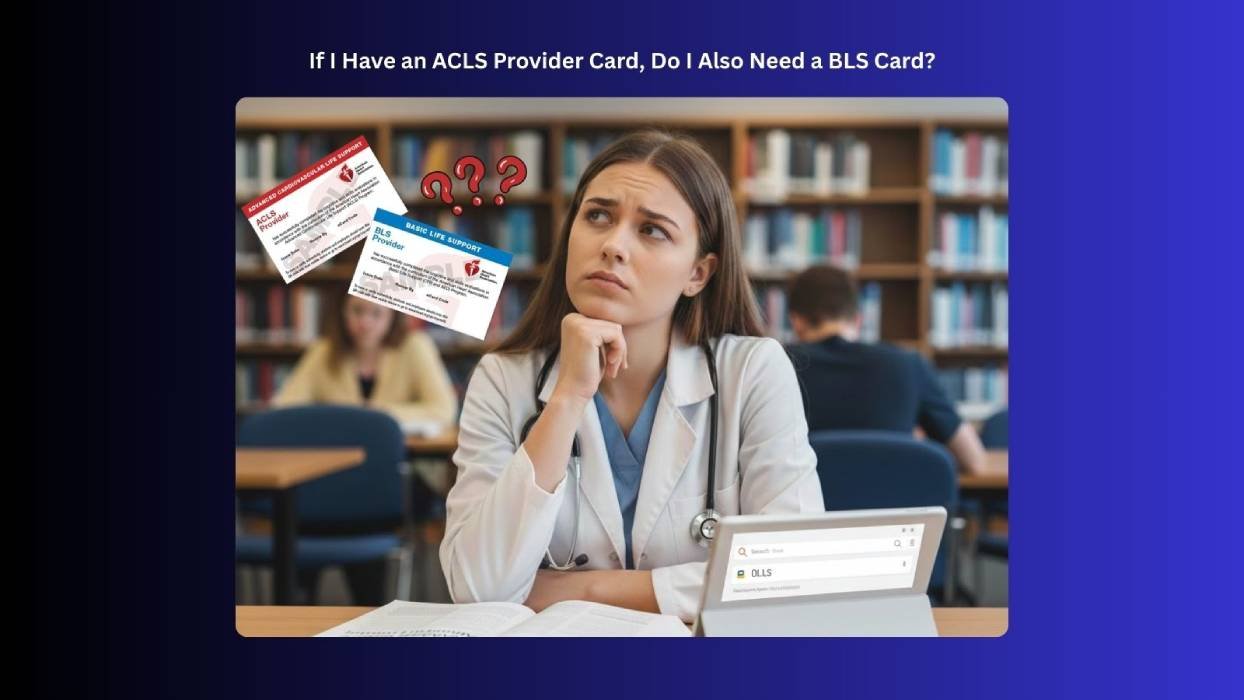
Yes, even if you have an ACLS provider card, you still need BLS. ACLS builds on BLS skills but does not replace them. High-quality CPR, early defibrillation, and basic airway management are foundational lifesaving skills taught in BLS that every healthcare provider must maintain. Without these basics, advanced interventions in ACLS cannot be performed effectively.
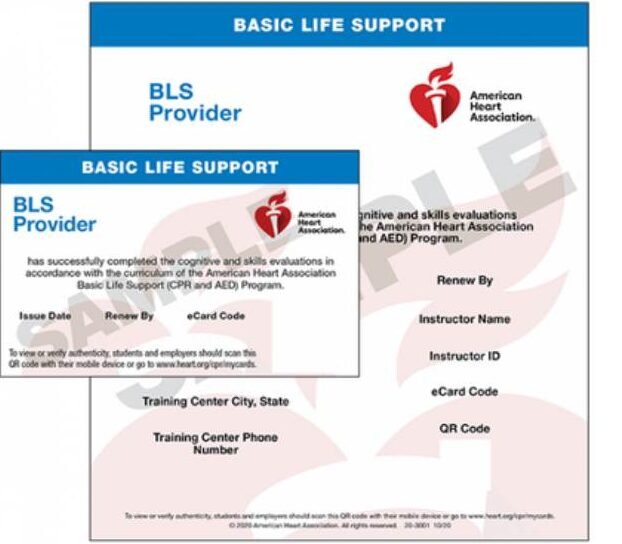
Employers, hospitals, and regulatory bodies usually require both AHA cards for credentialing, licensing, and patient safety compliance. Most ACLS courses also require an active BLS course completion card before enrollment, ensuring that all participants have a solid foundation in lifesaving basics.
In short, BLS is the essential starting point for every resuscitation, while ACLS enhances your ability to respond to complex cardiac emergencies. Maintaining both provider cards keeps you compliant, prepared, and confident in real-world emergencies.
What Is BLS Course?
Basic Life Support (BLS) course is a foundational training program that prepares healthcare professionals to respond to life-threatening emergencies. It focuses on the immediate, lifesaving skills needed when a patient experiences cardiac arrest, respiratory failure, or airway obstruction, learn more about what are the signs of severe airway obstruction in BLS.
BLS class covers essential skills such as high-quality CPR for adults, children, and infants; proper use of an automated external defibrillator (AED); rescue breathing; and relief of choking. These skills are evidence-based and follow current resuscitation guidelines, enabling providers to act quickly and effectively in critical situations.
Healthcare professionals who commonly require BLS include nurses, physicians, EMTs (Emergency Medical Technicians), paramedics, respiratory therapists, medical students, and other clinical staff involved in patient care. While BLS may seem basic compared to advanced training, it is the foundation for every resuscitation. Without strong BLS skills, even the most advanced life support interventions cannot be performed effectively.
What Is ACLS Course?
Advanced Cardiovascular Life Support (ACLS) class is an advanced training program suitable for healthcare professionals who manage or participate in the treatment of cardiopulmonary emergencies. It builds directly on BLS skills and focuses on the assessment and management of complex cardiac and respiratory conditions.
ACLS course covers advanced topics such as cardiac rhythm recognition, ECG interpretation, pharmacology, advanced airway management, team-based resuscitation, and post–cardiac arrest care. Providers learn how to lead or function within a coordinated resuscitation team, make rapid clinical decisions, and apply evidence-based algorithms in high-stress situations.
This training is typically required for professionals working in emergency departments, intensive care units, critical care settings, cardiac units, and advanced prehospital roles, including physicians, nurses, paramedics, and advanced practice providers. While ACLS involves advanced interventions, it assumes full competency in BLS, reinforcing that strong basic life support skills are essential before advanced care can be effectively delivered.
Does ACLS Replace the BLS Provider Card?
No, ACLS does not replace BLS. While ACLS is an advanced program, it is developed to build on BLS skills, not substitute them. Every ACLS course assumes that you can already perform high-quality CPR, use an AED correctly, and manage basic airway emergencies. These foundational skills are not taught in depth during ACLS training.
From an employment and compliance standpoint, most hospitals, healthcare systems, and accrediting organizations require separate, active BLS and ACLS provider cards. Having ACLS alone does not meet BLS requirements, even for experienced or advanced providers.
In real-life emergencies, BLS is always the first step. Cardiac arrests begin with immediate CPR and early defibrillation, long before advanced medications, airways, or cardiac algorithms are used. That’s why BLS remains a standalone requirement, because without strong basic life support, advanced life support simply cannot succeed.
Why BLS Is Still Required Even If You Have ACLS
Even if you hold an ACLS provider card, BLS is still required because it forms the foundation of every resuscitation effort. To understand the key contrasts between the two, you can read more about the difference between ACLS and BLS. Here’s why:
- BLS is the First Step in Any Emergency: High-quality CPR and early defibrillation are critical in the first minutes of cardiac arrest. ACLS interventions only come into play after these basic measures are in place.
- Employers and Hospitals Require Compliance: Most healthcare facilities mandate a separate BLS and ACLS course completion card for credentialing and policy adherence. Without a current BLS card, you may be ineligible for certain roles or shifts.
- Patient Safety Depends on BLS Proficiency: Even advanced interventions cannot replace effective basic life support. Quick recognition of arrest, along with timely CPR and AED use, saves lives before advanced measures can take effect. It’s important to understand when and how to use CPR and an AED together.
- Legal and Accreditation Standards: Regulatory bodies and professional organizations explicitly list BLS as a required provider card for clinical staff, regardless of ACLS status.
- Skill Reinforcement: BLS course completion card ensures you maintain core lifesaving skills, keeping them sharp for real-world emergencies.
In short, ACLS enhances your capabilities, but BLS is the essential starting point that every healthcare provider must master and maintain.
Employer and Regulatory Requirements
Healthcare employers and regulatory bodies take both BLS and ACLS trainings seriously, and for good reason. Here’s what you need to know:
1. Hospital Credentialing Standards
Hospitals and healthcare facilities require staff to hold active course completion cards for both BLS and ACLS. Credentialing committees review these cards before allowing providers to work in patient care areas, especially critical care, emergency departments, and cardiac units.
2. Licensing and Renewal Requirements
Many state licensing boards and professional organizations require up-to-date BLS and ACLS provider cards to maintain your license or clinical privileges. Letting either card lapse can impact your ability to practice legally.
3. Common Employer Expectations
Advanced providers such as ICU nurses, ER staff, paramedics, and physicians are typically expected to maintain both BLS and ACLS. Employers assume ACLS providers are already competent in BLS skills, but they still require formal documentation of BLS training.
4. Why “Having ACLS Only” May Delay Hiring or Credentialing
Even if you hold ACLS, lacking a current BLS AHA eCard can cause delays in onboarding, limit your job opportunities, or prevent you from participating in certain procedures. Facilities often treat BLS as non-negotiable because it ensures that every team member can perform essential lifesaving interventions immediately.
In short, having ACLS eCard alone is not enough; BLS is a baseline requirement for employment, regulatory compliance, and patient safety.
Can You Take ACLS Without BLS?
In most cases, you cannot take an ACLS course without BLS training. ACLS is developed as an advanced course that builds on the skills learned in BLS, so providers are expected to already be competent in basic life support.
1. Requirements for ACLS:
- Active BLS eCard: Most ACLS courses require a current BLS card before you can register.
- Ability to Perform High-Quality CPR: You must be able to demonstrate proper CPR techniques, use an AED, and manage basic airway interventions. These skills are tested at the start of the ACLS course.
2. If your BLS has expired:
- You may not be allowed to enroll in an ACLS course until you renew your BLS provider card.
- Some training centers offer combined renewal courses where you can update BLS and take ACLS in succession, but this depends on the provider.
In short, active BLS training is a mandatory requirement for ACLS, ensuring that all participants have a solid foundation in lifesaving basics before moving on to advanced cardiac care.
Should You Renew BLS and ACLS Separately?
Yes, BLS and ACLS provider cards generally need to be renewed separately, even though they are closely related. Here’s what to know:
1. Provider Card Cycles and Renewal Timelines
- Both BLS and ACLS cards valid for two years.
- Each card has its own renewal requirements and skills testing, which is why separate renewal is necessary.
2. Why Separate Renewals Are Necessary
- BLS and ACLS Cover Different Skill Sets: BLS focuses on foundational lifesaving techniques, while ACLS covers advanced cardiac care and team-based resuscitation.
- Maintaining separate eCard ensures providers remain competent in both basic and advanced life support, meeting employer and regulatory standards.
3. Tips for Staying Compliant
- Sync Renewal Dates If Possible: Planning renewals around the same time can simplify scheduling and reduce the risk of lapsing.
- Choose Accredited Training Providers: Ensure your course completion card are recognized by the American Heart Association (AHA).
- Consider Combined Training Options: Some providers offer courses where you can renew BLS and ACLS in the same session, saving time while meeting both requirements.
Maintaining both cards keeps you ready to respond effectively to emergencies and ensures compliance with hospital policies and licensing regulations.
Who Needs Both BLS and ACLS?
Healthcare professionals must maintain both BLS and ACLS provider cards to stay prepared for all levels of cardiac and respiratory emergencies.
- Nurses: Especially those working in ICU (Intensive Care Unit), ER (Emergency Room), telemetry, or critical care units where cardiac events are common.
- Paramedics and Advanced EMS Providers: Field providers must respond quickly to emergencies, often performing both basic and advanced life support.
- Physicians and Residents: Doctors in acute care, cardiology, or emergency medicine must master the full spectrum of resuscitation.
- Respiratory Therapists: Often manage airways and ventilatory support in critical situations, requiring both foundational and advanced skills.
- Medical Students Entering Clinical Roles: Early exposure to BLS and ACLS ensures competency before participating in patient care rotations.
In short, any healthcare provider involved in acute patient care or emergency response should maintain both cards to meet employer, regulatory, and patient safety standards.
Final Thought: Do You Need BLS If You Have ACLS?
In summary, yes, even if you have an ACLS provider card, BLS is still a must. It’s the foundation for every emergency response and the first step in saving lives. Keeping both cards current not only meets employer and legal requirements but also ensures you’re ready to act confidently in any situation. ACLS builds on BLS, but strong basic skills are always the starting point for effective care.
Be ready to respond when it matters most. Bayside CPR provides fast, convenient lifesaving training prepared to fit your schedule. Start by completing a short online portion, then attend a 30-minute in-person skills session at one of our 60+ locations. Enroll in ACLS or BLS courses and leave the same day with your official course completion card and the confidence to act in any emergency. We also offer additional courses such as PALS, CPR, and First Aid.