
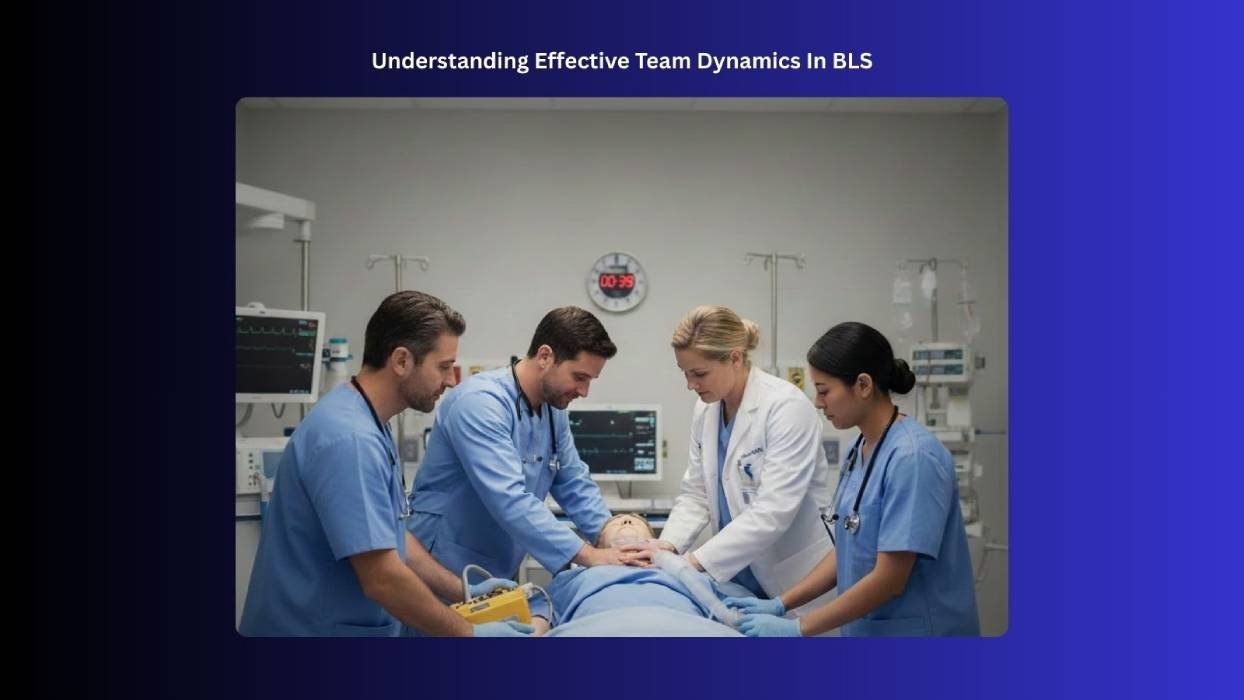
Effective team dynamics in Basic Life Support (BLS) directly impact patient outcomes either they are adults or pediatrics. Strong teamwork ensures high-quality CPR, faster interventions, fewer errors, and a well-coordinated response during emergencies. While technical skills like chest compressions, rescue breathing, and defibrillation are essential, team collaboration is equally vital. When a team functions well, each member works confidently and purposefully, improving survival chances.
This guide explains what effective team dynamics look like in BLS, explores key components, highlights common barriers, and offers practical strategies to strengthen collaboration during high-stress emergencies. These insights apply to BLS, ACLS (Advanced Cardiovascular Life Support), and multi-provider scenarios, helping improve patient outcomes. Additionally, it is important to understand how ACLS and BLS differ regarding responsibilities and approaches.
What Are Team Dynamics in BLS and How Do They Impact Patient Survival
Team dynamics in BLS describe how individuals interact, communicate, and coordinate during resuscitation. Success in emergency care depends not just on technical skills but on seamless team function under pressure. Effective dynamics ensure every member knows their role, monitors the patient’s condition, and works toward delivering fast, high-quality care.
1. Individual Skill vs. Team Performance
A team of highly skilled providers can still struggle if coordination is poor.
- Individual skill focuses on what one person can do.
- Team performance reflects how well members work together to deliver continuous care.
Patient outcomes suffer if communication breaks down or roles are unclear, no matter how skilled the providers are.
2. The Role of Human Factors
Human factors shape team effectiveness:
- Communication: Clear, concise, closed-loop communication ensures tasks are completed correctly.
- Mindset: A calm, focused, proactive mindset helps members respond effectively under pressure.
- Situational Awareness: Monitoring the patient, environment, and team actions allows anticipation of next steps, like preparing the AED or rotating compressors.
These elements show why team interactions are as crucial as individual skills.
Key Components of Effective BLS Team Dynamics
Effective BLS teams work best when everyone talks clearly, listens carefully, and supports each other. Strong teamwork, calm leadership, and quick problem-solving can make a real difference in patient care.
1. Communication
- Clear Messages: Team members share instructions in a simple and direct way so everyone understands what to do. Clear messages help avoid confusion and keep the team moving smoothly.
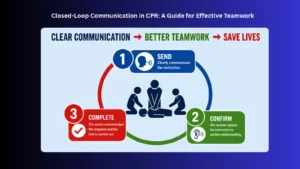
- Closed-Loop Communication: When someone gives an instruction, the receiver repeats it back to confirm. This ensures nothing gets missed and everyone stays on the same page.
- Knowledge Sharing: Team members openly share what they know to help each other perform better. Sharing knowledge strengthens the team and improves patient care.
2. Leadership
- Role Assignment: A good leader quickly assigns tasks so everyone knows their job. Clear roles help the team work efficiently without overlapping or missing steps.
- Monitoring Performance: Leaders watch how the team is doing and step in when needed. Keeping an eye on progress ensures patient care stays safe and effective.
- Maintaining Calm: Leaders stay calm even in stressful moments to guide the team. A steady presence helps everyone think clearly and act confidently.
3. Collaboration
- Mutual Respect: Team members treat each other with respect and value everyone’s skills. Respect creates a positive environment where people work well together.
- Mutual Support: Team members help each other when tasks get tough. Offering support keeps the team strong and improves patient care.
- Adaptability: Team members adjust quickly when things change during a procedure. Being flexible helps the team handle challenges smoothly.
4. Conflict Resolution
- Constructive Feedback/Intervention: Team members are encouraged to respectfully question actions or suggest improvements to prevent harm, and the leader must intervene appropriately if an unsafe practice is observed.
- Collaborative Problem Solving: Disagreements should be handled openly to find solutions that focus on patient safety and the shared objective, not personal disputes.
5. Summarizing and Reevaluating
- Reevaluate the Patient’s Status: This involves frequently checking the patient for any significant clinical changes or responses to interventions.
- Summarize Interventions Performed: The team leader should review aloud the treatments provided to maintain an ongoing record and ensure all team members are aware of what has been done.
- Assess Progress Within the BLS Algorithm: The team should check if their actions are following the established guidelines and if any steps have been missed, allowing for non-judgmental communication and correction.
6. Debriefing
- Review the Events and Performance: The team collectively reviews the sequence of actions, the timing of interventions, and how well each member fulfilled their role.
- Identify Areas for Improvement: The team engages in an open, non-judgmental discussion about challenges encountered, errors made, and specific steps that could be handled better in the next emergency.
- Plan for Future Scenarios (Action Plan): The session concludes with concrete takeaways and an action plan, ensuring lessons learned are integrated into future practice and skill development.
Common Barriers to Effective Team Dynamics That Can Compromise Patient Care
Even skilled teams face obstacles that can slow CPR or cause errors. Recognizing these barriers keeps patient care safe.
1. Stress and Panic
High stress can cause hesitation or hasty actions. Panic slows judgment, disrupts communication, and confuses roles. Teams that practice staying calm respond faster and more safely.
2. Inexperience or Lack of Training
Uncertainty about skills leads to hesitation or repeated tasks, slowing CPR and increasing errors. Regular practice builds confidence and efficiency.
3. Poor Communication Habits
Talking over each other, giving unclear instructions, or failing to confirm tasks creates confusion and delays. Clear, direct communication ensures safe, timely actions.
4. Leadership Hesitation
When leaders delay decisions, the team stalls or acts independently, causing inefficiency. Decisive, confident leadership keeps the team coordinated and interventions timely.
How to Strengthen Team Dynamics in BLS Training to Improve Patient Outcomes
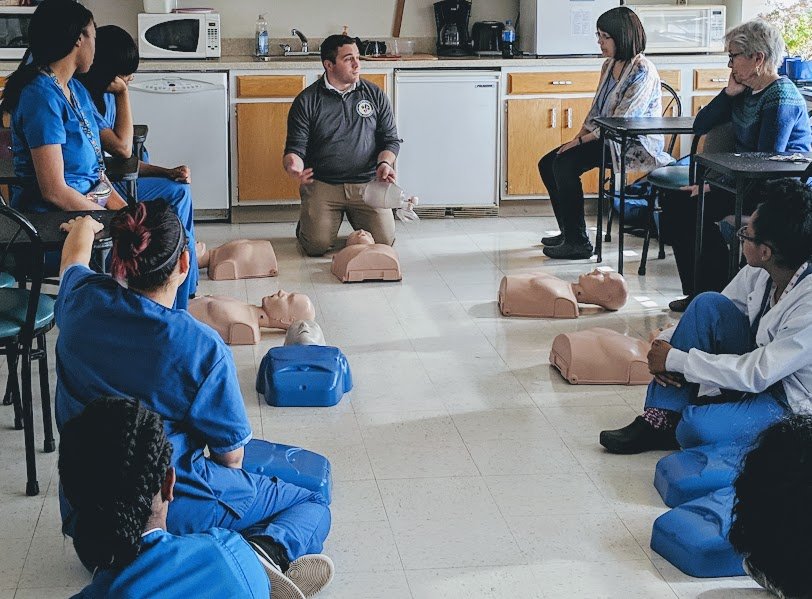
Teams improve when they train together regularly. Simulations, rapid role assignments, clear communication, and post-drill debriefings build coordination and confidence.
- Simulation-Based Practice: It allows risk-free practice in real-life scenarios, teaching quick action, task coordination, and calm responses.
- Rapid Role Assignments: Knowing roles from the start saves seconds and prevents confusion, keeping CPR continuous and efficient.
- Building Communication Habits: Practicing updates, task confirmations, and speaking up ensures coordination under pressure, reducing mistakes.
- Regular Debriefing: Reviewing performance after drills or real events identifies gaps, reinforces learning, and improves future teamwork.
Stronger BLS Teams, Better Outcomes
In short, effective team dynamics in BLS make a real difference. Teams that communicate clearly, share responsibilities, and support one another deliver care faster and more accurately. Strong leadership and awareness help everyone stay focused, while practice and reflection build confidence and smooth coordination. Regular training, paired with strong team dynamics, is the best way to ensure you’re ready for any emergency. When a team works together naturally and calmly, patients have the best chance of survival, and every member feels more capable and prepared for the next emergency.
Get BLS trained without hassle, Bayside CPR delivers streamlined, flexible lifesaving training that fits your schedule. Complete a brief online course followed by a 30-minute in-person skills session at one of our 60+ convenient locations to earn your AHA BLS course completion card the same day, so you’re ready to act right away. We also offer ACLS, PALS, CPR, and First Aid courses.