
If you’re a healthcare provider, mastering ACLS (Advanced Cardiac Life Support) isn’t just a credential; it’s a lifesaving skill. Whether you’re a nurse, paramedic, or physician, ACLS training ensures you’re ready to respond confidently in critical situations.
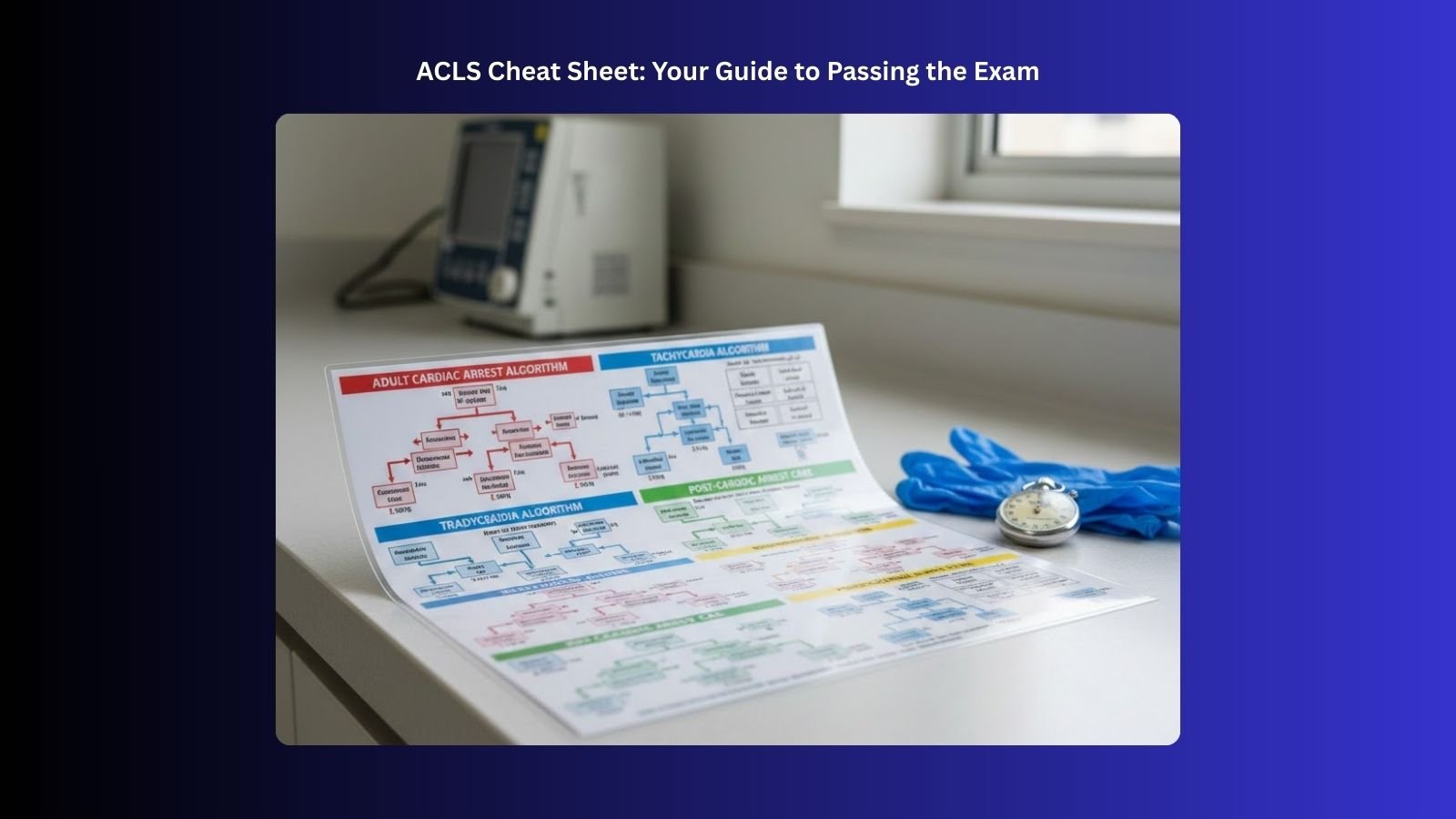
This cheat sheet is designed to give you a quick, easy-to-follow reference for the most essential ACLS algorithms, medications, and emergency protocols. Instead of wading through long manuals, you’ll have a concise guide that saves time, reinforces knowledge, and boosts your confidence as you prepare for the exam.
By the end of this guide, you’ll have the tools to navigate cardiac arrests, arrhythmias, strokes, and acute coronary events with clarity, helping you not only pass the ACLS exam but also excel in real-world emergencies.
ACLS Medications Cheat Sheet For Exam
Mastering the right ACLS medications helps you act fast during emergencies. This cheat sheet gives you the key drugs, doses, and tips to remember them easily.
| Drug | Uses | Dose (IV) / Key Point |
| Adenosine | SVT (fast heart rhythm) | 6 mg → 12 mg if needed; very short-acting |
| Atropine | Symptomatic bradycardia | 0.5 mg q3-5 min, max 3 mg |
| Dopamine | Low BP / cardiac output | 2–20 mcg/kg/min infusion |
| Epinephrine | Cardiac arrest / anaphylaxis | 1 mg q3-5 min during arrest |
| Amiodarone | Life-threatening arrhythmias | 300 mg → 150 mg if needed |
| Lidocaine | Ventricular arrhythmias | 1–1.5 mg/kg, repeat 0.5–0.75 mg/kg q5-10 min, max 3 mg/kg |
| Magnesium | Torsades / low Mg | 1–2 g over 15 min |
| Procainamide | Ventricular & SV arrhythmias | 20–50 mg/min until rhythm stops or max 17 mg/kg |
Tips to Memorize ACLS Algorithms Quickly and Effectively
Learning ACLS algorithms can feel tricky at first. With the right tricks and practice, you can remember them quickly and act confidently.
- Understand ACLS Algorithm Logic: Take time to see why each step happens in the algorithm. When you know the reason behind actions, you remember them better and can make decisions faster during emergencies.
- Use Mnemonics & Acronyms: Memory tricks can save time and stress. Short phrases or letters that stand for steps make it easier to recall sequences under pressure.
- Practice with Flowcharts & Visuals: Looking at diagrams or charts helps your brain link steps together. Visual aids make complicated rhythms and actions much easier to follow.
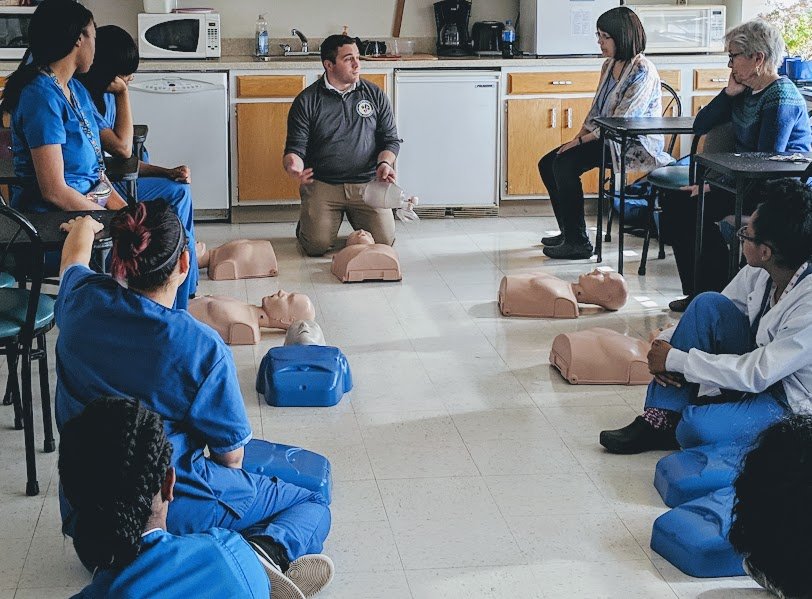
- Engage in Hands-On Simulations: Doing the steps in practice sessions trains your reflexes. Physical practice with manikins or team drills builds confidence and muscle memory.
- Teach Others to Reinforce Learning: Explaining what you know helps your brain hold onto information. Teaching classmates or friends can highlight gaps and strengthen your understanding.
- Apply Real-World Scenarios: Picture real emergencies as you study. Thinking about what you would do in an actual patient situation helps connect theory to action.
- Break Content into Manageable Sections: Study one piece at a time instead of everything at once. Smaller chunks are easier to remember and reduce stress when preparing for the exam.
Identifying Heart Rhythms During the Exam: Quick Strategies
Recognizing heart rhythms quickly can make a big difference in patient care. With clear steps and practice, you can identify them confidently during the ACLS exam.
- Check the Heart Rate: Start by looking at how fast the heart is beating. Knowing if the rhythm is slow, normal, or fast gives you a first clue about what type of rhythm you are dealing with.
- Look at the Rhythm Regularity: Notice if the beats are evenly spaced or irregular. Regular rhythms often point to one group of conditions, while irregular ones suggest different issues you need to recognize.
- Examine the P Waves: See if P waves are present and consistent before each QRS complex. This tells you whether the rhythm comes from the atria and helps differentiate types of arrhythmias.
- Measure the PR Interval: Check the time from the start of the P wave to the start of the QRS complex. A normal or abnormal interval gives clues about conduction problems in the heart.
- Analyze the QRS Complex: Look at the shape and width of the QRS. Narrow complexes usually start in the atria, while wide complexes often start in the ventricles.
- Identify T Waves and ST Segments: Observe the T waves and ST segments for changes. These can indicate underlying issues like ischemia or electrolyte problems that affect rhythm.
- Compare with Previous Strips: If you have older (Electrocardiogram) ECGs, compare them. Changes from a normal baseline can help you spot new or dangerous rhythms quickly.
- Practice Pattern Recognition: The more rhythms you see, the faster you identify them. Repeated practice helps your brain pick up patterns without overthinking during the exam.
For more study tips and strategies, you can explore the ECG Rhythms Recognition and Interpretation for ACLS.
Using ACLS Cheat Sheet in Megacode Scenarios to Ace the Exam
In the exam, ACLS megacode scenario tests your ability to integrate knowledge of algorithms, medications, and rhythm recognition under time pressure. Your cheat sheet can serve as a strategic reference tool, helping you stay organized and confident. How to use it effectively:
- Pre-Simulation Review: Quickly glance at your cheat sheet before starting to refresh key algorithms (e.g., VF/pulseless VT, asystole, PEA).
- Step-by-Step Guidance: During the megacode, mentally follow your cheat sheet sequence—airway, CPR (Cardiopulmonary Resuscitation), rhythm check, medication administration.
- Time Management: Use it to prioritize critical interventions without pausing unnecessarily.
- Mistake Prevention: Keep commonly confused rhythms, drug doses, and shock indications highlighted for quick reference.
- Confidence Booster: Knowing you have a “safety net” can reduce stress and improve performance.
While the real exam won’t allow a physical cheat sheet, practicing with one trains your brain to internalize the sequence, which is exactly what leads to acing the megacode.
Common ACLS Exam Mistakes and How to Avoid Them
Even well-prepared candidates can make mistakes during the ACLS exam. Knowing them in advance helps you avoid losing points.
1. Skipping or Delaying CPR
- Mistake: Waiting too long to start compressions or interrupting them unnecessarily.
- Solution: Always prioritize high-quality CPR first. Remember the “CAB” sequence: Compressions → Airway → Breathing.
2. Incorrect Rhythm Identification
- Mistake: Misreading VF, VT, or asystole.
- Solution: Practice rhythm strips regularly, and use mnemonic aids or your mental “cheat sheet” to differentiate rhythms quickly.
3. Wrong Medication or Dose
- Mistake: Administering the wrong drug or incorrect dosage during a scenario.
- Solution: Memorize high-yield drug doses (e.g., epinephrine, amiodarone) and practice using them in mock megacodes.
4. Delayed Defibrillation or Inappropriate Shocks
- Mistake: Not defibrillating shockable rhythms promptly or shocking non-shockable rhythms.
- Solution: Follow algorithm steps strictly: Shockable = defibrillate, Non-shockable = CPR + medical treatments.
5. Poor Team Communication
- Mistake: Failing to direct team members or give clear instructions during a megacode.
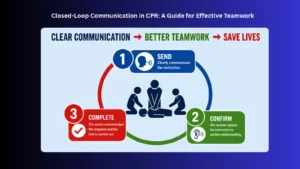
- Solution: Practice closed-loop communication by giving instructions, getting confirmation, and updating the team on changes. This approach highlights the main advantage of effective teamwork in ACLS and ensures everyone works efficiently during a megacode.
6. Over-Reliance on Memory Under Stress
- Mistake: Forgetting steps during high-pressure scenarios.
- Solution: Use mental “cheat sheets” and repetitive practice so steps become automatic.
Most mistakes are preventable with structured practice, memorization strategies, and repeated mock scenarios. Reviewing your cheat sheet until the steps are automatic is key to avoiding these pitfalls.
Managing Time Efficiently During the ACLS Exam
Efficient time management on the ACLS exam relies on both solid preparation and smart test-taking techniques. This includes taking practice exams to mimic real testing conditions, reading questions attentively, and maintaining focus throughout the test.
1. Preparation Strategies
Effective time management on exam day begins with thorough preparation well in advance.
- Master the Algorithms: Since much of the ACLS exam tests your knowledge of systematic approaches to cardiac emergencies, review all algorithms repeatedly until you’re confident in applying them.
- Take Practice Tests and Mock Exams: Regularly completing practice exams helps you become familiar with the question formats, manage time effectively, and reduce test-day anxiety.
- Strengthen Medication Knowledge: Study the correct medications and dosages for various scenarios. Tools like flashcards and mnemonic devices can help you recall this information quickly during the test.
- Maintain Calm and Confidence: Anxiety can affect performance. Remind yourself of your preparation and take deep breaths if stress builds.
- Know the Exam Format: Understanding the exam’s structure and rules ahead of time prevents surprises and helps you approach the test confidently.
2. Test-Taking Strategies
During the exam, use targeted strategies to manage your time and complete the test efficiently.
- Read Instructions Carefully: Take a moment to fully understand each question and section to avoid simple mistakes.
- Answer Strategically: Skip or flag questions you’re unsure about and return to them later. This ensures you address all questions you know first without getting stuck.
- Manage Time Wisely: If a question is taking too long, make an educated guess, mark it for review, and move on. Proper pacing allows time to revisit flagged questions before submitting.
- Review Your Answers: If time allows, double-check your responses for accuracy and completeness.
- Seek Clarification if Needed: For in-person exams, don’t hesitate to ask instructors or proctors if a question or instruction is unclear.
ACLS Cheat Sheet: Key Takeaways for Success
In summary, with the right preparation and consistent practice, passing the ACLS exam is entirely within your reach. Using this cheat sheet helps you focus on the key algorithms, medications, and rhythms without feeling overwhelmed. Keep reviewing, practicing, and visualizing real scenarios so that during the exam, your knowledge flows naturally and confidently. Remember, ACLS isn’t just about passing a test; it’s about being ready to act quickly and effectively when a patient’s life is on the line. Stay calm, trust your training, and you’ll be ready to succeed both in the exam and in real-life emergencies.
Don’t delay your readiness, sign up for an ACLS class today. Bayside CPR offers fast, adaptable lifesaving training prepared to fit even the busiest schedules. Complete a short online course followed by a 30-minute in-person skills session at one of our 60+ locations, and leave the same day with your official AHA ACLS course completion card, fully trained and ready to act when it matters most. We also provide BLS, PALS, CPR, and First Aid courses.