
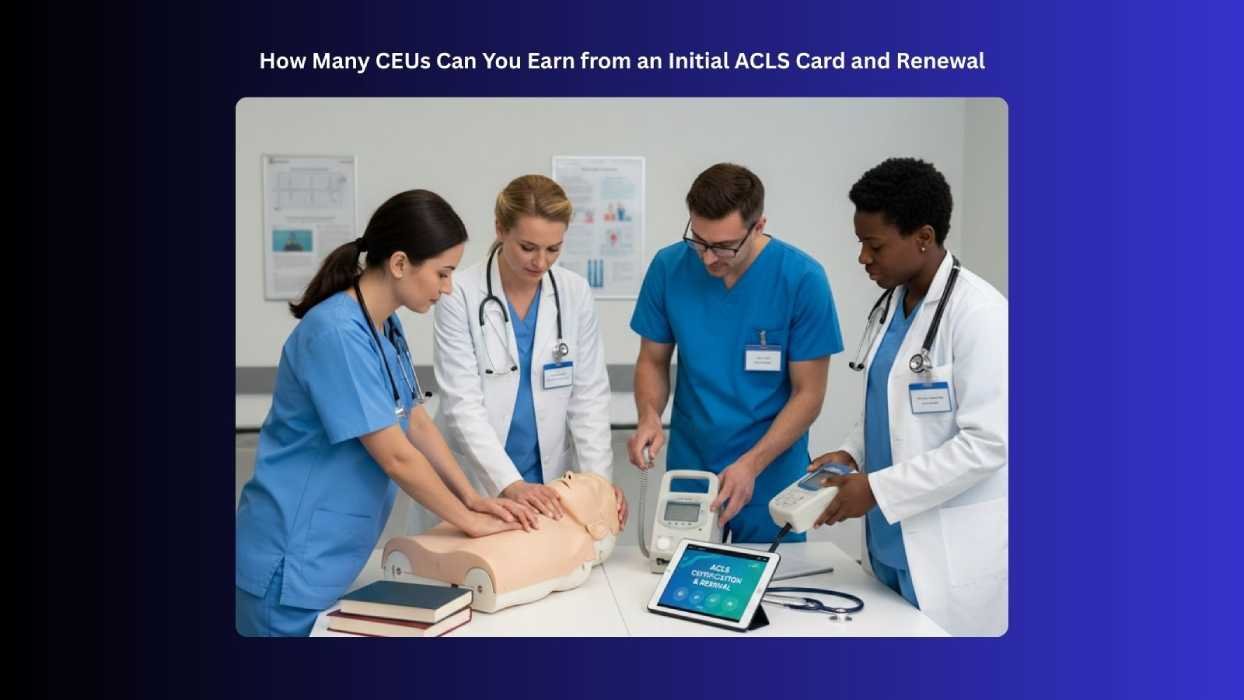
If you’re wondering how many Continuing Education Units (CEUs) you can earn from an ACLS card or its renewal, the answer is typically 2 to 3 CEUs through the American Heart Association (AHA). This applies to both initial ACLS courses and renewal programs.
These CEUs reflect the total time spent completing the course, which usually ranges from 20 to 30 hours of combined online learning and hands-on practice. Since 1 CEU equals 10 hours of educational activity, completing ACLS training translates into the CEUs needed to maintain licensure, meet professional requirements, and stay current with the latest emergency cardiovascular care guidelines.
By earning CEUs through the ACLS course, healthcare professionals not only fulfill regulatory requirements but also reinforce their life-saving skills, stay updated on evolving protocols, and boost their confidence in handling critical situations.
Why CEUs Matter for Healthcare Professionals
CEUs measure the time healthcare professionals invest in learning activities that strengthen their knowledge and skills.
- Maintain Skills: CEUs ensure you stay current with evolving emergency cardiovascular care protocols.
- Licensing Compliance: Many healthcare organizations and state boards require CEUs to maintain active credentials.
- Professional Growth: Continuing education demonstrates commitment to career development and patient safety.
CEUs for ACLS Initial Card and Renewal
The exact CEUs you earn depend on the accrediting organization and course format. Here’s a quick breakdown:
| Accrediting Organization | CEUs for ACLS Initial Card | Notes |
| American Heart Association (AHA) | 2–3 CEUs | Based on 20–30 hours of combined online and hands-on training |
| American Red Cross (ARC) | Up to 4 CEUs | Depend on course format and length |
| Other U.S. Training Centers | Varies | Usually meets state licensing requirements |
How CEUs Are Calculated by the AHA
Learning how the AHA calculates CEUs makes tracking your progress easy. Knowing the basics helps you see how your training hours turn into official credits.
- CEU Allocation: 2–3 CEUs are awarded for both initial and renewal ACLS cards.
- Calculation: 1 CEU = 10 hours of educational activity (online modules + in-person skills).
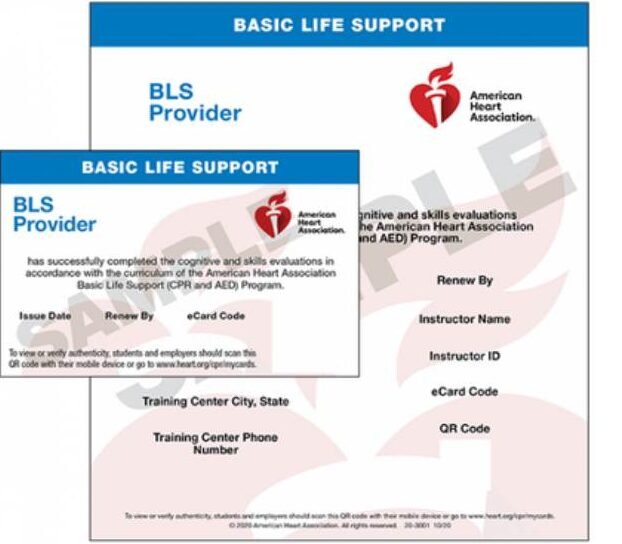
- Issuance: Accredited course providers track your CEUs, and your ACLS eCard serves as proof.
- Validity: CEUs remain valid as long as your ACLS course completion card is active (typically for two years).
Benefits of Earning CEUs Through ACLS
Earning CEUs through ACLS helps you stay skilled and confident in critical care. It also shows your commitment to growing as a healthcare professional.
- Maintain Licenses and Credentials: Fulfill continuing education requirements for nurses, paramedics, and other healthcare professionals.
- Enhance Career Opportunities: CEUs demonstrate dedication to professional growth and expertise in advanced life support.
- Stay Current with Guidelines: Regular CEUs keep you updated on the latest cardiac care and emergency protocols.
- Boost Confidence in Emergencies: Refreshed skills and CEUs ensure you’re prepared for life-threatening situations.
Tips for Maximizing Your CEUs
Maximizing your CEUs helps you get the most value from every course you take. Simple steps can keep your credits on track and make learning easier.
- Choose Accredited Providers: Make sure your course is recognized by professional organizations or state boards to ensure your CEUs count.
- Complete All Course Components: Some programs require quizzes, skills tests, or scenario simulations to award full CEUs.
- Track Your Progress: Keep a personal record of the CEUs you earn from different courses.
- Renew On Time: Don’t let your AHA ACLS provider card lapse, or you may lose CEU credits and have to retake the full course.
ACLS: Advancing Skills, CEUs, and Confidence
In summary, ACLS is more than just a course completion card. It’s a pathway to professional growth, patient safety, and confidence in critical situations. Earning CEUs through ACLS allows you to continue learning, stay current, and make a real difference in the lives of your patients every day. Staying committed to ongoing education and skill development helps ensure you’re prepared to respond effectively when it matters most.
Be ready when emergencies strike. Bayside CPR makes lifesaving training simple and convenient. Complete a brief ACLS online course, then join a 30-minute hands-on skills session at one of our 60+ locations to earn your course completion card the same day, and gain the confidence to step in when it matters most. We also offer BLS, PALS, CPR, and First Aid courses.