
Airway obstruction is a life-threatening emergency that prevents oxygen from reaching vital organs like the brain and heart. In Basic Life Support (BLS), it most often occurs when someone chokes on food or small objects, but it can also result from swelling due to allergies, trauma, or vomiting. Recognizing the signs of severe airway obstruction, such as inability to speak, difficulty breathing, noisy breathing, or universal choking gestures, is critical, because every minute without oxygen increases the risk of brain damage, cardiac arrest, or death.
In this article, we’ll explain how to identify severe airway obstruction in adults and children, distinguish between partial and complete blockage, and understand why quick recognition and action can save lives.
What Is Severe Airway Obstruction?
Severe airway obstruction occurs when air cannot pass freely into the lungs, causing a complete or near-complete blockage that rapidly deprives the body of oxygen. The brain is especially sensitive, just a few minutes without airflow can lead to irreversible damage.
Understanding age-specific differences helps BLS responders recognize signs quickly:
- Adults: Adults have larger, more rigid airways. Even with severe obstruction, some airflow may occur, allowing weak coughing or speech. However, complete blockage can develop suddenly, so immediate action is critical. It’s crucial to know what to do if you are alone and choking.
- Children: Infants and young children have smaller, softer, and more flexible airways, with proportionally larger tongues. Even a small object can cause complete blockage quickly, so signs of severe obstruction appear sooner, and deterioration can be rapid.
By recognizing these differences, BLS responders can anticipate which signs to look for in adults versus children and act quickly to prevent serious complications.
General Signs of Severe Airway Obstruction
Severe airway obstruction can develop quickly, and recognizing the signs promptly is critical to save a life. Key general signs include:
- Difficulty Breathing: Labored, rapid, or shallow breaths; nostrils may flare, and chest movement may be minimal or strained.
- Inability to Speak or Cough: Weak or absent cough and inability to produce sound indicate a severe blockage.
- High-Pitched Noises: Stridor, wheezing, or gurgling sounds show the body struggling to move air.
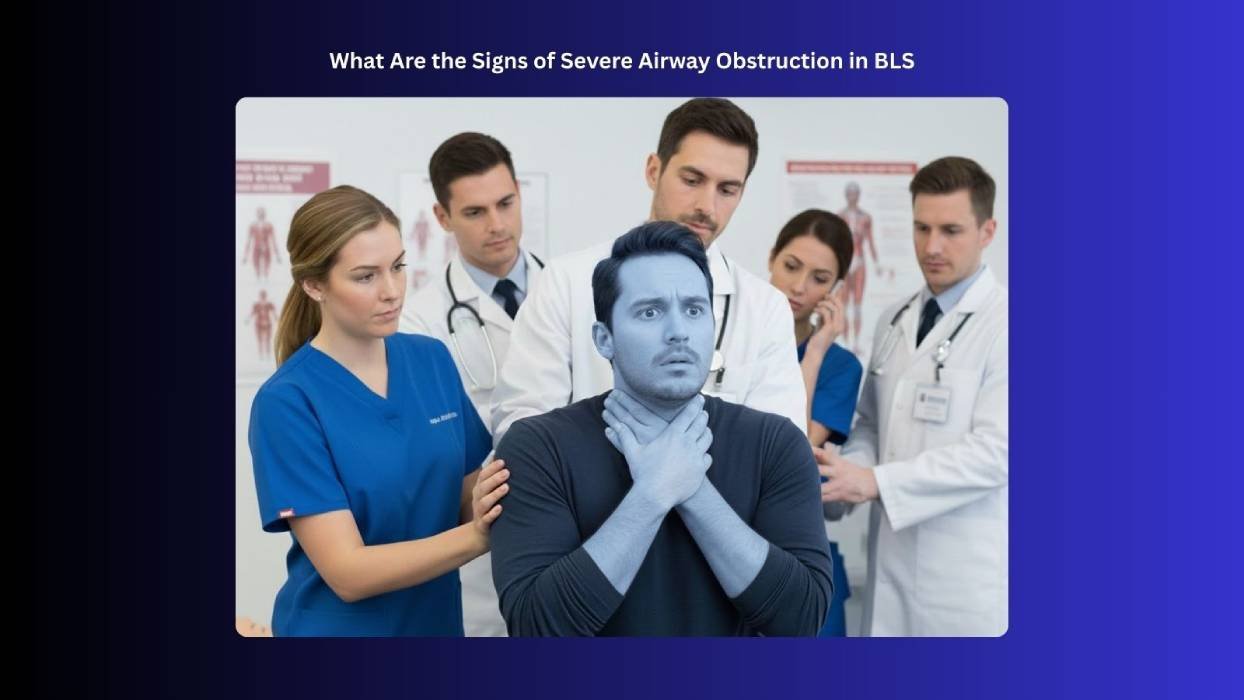
- Cyanosis: Bluish lips, face, or fingertips signal oxygen deprivation. In children, this can appear rapidly.
- Panic or Agitation: Clutching the throat, frantic movements, or visible distress are behavioral warning signs.
Recognizing these general signs quickly allows BLS responders to act immediately and prevent serious complications.
Recognizing Severe Airway Obstruction in Adults
Adults may show the general signs of airway obstruction, but certain age-specific cues are important to recognize:
- Sudden Choking Episodes: Often indicated by the universal choking sign, hands clutching the throat.
- Labored or Noisy Breathing: Wheezing, stridor, or gasping may occur before airflow completely stops.
- Inability to Speak or Cough Effectively: Even if some coughing or speech is possible, it may signal a partial yet severe obstruction.
- Loss of Consciousness: If the obstruction is not relieved quickly, fainting or unresponsiveness can occur.
Recognizing these adult-specific signs early allows BLS responders to act promptly and prevent serious complications.
Recognizing Severe Airway Obstruction in Children
Children can deteriorate rapidly due to smaller, more flexible airways and limited oxygen reserves. Recognizing age-specific signs early is crucial:
- Sudden Coughing or Gagging: Panic, crying, or repeated gagging may indicate obstruction.
- Difficulty Speaking or Weak Cry: Restricted airflow can prevent normal vocalization or crying.
- Labored or Noisy Breathing: Wheezing, stridor, or gasping may appear quickly.
- Rapid Cyanosis: Bluish lips, face, or fingertips can develop faster than in adults.
Early recognition allows BLS responders to act immediately, preventing progression from partial to complete airway obstruction.
Partial vs Complete Airway Obstruction
Understanding whether an airway obstruction is partial or complete is critical for deciding how to respond in BLS.
1. Partial Obstruction
- Some air can still pass through the airway.
- Signs include coughing, wheezing, and labored breathing without cyanosis.
- Encourage the person to cough forcefully to try to clear the airway naturally.
2. Complete Obstruction
- No air can pass through the airway.
- Signs include inability to speak, cough, or breathe, rapid cyanosis, and possible loss of consciousness.
- Immediate BLS intervention is required to prevent serious complications or death.
Importance of Recognition
Early recognition of severe airway obstruction is crucial in BLS, as it allows responders to act quickly and prevent life-threatening complications. Delays in identifying an obstruction can lead to:
- Cardiac Arrest: The heart may stop due to severe oxygen deprivation.
- Permanent Brain Damage: Just a few minutes without oxygen can cause irreversible brain injury.
- Loss of Consciousness: Complete obstruction can quickly render the person unresponsive.
- Death: Without prompt intervention, severe airway obstruction is often fatal.
Recognizing the signs promptly gives responders a critical window to act, significantly improving the chances of survival.
Final Thoughts on Identifying Severe Airway Obstruction
In summary, severe airway obstruction is urgent and can become life-threatening very quickly. Watching for signs like trouble breathing, weak coughing, strange noises, or bluish skin can give you the chance to act before things get worse. Adults and children show similar warning signals, but kids can deteriorate faster, so extra attention is needed. Spotting the problem early and responding immediately can make the difference between a safe recovery and serious harm. Staying alert and ready to help is the best way to protect someone’s life.
Looking to join BLS classes? Bayside CPR offers efficient, convenient lifesaving training that fits your schedule. Start by completing a brief online course, then attend a 30-minute in-person skills session at one of our 60+ locations. After finishing both parts, you will earn your American Heart Association BLS Provider card. You’ll receive your official card the same day and gain the confidence to respond when it matters most. ACLS, PALS, CPR, and First Aid courses are also available.