
Your heart rate changes throughout the day as your body responds to physical activity, rest, emotions, and other factors. A reading after exercise, for example, can be very different from one taken while you are sitting quietly.
Knowing what a typical heart rate looks like can help you understand your pulse and recognize when it is outside your usual range. This guide explains what is considered a normal heart rate, how heart rate varies by age, how heart rate and pulse rate differ, and what can affect your heart rate.
What Is a Normal Heart Rate?
Heart rate is the number of times the heart beats in one minute, expressed as beats per minute (bpm). The rate changes with activity, rest, emotions, and the body’s changing needs.
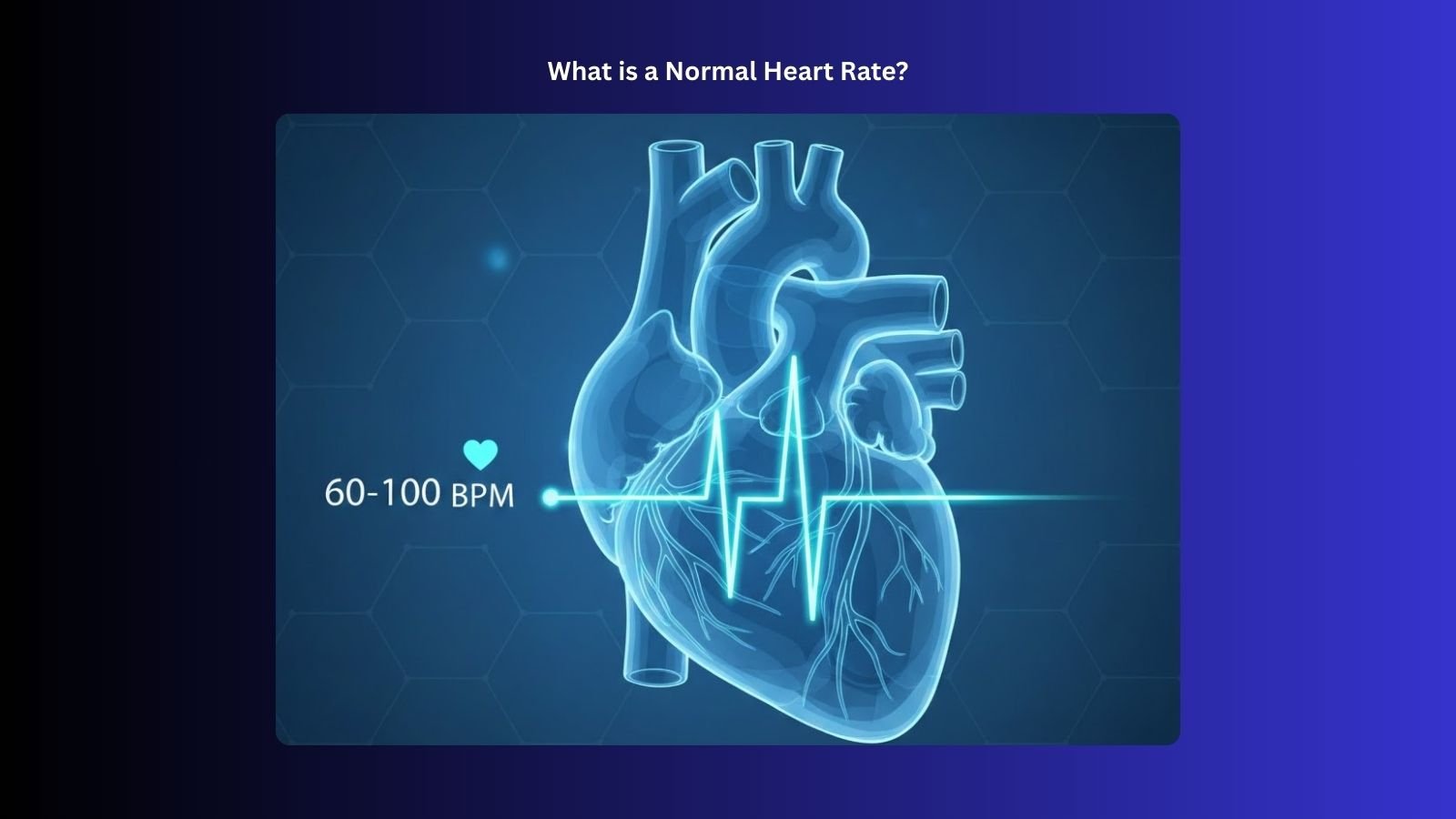
For most healthy adults, a normal resting heart rate is 60 to 100 bpm. A resting heart rate is measured when a person is calm and physically inactive.
A person’s usual rate can vary with age, fitness level, medications, illness, and other factors. A rate outside the typical range does not always indicate a health problem, particularly when the change is temporary or occurs during physical activity.
What Is a Normal Pulse Rate?
A normal pulse rate for most adults at rest is generally 60 to 100 beats per minute. Pulse rate and heart rate are closely related measurements, although they describe different things.
Heart rate is the number of times the heart beats per minute. Pulse rate is the number of arterial pulses you can feel per minute. In most healthy people, the two numbers are the same or very close.
You can check your pulse at several locations, including the wrist or neck. Counting the beats for a set period and converting the result to beats per minute gives you an estimate of your pulse rate.
Normal Resting Heart Rate by Age
Heart rateHeart rate can vary with age, activity level, fitness, medications, and other factors. Children generally have higher normal resting heart rates than adults, while individual readings can vary within the expected range for each age group.
| Age Group | Normal Resting Heart Rate (BPM) |
| Newborns (0 to 1 month) | 100 to 160 |
| Infants (1 to 12 months) | 80 to 140 |
| Toddlers (1 to 3 years) | 80 to 130 |
| Preschoolers (3 to 5 years) | 80 to 110 |
| School-age children (6 to 12 years) | 70 to 100 |
| Adolescents and adults (13+ years) | 60 to 100 |
Source: National Library of Medicine (NLM), “Normal Heart Rate by Age”
The most commonly used reference range for a healthy adult at rest is 60 to 100 bpm.
Normal Heart Rate for Athletes
Athletes and people who exercise regularly have a resting heart rate below the typical adult range of 60 to 100 bpm. Some trained athletes have a resting heart rate as low as 40 bpm. A lower rate occurs when the heart becomes more efficient at pumping blood with each beat.
A lower resting heart rate can be normal for a physically fit person. However, a new or unusually low rate accompanied by symptoms such as dizziness, fainting, unusual fatigue, or shortness of breath should be discussed with a healthcare professional.
What Can Affect Your Heart Rate?
Heart rate can change throughout the day in response to different conditions and activities. Common factors include:
- Physical activity and exercise: Heart rate increases as the body needs more oxygen and blood flow during physical activity.
- Stress, anxiety, and emotions: Strong emotions can activate the body’s stress response and temporarily increase heart rate.
- Caffeine and other stimulants: Caffeine and certain stimulants can cause a temporary increase in heart rate.
- Medications: Some medications can increase or decrease heart rate depending on how they affect the body.
- Fever or illness: Fever, infections, and other illnesses can increase heart rate.
- Body position: Moving from lying down to sitting or standing can temporarily change heart rate.
- Fitness level: People who exercise regularly often have a lower resting heart rate than people who are less physically active.
- Sleep: Heart rate generally decreases during sleep as the body’s activity level becomes lower.
- Dehydration: Fluid loss can cause the heart to work harder and increase heart rate.
Heart rate during exercise can be much higher than the normal resting range of 60 to 100 bpm. Resting and active rates should therefore be considered separately.
Resting Heart Rate vs Active Heart Rate
Resting and active heart rates provide different information about how the heart responds to the body’s changing demands. The table below highlights the key differences between them.
| Feature | Resting Heart Rate | Active Heart Rate |
| When measured | While sitting or lying down and relaxed | During walking, exercise, or other physical activity |
| Typical level | 60 to 100 bpm for most healthy adults | Higher than the resting rate and varies with activity intensity |
| Main factors | Age, fitness level, stress, medications, sleep, and illness | Exercise intensity, fitness level, temperature, hydration, and emotions |
| What it shows | Your usual rate when the body is at rest | How the heart responds to physical activity |
During exercise, the heart beats faster to deliver more oxygen and blood to working muscles. Active heart rate therefore should not be compared directly with the normal resting range of 60 to 100 bpm.
When Is a Heart Rate Too High or Too Low?
A resting heart rate below 60 bpm is generally considered bradycardia, while a resting heart rate above 100 bpm is generally considered tachycardia. These terms describe heart rate measurements and do not automatically mean that a person has a medical condition.
Some healthy people, including trained athletes, can have resting heart rates below 60 bpm. Temporary increases above 100 bpm can also occur after exercise, during stress, or with illness.
A heart rate that is unusual for you, especially when accompanied by symptoms such as chest pain, shortness of breath, dizziness, fainting, or severe weakness, should be evaluated by a healthcare professional.
How Can You Check Your Heart Rate?
You can check your heart rate by measuring your pulse at your wrist or another accessible pulse point. Follow these steps to measure your pulse and determine your heart rate:
Step 1: Find your pulse
Place two fingers on the thumb side of your wrist, just below the base of your thumb.
Step 2: Count the beats
Count each pulse you feel for a set period.
Step 3: Calculate beats per minute
Use the number of beats counted to determine your heart rate in beats per minute (bpm).
Step 4: Check your resting rate
Measure your pulse when you are calm, relaxed, and have not recently exercised.
Furthermore, smartwatches and heart rate monitors can provide continuous or frequent heart rate readings. These readings are generally more accurate at rest, while accuracy can vary during exercise, particularly during intense or rapidly changing activity. You can learn more about how technology is transforming heart monitoring.
When Should You Talk to a Healthcare Professional?
A single heart rate reading does not always indicate a problem. Your usual resting heart rate, symptoms, medications, activity level, and overall health can affect how the result should be interpreted.
Talk with a healthcare professional if you repeatedly have an unusually high or low resting heart rate or notice a significant change from your usual rate. Persistent changes can have different causes and may need further evaluation.
Seek prompt medical attention if an unusual heart rate is accompanied by symptoms such as dizziness, fainting, chest discomfort, or difficulty breathing.
How to Maintain a Healthy Heart Rate
Maintaining a healthy heart rate involves lifestyle choices that support cardiovascular health. Some helpful habits include:
- Exercise Regularly: Include aerobic activities, strength training, and other exercises that support cardiovascular fitness. Walking and cycling are simple ways to stay active.
- Eat a Balanced Diet: Choose fruits, vegetables, whole grains, lean proteins, and other nutrient-rich foods while limiting highly processed foods and excess sodium.
- Manage Stress: Meditation, deep breathing, and relaxing activities can help reduce the effects of stress on heart rate.
- Sleep Well: Getting consistent, quality sleep supports overall cardiovascular health and can help maintain a healthy resting heart rate.
- Avoid Smoking and Limit Alcohol: Smoking and excessive alcohol consumption can affect heart rate and increase cardiovascular risks.
- Stay Hydrated: Drinking enough water supports normal blood circulation and helps the cardiovascular system function properly.
Regular physical activity, a balanced diet, adequate sleep, stress management, and other healthy habits can support a healthy resting heart rate over time.
Keep Your Heart Strong and Steady
In short, keeping track of your heart rate is a simple way to understand how it is doing. Most adults have a resting rate between 60 and 100 beats per minute, but what’s normal can vary from person to person. Paying attention to changes, staying active, managing stress, and maintaining healthy habits all help your heart work well. By noticing patterns and taking small steps every day, you can support a strong, steady heart and feel your best.
Want to be ready for any emergency? Bayside CPR offers AHA-approved BLS, ACLS, and PALS courses. Start by completing a short online course, then attend a hands-on skills session at one of our 100+ locations. After finishing both parts, you will earn your American Heart Association course completion card the same day. You’ll leave with the confidence to respond effectively when it matters most. You can also enroll in BLS, ACLS, and PALS classes.