
Healthcare professionals renewing their Pediatric Advanced Life Support (PALS) course completion card often ask one important question first: How many CEUs do they get with PALS renewal? The answer depends on the course format, accrediting organization, and provider, but most PALS renewal courses award between 5 and 8 Continuing Education Units (CEUs).
Online and blended PALS renewal courses typically provide 5 to 6 CEUs, while fully in-person classroom courses often award 6 to 8 CEUs due to extended hands-on training and instructor-led simulations. These CEUs count toward license renewal, employer requirements, and ongoing professional development, making PALS renewal both a clinical and regulatory necessity.
Understanding how PALS CEUs work helps you choose the right course, meet licensing requirements, and avoid last-minute renewal stress. Below, we break down exactly how many CEUs you can expect, how they are awarded, and how to make sure your credits count.
What Are CEUs and Why Do They Matter for PALS Renewal
Continuing Education Units (CEUs) measure the time and effort healthcare professionals invest in maintaining and advancing their clinical knowledge. Licensing boards, credentialing agencies, and employers use CEUs to verify that providers stay current with evidence-based practices and updated guidelines. PALS renewal CEUs matter because they support several critical requirements:
- License Renewal: Many state boards require nurses, paramedics, respiratory therapists, and allied health professionals to earn a set number of CEUs each renewal cycle. PALS CEUs often apply directly to these requirements.
- PALS Card Compliance: Hospitals and healthcare systems frequently mandate current PALS card for staff working with pediatric patients.
- Clinical Competency: PALS courses reinforce high-risk, low-frequency skills such as pediatric cardiac arrest management, airway intervention, and shock treatment.
- Professional Credibility: Earning CEUs demonstrates your commitment to safe, up-to-date patient care.
- Audit Protection: CEUs provide documented proof of education if your license or credentials undergo review.
By renewing PALS and earning CEUs, you maintain both clinical readiness and professional compliance.
How Many CEUs Do You Earn with PALS Renewal
Most PALS renewal courses award 5 to 8 CEUs, but several factors influence the exact number.
Typical CEU Ranges by Course Format
- Online PALS Renewal: 5–6 CEUs: Self-paced courses focus on guideline updates, case reviews, and knowledge assessments.
- In-Person PALS Renewal: 6–8 CEUs: Classroom courses include hands-on skills testing, simulations, and instructor feedback, which increases total instructional hours.
- Hybrid PALS Renewal: 5–7 CEUs: These courses combine online learning with in-person skills sessions and often fall in the middle of the CEU range.
The accrediting body determines the final CEU count based on instructional time, learning objectives, and course content.
How CEUs Are Awarded During PALS Renewal
You earn CEUs only after completing all required elements of the PALS renewal course. Providers do not issue partial credits for incomplete training.
Steps Required to Earn CEUs
1. Complete an Accredited Course
Only recognized and accredited PALS renewal courses qualify for CEUs. Accreditation ensures the course meets national education standards.
2. Participate in All Required Activities
Courses require full participation in lectures, case scenarios, skills demonstrations, and simulations. Skipping components may invalidate your credits.
3. Pass the PALS Exam
Most courses include a written exam, skills assessment, or both. You must demonstrate competency to earn CEUs.
4. Receive an Official PALS Provider Card
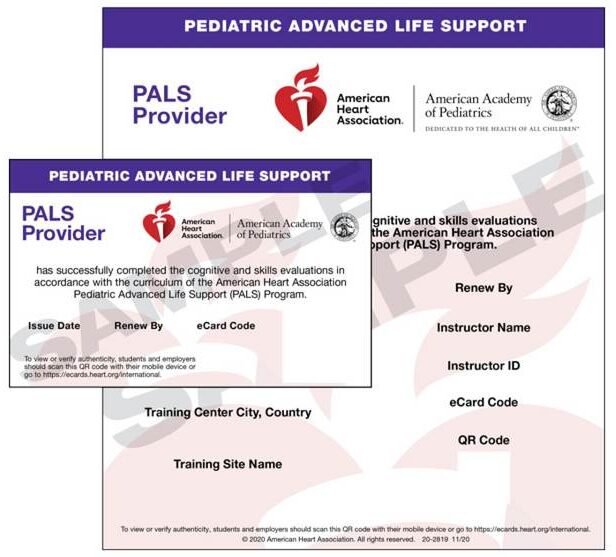
After successful completion, the provider issues a card listing your CEUs, course title, completion date, and accrediting organization.
Each of these steps confirms that your pediatric life support skills meet current standards.
CEUs vs CME Credits for PALS Renewal
PALS renewal courses may offer CEUs or CME credits, depending on the audience and accrediting organization.
1. Key Differences
- CEUs (Continuing Education Units)
Commonly issued to nurses, paramedics, respiratory therapists, EMTs, and allied health professionals.
- CMEs (Continuing Medical Education credits)
Typically issued to physicians and physician assistants.
2. How PALS Credits Are Assigned
- Most PALS renewal courses award CEUs by default
- Physician-focused courses may provide CME credits instead
- Some providers offer both, allowing learners to choose based on licensure needs
Both CEUs and CMEs verify continuing education, but you should always confirm which credit type your profession requires before enrolling.
Who Can Use PALS Renewal CEUs
PALS renewal CEUs apply to a wide range of healthcare professionals involved in pediatric emergency care.
1. Nurses (RN, LPN, APRN)
Nurses frequently serve as first responders in pediatric emergencies. PALS CEUs help them maintain advanced assessment, airway, and resuscitation skills while meeting license renewal requirements.
2. Paramedics and EMTs
Prehospital providers rely on PALS training to manage pediatric cardiac and respiratory emergencies in high-pressure environments. CEUs help them stay trained and operationally ready.
3. Physicians and PAs
Doctors and PAs lead pediatric resuscitation teams. While they may earn CMEs instead of CEUs, PALS renewal ensures guideline adherence and leadership readiness.
4. Respiratory Therapists and Other Professionals
Respiratory therapists and support staff play critical roles in airway management and ventilation. PALS CEUs keep their skills aligned with current pediatric protocols.
Are PALS CEUs Accepted by State Licensing Boards
Most state licensing boards accept PALS CEUs, provided the course comes from an accredited provider.
1. General Acceptance Guidelines
Licensing boards typically require CEUs from approved organizations, such as:
- American Heart Association (AHA)
- American Nurses Credentialing Center (ANCC)
- American Medical Association (AMA)
Courses aligned with these organizations meet national education standards and carry broad acceptance.
2. Why Accreditation Matters
Accredited providers:
- Ensure CEUs meet regulatory standards
- Provide valid documentation for audits
- Increase employer and board acceptance
3. How to Verify Acceptance
Before enrolling:
- Review your state licensing board’s CEU guidelines
- Confirm provider accreditation
- Contact your board if you have questions
Verifying acceptance ahead of time prevents wasted time and unusable credits.
How Online vs In-Person PALS Renewal Affects CEUs
The course format directly affects how many CEUs you earn and how you complete the training.
1. Online PALS Renewal
Online courses allow self-paced learning and flexible scheduling. You earn CEUs after completing all modules and passing the exam. These courses usually award 5–6 CEUs.
2. In-Person Classroom Renewal
Classroom courses provide live instruction, skills testing, and simulations. Due to increased instructional time, these courses often award 6–8 CEUs.
3. Hybrid PALS Renewal
Hybrid courses combine online coursework with in-person skills sessions. They offer flexibility while maintaining hands-on competency and typically award 5–7 CEUs.
Each format meets PALS standards, so the best option depends on your schedule, learning style, and CEU needs.
How to Claim and Document Your PALS CEUs
After completing your PALS renewal course, providers usually issue CEUs immediately or within a few business days.
1. How You Receive Your CEUs
- Download your PALS Provider card from the student portal
- Receive confirmation by email
- Access transcripts if you complete multiple courses
- Your card should list:
- Your name
- Course title
- Completion date
- Accrediting body
- Total CEUs earned
2. Best Practices for Recordkeeping
- Save digital and printed copies
- Label files clearly with the course name and date
- Back up records to secure cloud storage
- Retain CEU documentation for at least 4–6 years or as required by your state
Organized records simplify audits and renewals.
Tips for Maximizing CEUs from PALS Renewal
You can strategically earn and apply CEUs by planning.
- Choose Accredited Providers: Ensure your CEUs are recognized and accepted by licensing boards.
- Bundle Cards: Combine PALS with BLS or ACLS courses to earn more CEUs efficiently in a single training session.
- Align with License Deadlines: Schedule renewals to coincide with your license requirements, so your CEUs count exactly when needed.
- Verify CEU Totals Before Enrolling: Check how many CEUs each course offers to avoid surprises and make the most of your time.
Smart planning saves time and ensures every credit counts.
Steps To Earn CEUs For PALS Renewal
Earning CEUs through PALS renewal follows a straightforward process:
- Find an accredited provider that offers valid PALS renewal CEUs
- Enroll in a course that fits your schedule and format preference
- Complete all coursework and review pediatric life support concepts
- Pass the required exams to demonstrate competency
- Download and save your CEU card for future use
Following these steps keeps your card active and your license compliant.
CEUs Made Simple: Keep Your PALS Skills Current
In short, PALS renewal not only refreshes your pediatric life support skills but also helps you earn valuable CEUs. Most courses give between 5 and 8 CEUs, depending on whether you learn online, in person, or through a hybrid format. By completing all course requirements and keeping your PALS Provider card, you stay current, maintain your license, and show your commitment to safe, confident care for kids.
Want to stay ready for any pediatric emergency? Bayside CPR offers PALS classes with streamlined, flexible lifesaving training designed around your busy schedule. Complete a short online course followed by a 30-minute hands-on skills session at one of our 60+ locations, and leave the same day with your official AHA PALS course completion card, fully prepared and confident to act when it matters most. We also offer BLS, ACLS, CPR, and First Aid courses.