American Heart Association Training Center
Adult Foreign-Body Airway Obstruction (FBAO) refers to a life-threatening condition in which a solid object, such as food or a small item, becomes lodged in an adult’s airway, partially or completely blocking airflow to the lungs. Adult FBAO commonly occurs during eating, especially when food is not chewed properly, or in individuals with risk factors such as alcohol use, neurological disorders, or dental issues. This blockage can lead to choking, inability to speak or breathe, coughing, and, in severe cases, unconsciousness or death if the airway is not cleared promptly.
The FBAO Algorithm plays a crucial role as a standardized emergency guideline that helps responders quickly recognize and manage choking situations. It provides a step-by-step approach to assess the severity of the obstruction, encourage coughing if the airway is partially blocked, and perform interventions such as back blows and abdominal thrusts when necessary. The algorithm also guides decision-making on when to escalate care, including initiating CPR (Cardiopilmonary Resuscitation) if the person becomes unconscious and calling for emergency medical assistance. By following this structured approach, responders can act quickly and effectively, improving the chances of restoring airflow and preventing serious complications or death.
Note: This adult foreign-body airway obstruction algorithm guideline is valid for 2025–2030

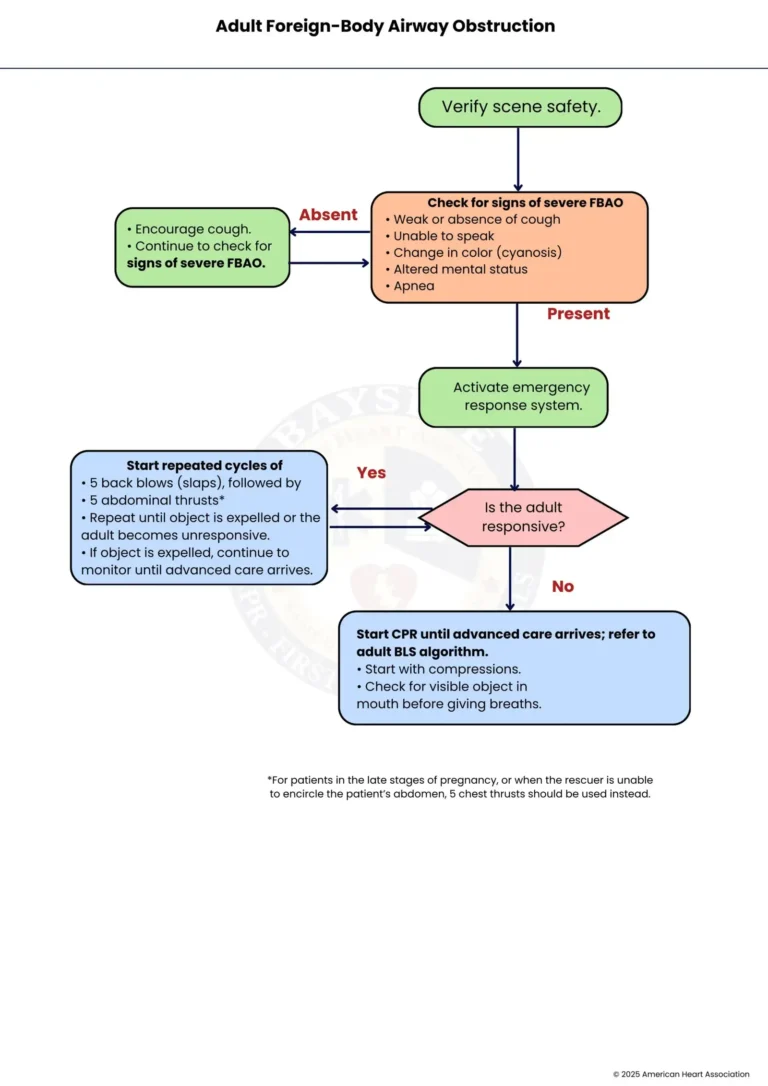
This guide explains how to respond when an adult has a foreign object blocking the airway and may be unable to breathe or speak. It helps you recognize warning signs quickly and take the right actions to support the person until emergency help arrives.
Before approaching the victim, ensure the environment is safe for both the rescuer and the patient. Check for any hazards such as traffic, fire, electricity, or other dangers that could cause harm. Do not intervene until the scene is secure, as rescuing in an unsafe environment may put both lives at risk.
Assess the person for critical indicators such as an ineffective or absent cough, inability to speak, cyanosis (bluish discoloration of lips or face), altered mental status, or apnea (not breathing). These signs suggest a severe airway blockage. If these are absent, proceed to Step 3; the obstruction may be partial, and the patient may still be able to clear it. If present, proceed to Step 4; immediate intervention is required.
If the person can still cough effectively, encourage them to continue coughing, as this is the most natural and effective way to expel the foreign object. Stay with the person, monitor their condition closely, and continuously reassess for any worsening signs of airway obstruction. If necessary, return to Step 2.
If severe airway obstruction is suspected, immediately call for emergency medical help or activate the local emergency response system. Early activation ensures advanced care support is on the way while initial life-saving measures are being performed.
Check whether the person is responsive by speaking to them or gently tapping their shoulders. If they respond, continue with Step 6 obstruction management techniques. If they do not respond, it indicates a more serious condition, and you should proceed to initiate CPR (Step 7).
For a responsive adult with severe obstruction, begin alternating between 5 back blows and 5 abdominal thrusts. For pregnant individuals or when abdominal thrusts cannot be performed, use 5 chest thrusts instead. Continue these cycles repeatedly until the object is expelled or the person becomes unresponsive. If the object is expelled, monitor the person closely until advanced medical care arrives. After each cycle, reassess and return to Step 5.
If the person becomes unresponsive, begin CPR immediately, following adult basic life support guidelines. Start with chest compressions, and before giving rescue breaths, check the mouth for any visible foreign objects and remove them if present. Continue CPR cycles without interruption until emergency responders arrive or the person recovers.
Key Note: For patients in the late stages of pregnancy, or when the rescuer is unable to encircle the patient’s abdomen, 5 chest thrusts should be used instead.
In short, the adult foreign body airway obstruction algorithm provides a clear and practical method to help someone who is choking. It guides you to stay calm, assess the situation, and take the appropriate steps at the right time. By encouraging coughing, using back blows and thrusts, and starting CPR if necessary, you can make a real difference in a critical moment. Acting quickly and confidently can help restore breathing and save a life.
Learning and remembering these steps prepares you to respond in an emergency, and it helps you protect those around you with care and confidence. Sign up for our BLS course at Bayside CPR and learn reliable life-saving skills for adult emergencies.
Adult FBAO happens when something like food or a small object blocks a person’s airway. This can make it hard or impossible to breathe, speak, or cough.
Look for signs like not being able to talk, weak or no coughing, or bluish lips or face. If you see these signs, act quickly because the person needs immediate help.
Encourage them to keep coughing because it is the best way to push the object out. Stay with them and watch closely in case their condition gets worse.
Call for emergency help right away and start giving 5 back blows followed by 5 abdominal thrusts. Keep repeating these steps until the object comes out or the person becomes unresponsive.
Start CPR immediately and check the mouth for any visible objects before giving breaths. Continue CPR until medical help arrives or the person starts breathing again.