American Heart Association Training Center
Infant Foreign-Body Airway Obstruction (FBAO) is a dangerous condition that happens when something like food, a small toy, or another object gets stuck in an infant’s airway and blocks their breathing. Because infants under one year have small and delicate airways, they are especially at risk, and even a small blockage can quickly make it hard for them to breathe or get enough oxygen.
The Infant FBAO Algorithm is a simple, step-by-step guide that helps caregivers and healthcare providers know what to do in these emergencies. It explains how to recognize choking and what actions to take, such as giving back slaps and chest thrusts, as well as when to call for emergency help. Giving clear guidance in stressful moments helps people act quickly and confidently, improving the infant’s chances of survival and recovery.
Note: This infant foreign-body airway obstruction algorithm guideline is valid for 2025–2030

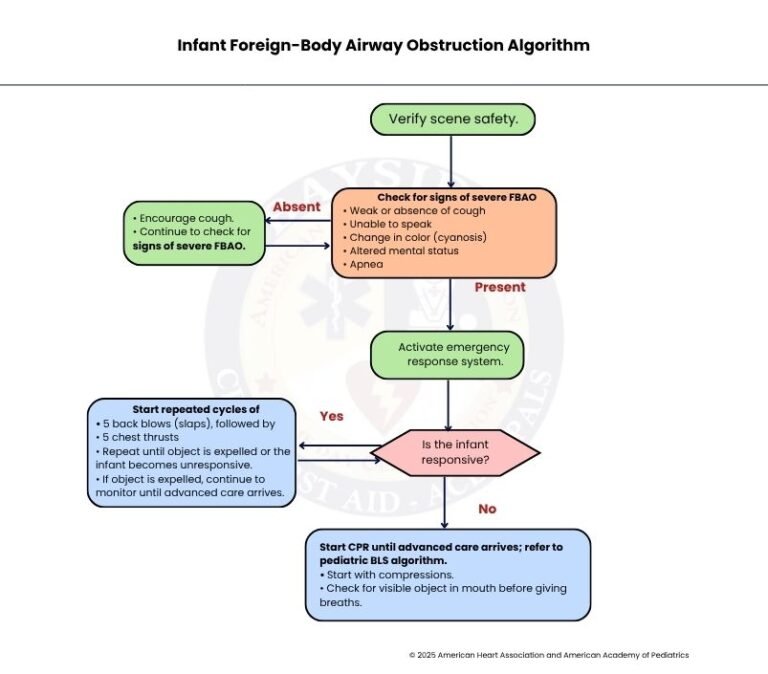
When an infant is choking, quick and calm action can save a life. This simple guide walks you through clear steps so you can help with confidence and care.
Before providing any assistance, ensure that the environment is safe for both you and the infant. This means checking for any immediate dangers such as sharp objects, traffic, fire, or other hazards. A safe scene allows you to focus fully on delivering effective care without putting yourself or the infant at further risk.
Carefully assess the infant for clear indicators of severe airway obstruction. These include a weak or absent cough, inability to cry or make sounds, bluish discoloration of the skin (cyanosis), altered level of consciousness, or apnea (no breathing). These signs suggest that the airway is critically blocked. If none of these signs are present, the obstruction may be mild, and you should proceed to Step 3. If any of these signs are observed, it indicates a severe emergency, and you should immediately move to Step 4.
If the infant is still able to cough effectively, encourage them to continue coughing, as this is the body’s natural way of clearing the airway. Do not interfere with forceful coughing, but closely monitor the infant for any worsening signs. Continuously reassess the situation, and if the condition deteriorates into severe FBAO, return to Step 2 and act accordingly.
Once severe airway obstruction is identified, call for emergency medical help immediately or instruct someone nearby to do so. Early activation ensures that advanced medical care is on the way while you begin life-saving interventions.
Quickly determine whether the infant is responsive by gently tapping the foot and observing for movement or response. If the infant is responsive, continue with active choking relief measures in Step 6. If the infant becomes unresponsive, this indicates a critical situation requiring immediate CPR, so proceed to Step 7.
For a responsive infant with severe choking, begin cycles of 5 back blows followed by 5 chest thrusts. Back blows are delivered firmly between the infant’s shoulder blades, and chest thrusts are applied to the center of the chest. Continue these cycles until the object is expelled or the infant becomes unresponsive. If the obstruction is relieved, continue to monitor the infant closely until professional help arrives. Reassess responsiveness frequently by returning to Step 5.
If the infant becomes unresponsive, begin cardiopulmonary resuscitation (CPR) immediately and continue until advanced medical care takes over. Start with chest compressions to help circulate oxygenated blood. Before giving breaths, quickly check the mouth for any visible objects and remove them only if clearly seen. Do not perform blind finger sweeps. Continue CPR following pediatric basic life support guidelines until help arrives.
In short, the Infant FBAO Algorithm gives you a clear and calm way to respond when every second is important. It helps you recognize danger signs early and take the right steps without panic. By staying alert, acting quickly, and following each step with care, you can protect an infant and give them the best chance to breathe again. This guide reminds you that even in a scary moment, simple actions can make a life-saving difference. Sign up for our BLS course at Bayside CPR and develop the skills needed to respond confidently to pediatric emergencies.
Infant FBAO happens when a small object, like food or a toy, gets stuck in a baby’s airway and blocks their breathing. Infants under one year are especially at risk because their airways are tiny and can be blocked quickly.
Look for warning signs like a weak or no cough, inability to cry, bluish skin, or the baby stops breathing. If you see any of these signs, act right away because this is a serious emergency.
First, make sure the area around you and the baby is safe, then check how serious the choking is. If the baby can still cough strongly, encourage them to keep coughing and watch them closely.
Give the baby 5 firm back blows between the shoulder blades, then 5 chest thrusts to the center of the chest. Keep repeating these cycles until the object comes out or emergency help arrives.
Start CPR right away, begin with chest compressions, and check the mouth for any visible objects before giving breaths. Never do a blind finger sweep inside the mouth, and keep going until medical professionals take over.