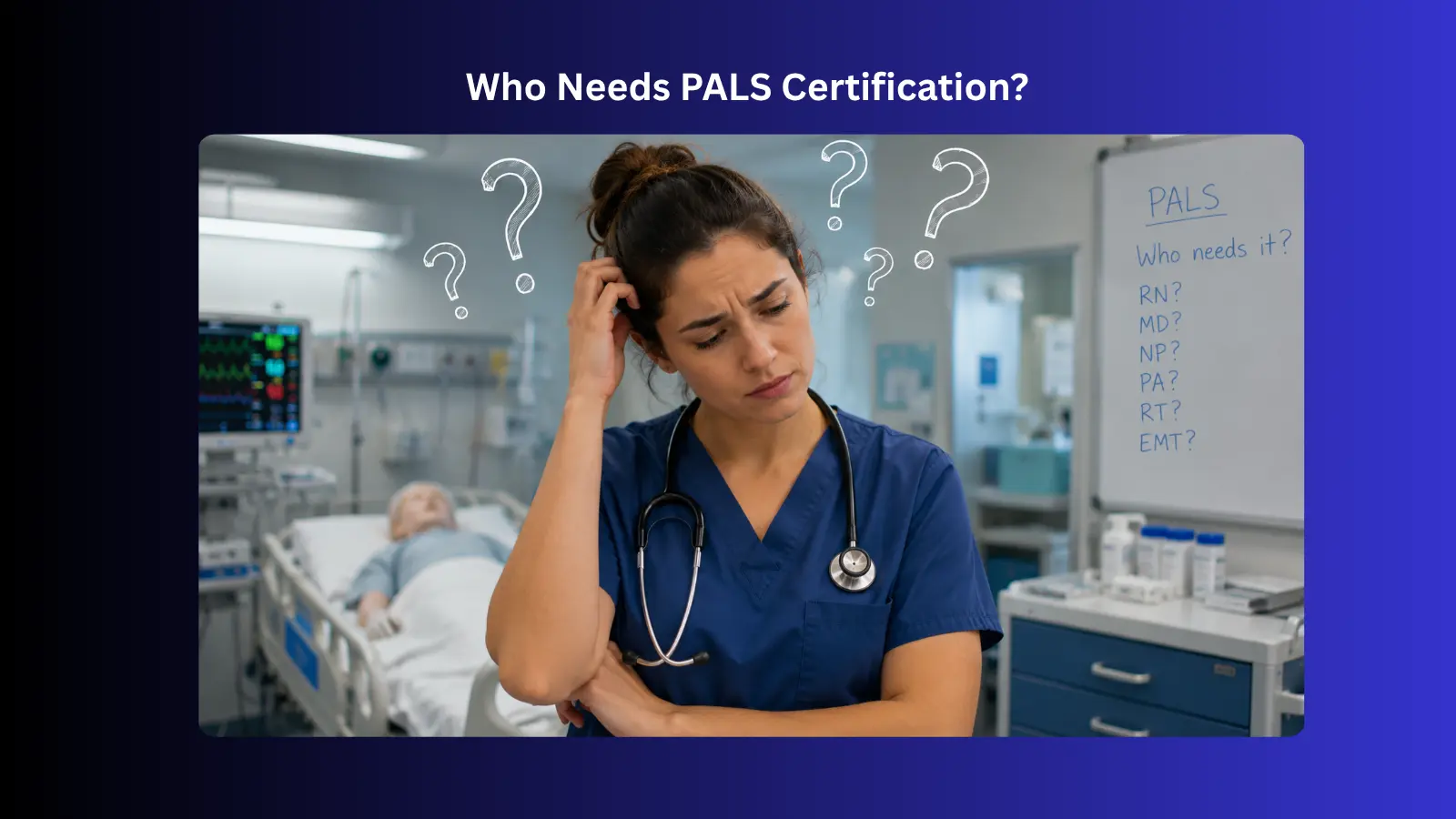

Learn who needs PALS certification, the healthcare roles that commonly require it, and the skills covered during training. Explore available course formats, renewal information, and tips for choosing the right training provider....
Read More ›When a patient goes into cardiac arrest or stops breathing, the certification in your pocket determines how confidently you respond. Two certifications define emergency care training: ACLS (Advanced Cardiovascular Life Support) and PALS (Pediatric Ad...
Read More ›Pediatric Advanced Life Support (PALS) certification is one of the most valuable certifications a healthcare professional can have. Whether you’re a nurse, emergency medical technician, physician, or respiratory therapist, being PALS certified mean...
Read More ›Pediatric Advanced Life Support (PALS) equips healthcare professionals with the skills to respond to life-threatening emergencies in infants and children. Following American Heart Association (AHA) guidelines, PALS emphasizes early recognition, resus...
Read More ›Healthcare professionals renewing their Pediatric Advanced Life Support (PALS) course completion card often ask one important question first: How many CEUs do they get with PALS renewal? The answer depends on the course format, accrediting organizati...
Read More ›Choking is a serious and potentially life-threatening emergency in infants, who are particularly vulnerable because their small airways can be easily blocked, and they often put objects in their mouths. Even a tiny obstruction can completely cut off ...
Read More ›