
Getting ready for the ACLS (Advanced Cardiovascular Life Support) exam feels a lot easier when you know what to expect and how to study with purpose. This test isn’t just about memorizing steps; it’s about understanding how to respond with confidence during real emergencies. With the right approach, you can build strong skills, stay calm under pressure, and walk into the exam feeling prepared. In this guide, we’ll talk through practical tips, helpful study habits, and simple ways to boost your comfort with the material so you can succeed on exam day.
Who Needs ACLS Class?
The ACLS class is typically required for healthcare professionals who care for critically ill adults. This includes registered nurses, physicians, paramedics, respiratory therapists, nurse practitioners, physician assistants, and many hospital-based clinicians working in emergency departments, intensive care units, telemetry floors, anesthesia, and code response teams. Some facilities also require ACLS for staff who may respond to in-hospital emergencies, even if it is not part of their daily role.
Understand the ACLS Exam Structure
The ACLS exam checks both your knowledge and hands-on skills in emergencies. Knowing its structure helps you prepare smarter and feel more confident on test day.
1. Online Session
- Format: The exam consists of 50 multiple-choice questions.
- Content: Questions focus on recognizing and managing cardiac and respiratory arrest, airway management, pharmacology, and ACLS algorithms.
- Passing Score: A minimum of 84% is needed to pass.
- Resources: Reference materials such as the ACLS manual, study aids, and notes are typically permitted during the exam.
2. Practical Skill Assessment
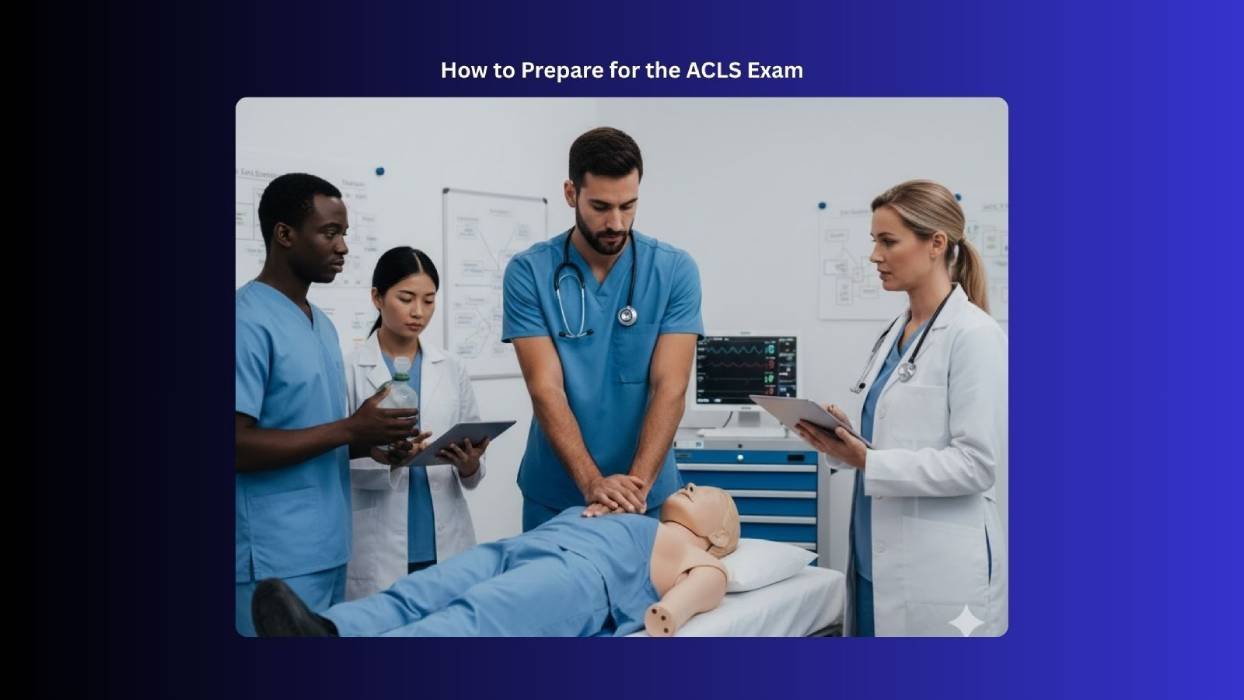
- Format: A hands-on simulation of a real-life emergency scenario, referred to as an ACLS megacode.
- Skills Assessed:
- Performing high-quality CPR.
- Managing the airway, including intubation and bag-mask ventilation.
- Operating a defibrillator.
- Demonstrating team leadership and effective communication during cardiac arrest
- Implementing treatment algorithms according to the patient’s condition.
How the Algorithms Are Applied in Real-Time Scenarios
ACLS algorithms aren’t just memorized; they’re used dynamically during the megacode. Here’s how they come to life in a real scenario.
- You quickly assess the patient and identify whether it’s a shockable or non-shockable rhythm.
- The algorithm guides your next immediate actions: CPR, defibrillation, or medication administration.
- You follow the algorithm step-by-step, adjusting based on the rhythm and patient response.
- Team members are assigned roles (compressor, airway, recorder, medication nurse).
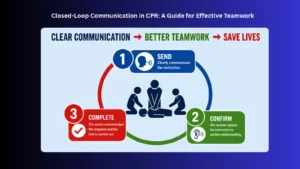
- You communicate clearly, anticipate the next step, and ensure the team stays coordinated.
Being comfortable with how algorithms flow helps you stay calm and in control during the exam and in actual emergencies.
Review the Latest AHA ACLS Guidelines
Using the latest AHA (American Heart Association) guidelines keeps your knowledge up to date with evidence-based practices. Following current materials ensures you provide the safest, most effective care during emergencies. Guidelines evolve as research uncovers better ways to save lives. Knowing the updates helps you avoid outdated steps and improves your confidence in applying algorithms. The AHA website is the best place to get official manuals, updates, and practice tools. Other trusted sources include your training center, approved apps, and reputable online courses. The importance of AHA guideline updates matters in everyday CPR: the 2025 edition highlights how these changes can impact real-life situations.
Understand Core ACLS Algorithms
Learning the core ACLS algorithms helps you respond quickly and confidently during emergencies. These step-by-step guides cover common heart and stroke situations so you know exactly what to do.
1. Adult Cardiac Arrest Algorithm
The adult cardiac arrest algorithm teaches you how to respond when a patient’s heart stops. It walks you through performing high-quality CPR, delivering shocks for shockable rhythms, and giving the right medications at the correct times. Practicing this algorithm helps you act quickly and confidently, ensuring that every step supports patient survival and recovery.
2. Bradycardia with a Pulse
The bradycardia with a pulse focuses on treating slow heart rhythms that still allow some blood flow. The algorithm guides you on monitoring vital signs, giving medications like atropine, and preparing for pacing if the patient does not respond. Knowing these steps helps you keep the patient stable while making timely interventions.
3. Tachycardia with a Pulse
The tachycardia with a pulse involves identifying and managing fast heart rhythms safely. The algorithm helps you determine whether the rhythm is stable or unstable, choose the correct medications, and perform synchronized cardioversion when needed. Mastering these steps ensures you can prevent complications and protect vital organs.
4. Post–Cardiac Arrest Care
Once a patient regains a heartbeat, post–cardiac arrest care focuses on stabilizing them and preventing further problems. You monitor vital signs closely, support airway and breathing, and manage circulation while keeping an eye on potential complications. Following these guidelines improves the patient’s chance of full recovery.
5. Acute Coronary Syndromes (ACS)
The acute coronary syndromes cover heart attacks and unstable chest pain scenarios. This algorithm helps you quickly recognize symptoms, provide appropriate medications like aspirin or nitroglycerin, and decide when urgent interventions are required. Being comfortable with these steps ensures timely treatment and reduces heart damage.
6. Stroke Algorithm Basics (As Needed for Exam)
The stroke algorithm helps you identify and respond to a patient showing signs of a stroke. You learn to assess neurological deficits, stabilize the patient, and get them to specialized care as quickly as possible. Early recognition and rapid action are critical for preserving brain function and improving outcomes.
Learn and Memorize ACLS Drug Doses
Knowing the common ACLS drug doses helps you act quickly and safely during emergencies. Learning when and how to give each medication builds your confidence and improves patient care.
1. Epinephrine
It is a key medication in cardiac arrest and severe bradycardia. You give it at the right time to help the heart pump more effectively and improve circulation, which can make a big difference in patient survival.
2. Amiodarone
This medicine is used to treat dangerous heart rhythms, such as ventricular fibrillation or tachycardia. Knowing when and how to administer it helps stabilize the heart and prevent the rhythm from worsening.
3. Atropine
It treats slow heart rates that may cause symptoms or instability. Understanding the correct dose and timing ensures the patient’s heart rate improves safely without causing side effects.
4. Adenosine
This medication is used to stop certain fast heart rhythms and reset the heart’s electrical system. Learning the proper dose and administration method helps you act quickly during a tachycardia emergency.
5. Magnesium Sulfate
Magnesium sulfate is used for specific arrhythmias, such as torsades de pointes. Knowing the right dose and when to use it helps protect the heart and prevent dangerous complications.
6. Vasopressin (if applicable)
Vasopressin may be used in some cardiac arrest scenarios as an alternative to epinephrine. Learning its timing and dosage helps you provide effective support when needed.
Tips for Remembering Drug Indications and Dosing
Using flashcards, repetition, and rhythm mnemonics makes memorizing drug doses easier. Practicing with real scenarios helps you recall medications quickly during the exam and in real emergencies.
Strengthen Your Rhythm Interpretation Skills
Being able to read ECG heart rhythms quickly is essential in ACLS. Practicing rhythm interpretation helps you make fast, accurate decisions during emergencies.
1. Recognizing Shockable Vs. Non-Shockable Rhythms
Learning to tell the difference between shockable and non-shockable rhythms is key in ACLS. Knowing which rhythms need defibrillation helps you act fast and follow the correct algorithm.
2. Identifying Tachyarrhythmias and Bradyarrhythmias
You practice spotting fast or slow heart rhythms that may be dangerous. Being able to identify these rhythms quickly ensures you choose the right treatment and keep the patient stable.
3. Practice Strips and Free Online Tools
Using practice ECG (Electrocardiogram) strips and online simulators helps you improve rhythm recognition. Repetition with these tools builds speed and confidence for both the exam and real-life situations.
4. Common Pitfalls to Avoid
Mistakes like misreading a rhythm or delaying action can affect patient outcomes. Knowing common pitfalls helps you stay alert, make accurate decisions, and perform confidently under pressure.
Use High-Quality Study Resources
Using the right study resources makes ACLS preparation easier and more effective. Trusted manuals, practice tests, and visual tools help you learn faster and feel confident.
1. AHA ACLS Provider Manual: It is the most trusted guide for learning algorithms, medications, and rhythms. Studying it carefully gives you a strong foundation and ensures you follow the latest guidelines.
2. Online ACLS Practice Tests: The ACLS practice tests help you see what types of questions to expect in the hands-on skill session. Repeated testing builds confidence and highlights areas where you need more review.
3. Flashcards and Quick Guides: Using flashcards and quick reference sheets makes memorizing drugs, rhythms, and steps easier. These tools are handy for last-minute review and reinforcing key concepts.
4. Simulation Videos for Megacode Practice: Watching simulation videos shows how real-life scenarios play out and how algorithms are applied. This visual practice helps you feel more confident leading or participating in a megacode.
Practice Megacode Scenarios
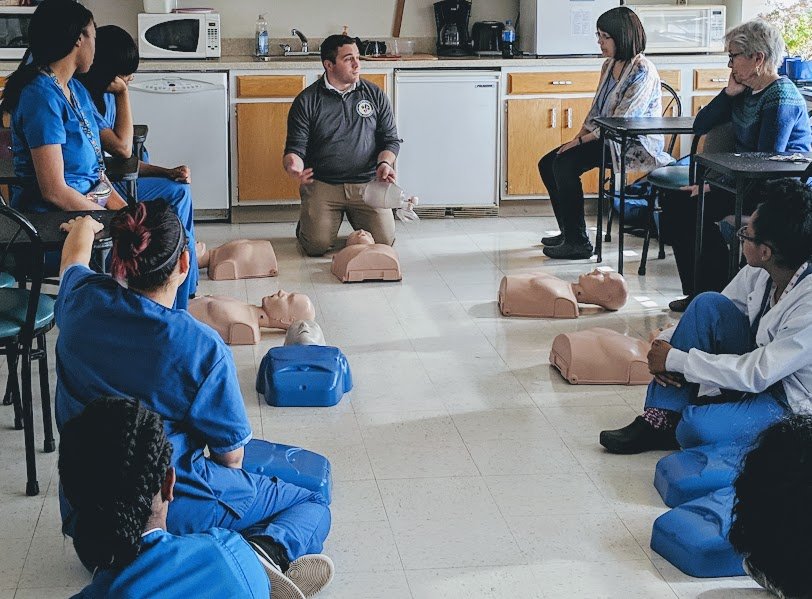
Practicing megacode scenarios is one of the best ways to apply ACLS skills in real-time situations. Running through these exercises helps you become confident in performing CPR, interpreting rhythms, giving medications, and following algorithms quickly. Practicing roles and clear communication not only ensures the group works smoothly during high-pressure moments but also demonstrates the main advantage of effective teamwork in ACLS. Familiarity with common cases allows you to anticipate challenges and act without hesitation. Rehearsing structured scenarios step by step, assessing the patient, performing interventions, and guiding the team, builds the skills and confidence you need for both the exam and real emergencies.
Review Your Basic Life Support Skills
Reviewing your basic life support skills makes advanced care much easier. Practicing CPR, AED use, and ventilation helps you act confidently during emergencies.
1. Emphasis on High-Quality CPR
High-quality CPR is the foundation of all advanced life support. Practicing steady, deep compressions and maintaining a proper rhythm ensures that blood keeps flowing and the patient has the best chance of survival, while also understanding when you can generally pause compressions during high-quality CPR helps minimize interruptions and maintain effectiveness.
2. AED use
Knowing how to use an AED (Automated External Defibrillator) correctly is critical during sudden cardiac arrest. Practicing pad placement, following prompts, and delivering shocks safely helps you respond quickly and confidently.
3. Ventilation Basics
Effective ventilation keeps oxygen flowing to the patient’s lungs and vital organs. Learning the proper bag mask breath delivery technique and using other airway tools correctly makes your care more effective and efficient.
4. How strong BLS makes ACLS easier
Understanding the (BLS) basic life support algorithm or skills makes ACLS less stressful because the fundamentals are already second nature. When compressions, ventilation, and defibrillation are automatic, you can focus on advanced algorithms and medications.
Create a Study Schedule
Creating a study schedule helps you stay organized and cover everything before the exam. Breaking your preparation into daily steps makes learning easier and less stressful.
- Study Timeline: Planning a 1 to 2 week study schedule gives you enough time to cover all ACLS content without feeling rushed. Spreading your preparation over several days helps you retain information better and build confidence before the exam.
- Breaking the Content: Dividing topics into smaller sections makes studying less overwhelming. You can focus on one algorithm, rhythm type, or drug each session, which helps improve understanding and memory.
- Daily Review Strategies: Setting aside time each day to review key concepts strengthens retention. Quick daily reviews of rhythms, algorithms, and drug doses keep knowledge fresh and ready for the exam.
- Practice Exam Intervals: Taking practice exams periodically shows you which areas need more attention. Simulating test conditions also helps reduce anxiety and improve timing on the real exam.
Test-Day Tips
Knowing what to expect on test day helps you stay confident and focused. Simple preparation and calm thinking make it easier to perform well during both the online and skills test.
- What to Bring: Bring your current ACLS provider card, photo ID, and any materials allowed by your training center. Being prepared with the right items helps reduce stress and ensures you can focus on the exam.
- How to Stay Calm During Megacode Testing: Take slow, deep breaths and focus on each step of the scenario. Staying calm helps you think clearly, follow the algorithms, and lead your team effectively.
- Last-Minute Algorithm Review: Quickly reviewing key algorithms before the test keeps them fresh in your mind. Focus on rhythm recognition, drug timing, and the order of interventions to boost confidence.
- Common Mistakes and How to Avoid Them: Avoid rushing, skipping steps, or misreading rhythms during the exam. Being mindful, practicing ahead of time, and following algorithms carefully helps prevent errors and improve your performance.
Feel Ready and Confident for ACLS Exam
In summary, preparing for the ACLS exam can feel challenging, but with the right approach, it becomes manageable and even rewarding. Focusing on understanding the algorithms, practicing megacodes, and reviewing core skills gives you the confidence to act quickly and correctly. Using trusted resources, keeping up with the latest guidelines, and rehearsing real-life scenarios helps you feel ready for both the online session and practical parts of the test. By studying consistently and practicing smartly, you can walk into the exam calm, confident, and prepared to succeed.
Stay prepared with Bayside CPR. Our simple, flexible training lets you complete the American Heart Association (AHA) CPR course without the hassle. Complete a short online course followed by a 30-minute hands-on skills session at one of 60+ convenient locations to earn your AHA course completion card the same day. We also offer other CPR classes, including BLS, ACLS, and PALS.