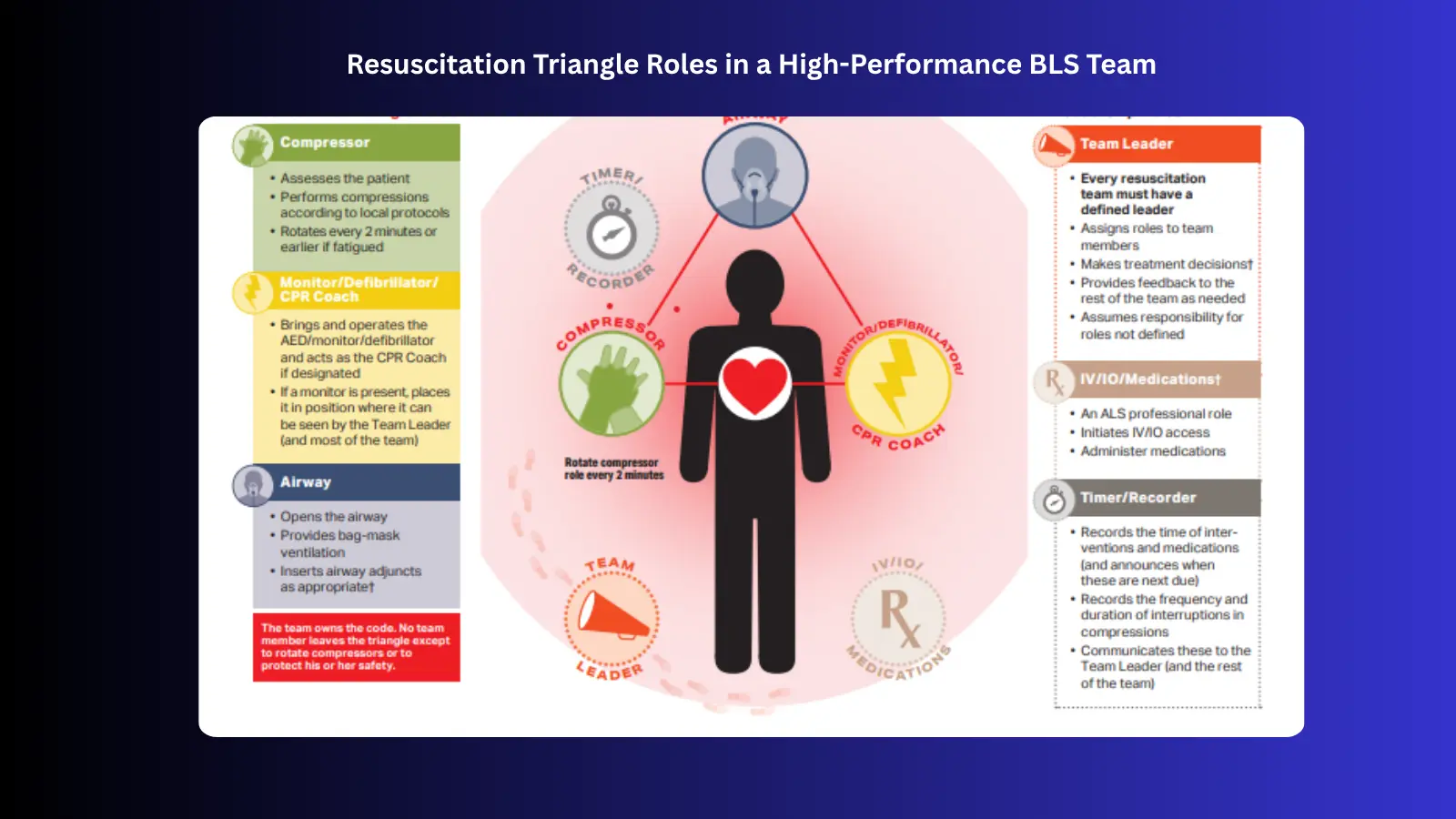

A high-performance BLS team divides CPR responsibilities among providers so that chest compressions, ventilation, and cardiac monitoring are performed together in a coordinated response. The resuscitation triangle represents the three core positions ...
Read More ›The Pediatric Chain of Survival for BLS is a straightforward, step-by-step approach, often referred to as the pediatric cardiac arrest algorithm, to help children in emergencies, especially during cardiopulmonary arrest or breathing problems. It star...
Read More ›Cardiac arrest occurs when the heart suddenly stops pumping blood effectively, and quick action is crucial to saving lives. The reversible causes of cardiopulmonary arrest include hypoxia and hypovolemia. Traditionally, CPR is used to manually pump b...
Read More ›High-quality chest compressions are a critical component of CPR, ensuring that oxygen continues to flow to vital organs. To aid rescuers in delivering optimal compressions, chest compression feedback devices have been developed. These valuable tools ...
Read More ›CPR, or cardiopulmonary resuscitation, is a life-saving technique that helps keep blood and oxygen flowing through the body when someone’s heart stops beating. It incorporates chest compressions with rescue breaths to support circulation and oxygen...
Read More ›When you’re responding to an emergency like cardiac arrest, myocardial infarction, someone collapsing, or a person in shock and decide to help them with CPR & first aid, there’s an important step you need to take before you touch them...
Read More ›