
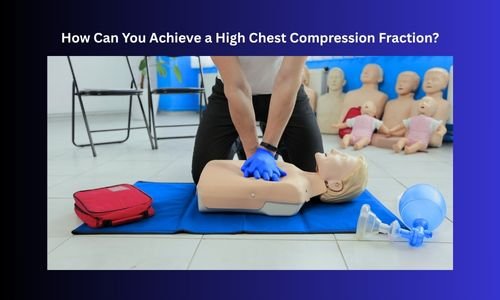
Delivering effective cardiopulmonary resuscitation (CPR) requires more than just following the basic steps. One important factor that can make a significant impact is the Chest Compression Fraction (CCF). This often-overlooked metric measures the percentage of time chest compressions are performed during a cardiac arrest response. If you’re looking to improve your CPR skills or train others to be more effective, understanding and increasing your CCF is essential.
This guide will walk you through exactly what chest compression fraction is, why it matters, and most importantly, how to increase chest compression fraction during a code.
What Is Chest Compression Fraction (CCF)?
Chest Compression Fraction is the percentage of time that chest compressions are actively being performed during a cardiac arrest. It’s calculated during the period of CPR, from the moment the patient loses a pulse to the time they regain one or resuscitation efforts are stopped.
For example:
If you perform chest compressions for 6 minutes during an 8-minute resuscitation effort, your CCF is 75%.
The American Heart Association recommends a CCF of at least 60%, with a target of 80% or higher as a cornerstone of high quality CPR and optimal outcomes.
Why Is High Chest Compression Fraction Important?
A higher CCF means less interruption during CPR. That’s critical because:
- Blood flow to the heart and brain depends on continuous compressions
- Stopping compressions drops coronary perfusion pressure
- Restarting compressions takes a few seconds to build that pressure back up
In short, whether during CPR, Emergency Medical Services (EMS) response, or a hospital cardiac arrest, the more time spent on compressions, the better the chance of survival.
Common Barriers to Achieving High CCF
Before jumping into how to improve your CCF, let’s look at what typically reduces it:
- Pausing too long for ventilations
- Frequent rhythm analysis or pulse checks
- Poor coordination among responders
- Delays in switching compressors
- Unnecessary interruptions for equipment adjustments
Knowing these barriers helps you recognize and correct them during practice and real scenarios.
10 Practical Steps to Improve Chest Compression Fraction
To increase your CCF, focus on minimizing unnecessary interruptions and maximizing hands-on time. Here are 10 key strategies to help you do just that:
1. Start Compressions Immediately
Don’t wait for everything to be perfect. As soon as cardiac arrest is recognized, begin compressions. Every second of delay drops survival chances.
Tip: Even while someone prepares the Automated External Defibrillator (AED) or calls for help, compressions should already be in progress.
2. Limit Pulse Checks to 10 Seconds or Less
During resuscitation, every pause matters. It’s easy to get caught up in pulse checks, but time yourself and don’t exceed 10 seconds.
If you’re unsure whether a pulse is present, resume compressions, it’s safer to make the mistake of acting than of doing nothing.
3. Pre-Charge the Defibrillator
If you’re part of a team using a manual defibrillator, pre-charge the defibrillator during ongoing compressions. This limits the pause before the shock.
How it helps: Instead of pausing to charge after rhythm analysis, you deliver the shock almost immediately and resume compressions faster.
4 . Resume Compressions Immediately After a Shock
One of the most common mistakes is waiting to see a rhythm change after shocking the patient. Instead, resume compressions right after delivering the shock, unless there’s a clear sign of ROSC (Return of Spontaneous Circulation).
5. Minimize Pauses for Airway Management
If you’re providing ventilations, be mindful not to over-ventilate or pause compressions too long.
Best Practice:
Use two-rescuer CPR where one does compressions and the other gives breaths without interrupting.
Consider using a bag-valve mask with an airway adjunct to streamline breathing support.
6. Switch Compressors Quickly and Efficiently
Fatigue sets in quickly, even for trained rescuers. To maintain compression quality and minimize pauses, switch compressors every 2 minutes and do it fast.
Tip:
Have the next rescuer ready to go before the switch.
Announce the switch out loud: “Prepare to switch on next cycle.
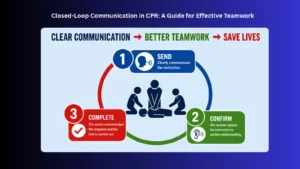
7. Assign Clear Roles in Team-Based CPR
When multiple responders are involved, chaos can cause delays. Assign clear roles:
- Compressor
- Airway manager
- AED or monitor operator
- Team leader
Having defined roles cuts down confusion and improves coordination, resulting in a higher CCF.
8. Use a Metronome or CPR Feedback Device
Many CPR devices now include feedback tools to help rescuers maintain proper rate and depth.
Metronomes help keep compressions at the recommended 100–120 per minute. Some AEDs or monitors offer real-time feedback on cardiopulmonary resuscitation quality and pause time, helping you improve CCF.
You Might Be Interested In: What Does a Chest Compression Feedback Device Monitor During CPR?
9. Avoid Overthinking the Monitor
When using an AED or manual defibrillator, it’s tempting to focus on the screen. But remember: your hands save lives, not the cardiac monitor.
Quickly analyze, shock if needed, and get back to compressions. Don’t waste valuable seconds staring at rhythms.
10. Practice, Practice, Practice
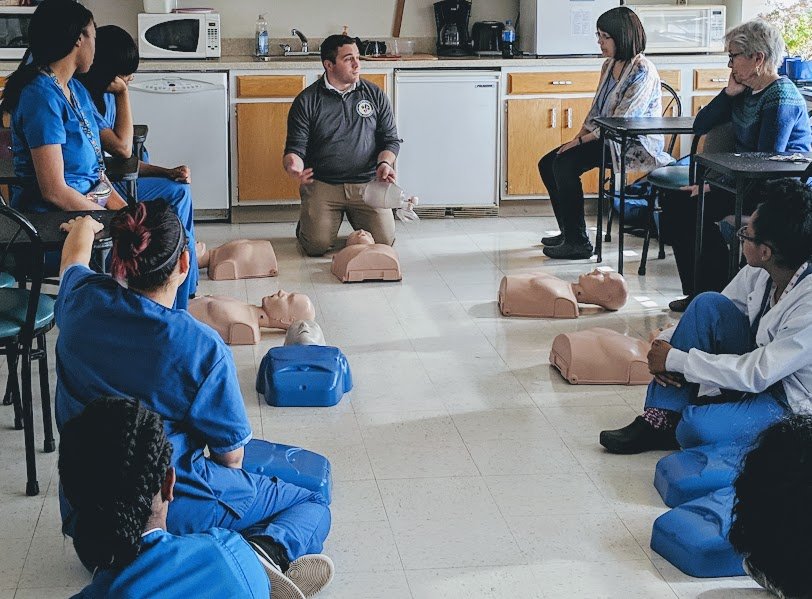
The best way to improve your compression fraction is to practice high-performance CPR in simulations.
Include drills that focus on:
- Minimizing interruptions
- Switching compressors efficiently
- Coordinating team roles
- Pre-charging defibrillators
- Realistic time pressure
Measuring CCF: How Can You Know Your Score?
If you’re working in a clinical or training setting, defibrillators and manikins with data recording features can help you track CCF.
For lay rescuers, focus on the principles:
- Minimize pauses
- Start fast
- Keep going
Many training centers now include CCF training as part of BLS and ACLS certifications, and you can always ask for feedback during recertification.
Final Thoughts
High chest compression fraction is one of the simplest, yet most powerful ways to improve CPR outcomes. Whether you’re a healthcare professional, first responder, or concerned citizen, increasing your CCF can save more lives. Getting CPR certified doesn’t have to be difficult. Bayside CPR makes it easy with a quick online course paired with a 30-minute hands-on session at over 60 locations. Complete your AHA Standard certification in ACLS, BLS, PALS, CPR, or First Aid, and leave with your certification card in hand the same day.