
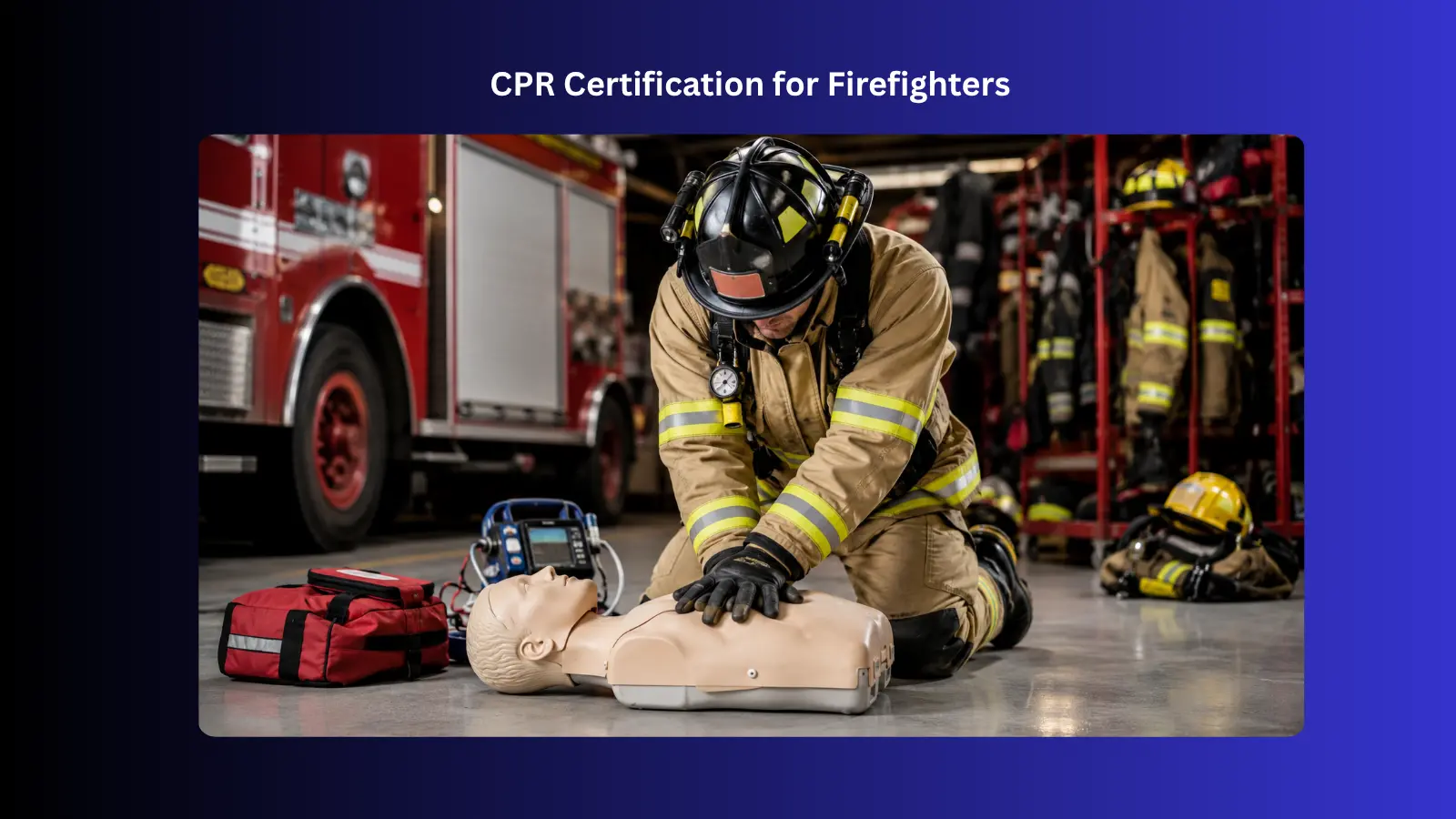
Every emergency call can take firefighters into a completely different situation. A routine response can quickly turn into a life-threatening medical emergency where someone needs CPR without warning. CPR training equips fire and rescue personnel with the skills to identify emergencies, begin appropriate care, and support better outcomes at the scene.
Cardiac arrest can happen during a house fire, after a vehicle collision, at a workplace incident, or while responding to a community event. Fire service personnel trained in CPR know how to recognise the warning signs, begin high-quality chest compressions, and use an automated external defibrillator. Prompt action during these first moments can greatly improve a person’s chances of survival.
This guide explains the importance of CPR certification for firefighters, the skills covered in training, certification requirements, career roles that benefit from CPR knowledge, and how to earn an AHA BLS credential for emergency response.
Why CPR Certification Matters for Firefighters
Firefighters frequently become the first trained professionals to reach people experiencing life-threatening medical emergencies. Their responsibilities extend beyond fire suppression and rescue operations to include providing immediate medical assistance. CPR training prepares firefighters to recognise cardiac arrest, begin high-quality CPR, provide rescue breaths when appropriate, and use an AED correctly during a cardiac emergency.
Communities depend on fire service personnel to respond at any hour and in every type of environment. A strong understanding of CPR allows fire and rescue personnel to deliver effective care during residential emergencies, commercial incidents, traffic collisions, and public events. These lifesaving skills remain valuable throughout their careers and contribute to better patient outcomes.
Is CPR Certification Mandatory for Fire Service Professionals?
CPR certification is not required under a single nationwide law for all fire service professionals in the United States. Requirements vary by state, fire academy, and individual fire department. Many departments require firefighters to maintain a current CPR certification as part of their employment or training standards, particularly when responding to medical emergencies.
Common situations where CPR certification may be required include:
- Fire academy graduation or department onboarding.
- Employment with career or volunteer fire departments.
- Emergency Medical Responder, Emergency Medical Technician, or Paramedic roles.
- Department policies requiring periodic CPR certification renewal.
Checking the requirements of the hiring department or state certification authority is the best way to determine which CPR credential is needed.
What Skills Are Taught in CPR Certification for Firefighters?
Firefighters who complete CPR certification generally take a Basic Life Support (BLS) course. The course focuses on the practical skills needed during medical emergencies. Each part of the training prepares fire service personnel to respond effectively in different emergencies.
High-Quality CPR
Early, high-quality CPR plays a vital role in improving survival during cardiac emergencies. Fire service professionals learn the differences between adult, child, and infant CPR techniques, practise effective chest compressions, and develop the skills needed to respond confidently in real emergencies.
Automated External Defibrillator Use
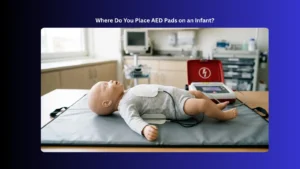
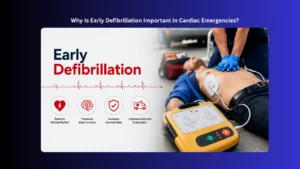
An automated external defibrillator can restore a normal heart rhythm in certain cardiac emergencies. Training prepares emergency responders to recognise when an AED is needed, apply the pads correctly, and operate the device safely.
Rescue Breathing
Some emergencies require rescue breaths when a person is not breathing normally and needs breathing support. BLS training teaches fire service professionals the indications for mouth-to-mouth rescue breaths, how to provide effective ventilations, and how to combine rescue breathing with CPR during respiratory and cardiac emergencies. These skills help responders provide appropriate care when needed.
Choking Emergencies
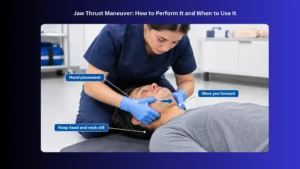
Airway obstructions can occur in homes, workplaces, schools, or public spaces. Training prepares fire service professionals to recognise choking quickly and respond with the appropriate techniques for adults, children, and infants.
Team-Based CPR
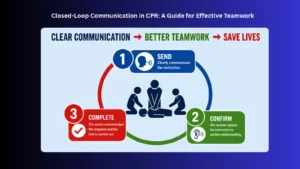
Emergency response relies on effective teamwork, particularly during cardiac emergencies. BLS training emphasises effective team dynamics, including clear communication, role coordination, and rotating responsibilities while maintaining continuous CPR during resuscitation efforts. Crew members practise working together to provide organised and efficient patient care.
Hands-On Skills Assessment
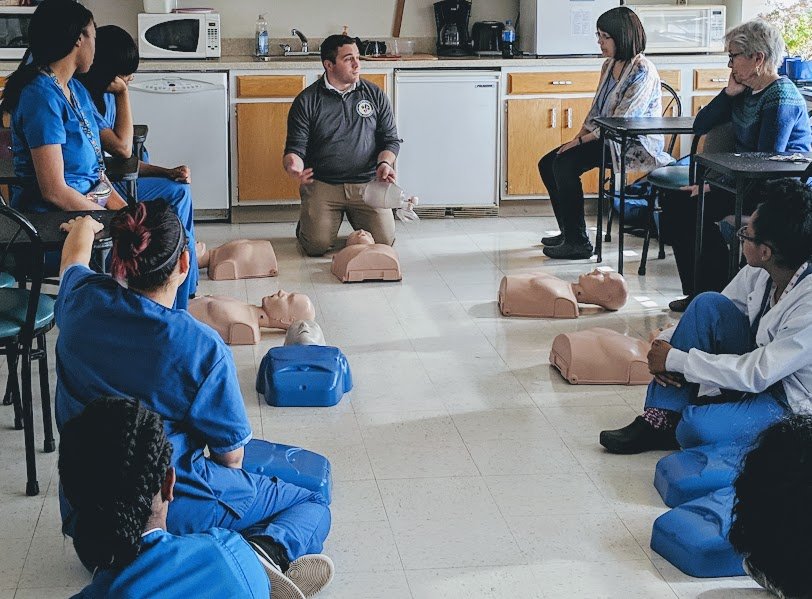
Practical scenarios allow participants to apply their CPR and AED skills in realistic emergencies. This hands-on experience helps build confidence and confirms they can perform each technique correctly under pressure.
Fire Service Careers That Benefit From CPR Certification
Many professionals within the fire and rescue service rely on CPR skills as part of their daily responsibilities. While job duties vary, each role may require responding to medical emergencies and providing immediate care before patients reach a healthcare facility.
Fire Suppression and Emergency Response
Professionals in these roles provide immediate emergency assistance while protecting lives and property.
- Firefighter
- Fire Engineer
- Driver Operator
- Company Officer
- Fire Captain
- Battalion Chief
Rescue and Technical Operations
These specialists respond to complex rescue incidents where injured patients often require immediate medical care.
- Technical Rescue Technician
- Rope Rescue Technician
- Confined Space Rescue Technician
- Trench Rescue Technician
- Urban Search and Rescue Team Member
- Swift Water Rescue Technician
Wildland and Forestry Fire Services
Wildland firefighters often work in remote locations where immediate medical assistance may be limited.
- Wildland Firefighter
- Forestry Fire Technician
- Hotshot Crew Member
- Smokejumper
- Helitack Crew Member
Airport and Industrial Emergency Services
Emergency response in specialised facilities often includes medical incidents involving employees, travellers, or hazardous environments.
- Airport Rescue and Firefighting (ARFF) Personnel
- Industrial Emergency Response Technician
- Marine Rescue Personnel
- Refinery Emergency Response Technician
- Chemical Plant Emergency Response Specialist
Fire Investigation and Community Safety
Although these roles may respond to fewer emergencies, CPR training remains valuable during inspections, investigations, training activities, and public education events.
- Inspection Officer
- Investigation Specialist
- Fire Marshal
- Fire Prevention Specialist
- Community Fire Safety Educator
How to Get CPR Certified as a Fire Service Professional
Earning an American Heart Association BLS certification involves completing a series of required steps. Fire and rescue personnel can complete the process through a recognised training provider such as Bayside CPR.
The certification process includes:
- Register for your preferred BLS course and gain access to the required training materials.
- Complete the HeartCode BLS online coursework at your own pace.
- Schedule and attend your hands-on BLS skills session.
- Demonstrate CPR, AED use, and other required skills during the practical assessment.
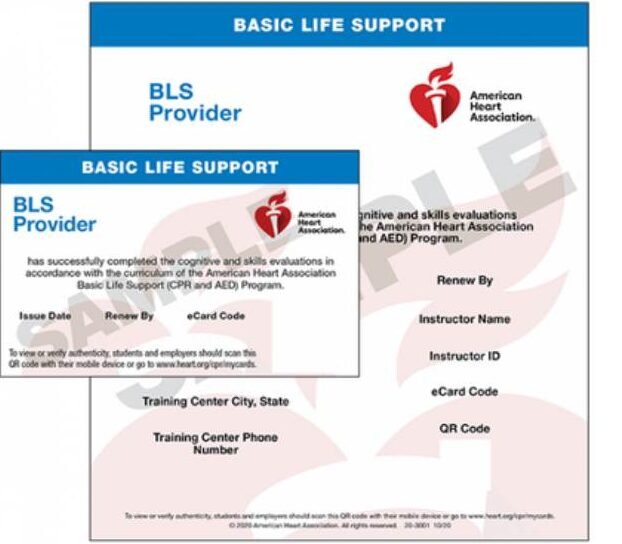
- Receive your official American Heart Association BLS Provider eCard after completing all course requirements.
Your official AHA BLS certification remains valid for two years. Before it expires, complete a renewal course to maintain active credentials and meet employer and department standards.
How Much Does CPR Certification Cost for Fire Service Professionals?
The cost of CPR certification for fire and rescue personnel depends on the course format you choose. Bayside CPR offers several American Heart Association BLS training options to accommodate different schedules and learning preferences.
| Course | Price |
| AHA BLS Online and Skills | $120 |
| AHA BLS Skills Session Only | $90 |
| AHA Instructor-Led BLS Class | $90 |
All training options lead to the same official AHA BLS certification after completion of the required course components. Furthermore, if you need additional AHA certifications such as ACLS, PALS, or Heartsaver, you can check our course prices before registering.
Stay Ready for Every Emergency
Emergency calls can arise without warning, requiring fire service professionals to act quickly and confidently in critical situations. Maintaining current CPR certification ensures responders have the essential knowledge and skills needed to provide effective care when lives are at risk.
At Bayside CPR, our AHA BLS training strengthens real-world competency through practical scenarios, hands-on skill evaluation, and evidence-based techniques. Register today to earn your official AHA certification the same day and strengthen your ability to respond, support, and protect the communities you serve.