
Choking can happen during an ordinary meal, at home, at work, or in a public place. A person may suddenly be unable to speak, cough effectively, or breathe, turning a routine situation into a serious emergency. Knowing how to recognize severe choking and respond correctly can help you provide immediate assistance.
The Heimlich maneuver is one part of the recommended response for severe choking in adults and children. Current American Heart Association guidance recommends starting with five back blows, followed by five abdominal thrusts, then repeating the cycle until the object is expelled or the person becomes unresponsive.
This guide explains how to recognize severe choking, the step-by-step procedure for performing the Heimlich maneuver, how to respond to different choking situations, and common mistakes to avoid.
What Is the Heimlich Maneuver?
The Heimlich maneuver, also known as abdominal thrusts, is an emergency first aid procedure used when a foreign object blocks a person’s airway. The technique involves applying pressure to the abdomen to help dislodge the object and clear the airway.
The maneuver is intended for situations where a person cannot breathe, speak, or cough effectively due to a blocked airway. The steps used to help someone who is choking can differ based on their age and condition, so it is important to understand when abdominal thrusts are appropriate.
How to Recognize Severe Choking
Severe choking can develop quickly, so paying attention to the person’s behavior and breathing can help you identify the situation. A person may suddenly become distressed and show clear signs of difficulty breathing, so recognizing these changes can help you respond appropriately.
Common signs of severe choking include:
- Clutching the throat: The person may place one or both hands around their throat, a common sign of choking.
- Inability to speak: The person may be unable to answer you, speak, cry, or make normal sounds.
- Weak or silent cough: The person may be unable to produce a strong, effective cough.
- Difficulty breathing: Breathing may become strained, noisy, or absent.
- Change in skin color: The lips, face, or fingernails may become blue, gray, or pale.
- Signs of distress: The person may appear frightened, confused, or panicked.
- Loss of consciousness: If the airway remains blocked, the person may eventually become unresponsive.
A strong, effective cough generally indicates that some airflow is still passing through the airway. Encourage the person to continue coughing while watching them closely. If the person can no longer cough forcefully, speak, or breathe, they may have a severe airway blockage and need immediate help.
When to Use Abdominal Thrusts
Abdominal thrusts are appropriate when a conscious person has severe choking and cannot breathe, speak, or cough effectively. The technique applies to adults and children older than 1 year who have a serious airway obstruction.
- Conscious and older than 1 year
- Food, a toy, or another small object lodged in the airway
- Unable to speak, breathe normally, or produce an effective cough
- Severe airway obstruction that prevents normal airflow
Step-by-Step Instructions for Performing the Heimlich Maneuver
For a conscious adult or child experiencing severe choking, staying calm and following the correct procedure can help provide effective assistance. Before starting, make sure emergency medical help has been activated and assess the person’s condition as you continue.
Step 1: Call for Emergency Help
Once severe choking has been identified, ask someone nearby to call emergency services while you begin providing first aid. If another person is not available, activate emergency medical services yourself before starting the choking response.
Stay with the person and begin the recommended choking response without unnecessary delay. Continue monitoring their condition throughout the process, particularly for any change in responsiveness.
Step 2: Give Five Back Blows
Stand slightly to the side and behind the person so you can support them safely. Place one arm across their chest and lean their upper body forward. This position helps keep the airway angled downward and allows the object to move out of the mouth.
Using the heel of your other hand, deliver five firm back blows between the person’s shoulder blades. Give each blow separately and check whether the obstruction has cleared. If the object comes out and the person can breathe normally, stop the procedure and continue monitoring them.
Step 3: Give Five Abdominal Thrusts
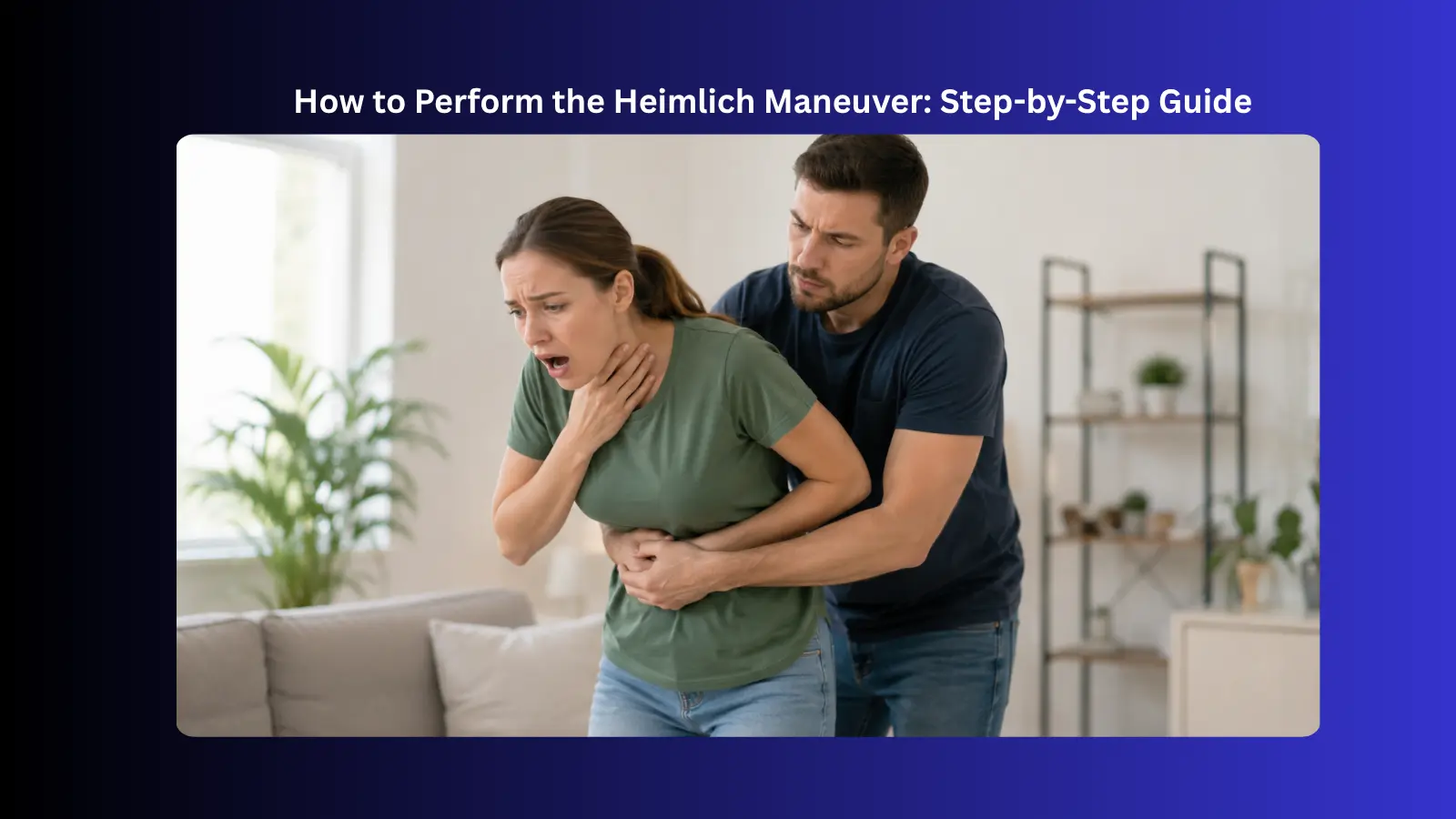
If the back blows do not clear the obstruction, move behind the person and wrap your arms around their waist. Make a fist with one hand and position it against the abdomen with the thumb side facing inward. Place your fist above the navel and below the breastbone.
Place your other hand over your fist and give five quick abdominal thrusts, pulling inward and upward each time. Each thrust should be separate and firm enough to help dislodge the object. Check the person’s condition after the thrusts and continue the response if the airway remains blocked.
Step 4: Alternate Back Blows and Abdominal Thrusts
If the person is still choking, continue alternating five back blows with five abdominal thrusts. Keep checking for signs that the obstruction has been cleared after each set.
Continue the sequence until the object is expelled and the person can breathe normally, or until the person becomes unresponsive. Make sure emergency medical services have been contacted, even if another person is already assisting.
Step 5: Begin CPR if the Person Becomes Unresponsive
If the person becomes unresponsive, carefully lower them to the floor and begin CPR. If someone has not already contacted emergency services, have them call immediately while you begin resuscitation.
Before giving rescue breaths, open the person’s mouth and look for a visible object. Remove an object only if you can clearly see it. Do not perform a blind finger sweep, as this can push the obstruction farther into the airway. Continue CPR until the person shows signs of recovery or trained medical help takes over.
Benefits of Learning the Heimlich Maneuver
Having the knowledge to respond to severe choking emergencies can help you provide appropriate assistance with greater confidence while emergency medical help is on the way. Key benefits of learning the Heimlich maneuver include:
- Learning how to clear an obstructed airway can help you respond quickly during a choking emergency.
- Knowing the appropriate response can help reduce panic and improve confidence during an emergency.
- The skill can help you assist adults and children over 1 year old experiencing severe choking.
- This technique provides a practical first-aid skill for helping a conscious person who cannot breathe, speak, or cough effectively after food or another object becomes lodged in the airway.
- Reviewing the technique regularly can help you remember the correct steps and perform the maneuver properly when someone is severely choking.
Heimlich Maneuver Techniques for Different Situations
The appropriate response to severe choking depends on the person’s age, physical condition, and whether they are conscious. The following techniques explain how to respond appropriately in different choking situations.
Conscious Adults and Children Over 1 Year Old
For a conscious adult or child older than 1 year who cannot breathe, speak, or cough effectively, begin with five back blows. If the obstruction remains, perform five abdominal thrusts, then continue alternating between five back blows and five thrusts until the object is expelled or the person becomes unresponsive.
For a child, kneel behind them to position yourself at their height and deliver back blows and abdominal thrusts safely and effectively.
Pregnant Individuals or People With Larger Bodies
A pregnant choking victim should be treated differently. Abdominal thrusts may not be appropriate during pregnancy or for someone with a larger abdomen. Instead, provide chest thrusts by placing your hands on the center of the chest and applying firm, quick inward pressure.
Continue alternating five back blows with five chest thrusts while monitoring the person’s condition and seeking emergency medical assistance.
When a Choking Person Becomes Unresponsive
If the choking person becomes unresponsive, do not continue standing abdominal thrusts. Carefully lower the person to the floor, activate emergency medical services, and begin CPR.
Before giving rescue breaths, check the mouth for a visible object and remove it only if you can easily reach it. Avoid placing your fingers in your mouth when you cannot see the object.
Infants Under 1 Year Old
Abdominal thrusts should not be performed on infants under 1 year old. For a responsive choking infant, provide five back blows while supporting the infant securely with the head positioned lower than the body.
If the obstruction remains, turn the infant face up and provide five chest thrusts using two fingers in the center of the chest. Continue alternating five back blows and five chest thrusts until the object is expelled or the infant becomes unresponsive.
When You Are Choking and Alone
If you are alone and experiencing severe choking, call emergency services as soon as possible. You can attempt abdominal thrusts on yourself by placing a fist above your navel and applying quick inward and upward pressure with your other hand.
If you cannot generate enough force with your hands, use a firm surface such as the edge of a countertop or the back of a sturdy chair. Position the upper abdomen against the edge and apply firm pressure to help dislodge the object.
What Should You Do After the Object Is Removed?
Removing the object does not necessarily mean the emergency has ended. The person should continue to be monitored, and medical evaluation may be appropriate, particularly after severe choking or if symptoms remain.
Watch for continued difficulty breathing, persistent coughing, chest or abdominal discomfort, changes in consciousness, or other concerning symptoms. Anyone who remains unwell after a choking episode should receive appropriate medical attention.
Common Mistakes to Avoid During a Choking Emergency
Certain actions can delay effective care or worsen a choking emergency, so knowing what to avoid is important.
Avoid these common mistakes:
- Abdominal thrusts should not be used on infants. Use back blows and chest thrusts instead.
- Blind finger sweeps should be avoided. Remove an object only when you can clearly see and easily reach it.
- A person who can cough forcefully should generally be allowed to continue coughing unless their condition changes.
- A child should never be held or suspended upside down by the feet.
- The response should continue if the obstruction remains rather than stopping after a single back blow or thrust.
- Emergency medical services should be activated promptly when severe choking is present.
What Injuries Can Occur After the Heimlich Maneuver?
The Heimlich maneuver can be highly effective for severe choking, but the force required to clear an airway obstruction can sometimes cause injury. Most effects are minor, while more serious complications are uncommon.
Minor Injuries
- Bruising or tenderness around the abdomen or chest
- Muscle soreness or strain from the force of the thrusts
- Minor skin irritation or abrasions from contact with clothing or surrounding surfaces
More Serious Injuries
- Rib fractures, particularly in older adults or people with fragile bones
- Injury to abdominal organs, including the liver, spleen, or pancreas
- Damage to the stomach, esophagus, or intestines
- Injuries involving the lungs or tissues within the chest, such as a pneumothorax or pneumomediastinum
Medical evaluation may be appropriate after the maneuver if the person develops persistent pain, difficulty breathing, abdominal tenderness, vomiting, or other concerning symptoms.
How to Perform the Abdominal Thrusts Safely
Proper technique and hand placement can help reduce the risk of injury during a choking emergency. The Heartsaver First Aid CPR AED course can help you respond to choking emergencies and adjust your response based on the person’s age and physical condition.
- Position your hands correctly above the belly button and below the rib cage when performing abdominal thrusts on an appropriate adult or child.
- Infants under 1 year old should receive back blows and chest thrusts rather than abdominal thrusts.
- Pregnant individuals or people with larger bodies should receive chest thrusts when abdominal thrusts are not appropriate.
- Use controlled thrusts appropriate for the person’s size and situation rather than applying unnecessary force.
- Consider medical evaluation after a severe choking episode, particularly if the person experiences persistent pain, difficulty breathing, or other concerning symptoms.
Be Prepared to Respond to a Choking Emergency
A choking emergency can require immediate action when a person cannot breathe, speak, or cough effectively. Learning the appropriate response for adults, children, infants, pregnant individuals, and people with larger bodies can help you choose the correct technique and avoid actions that could cause additional harm. Proper training can also help you understand when to provide back blows, abdominal thrusts, chest thrusts, or CPR while waiting for emergency medical assistance.
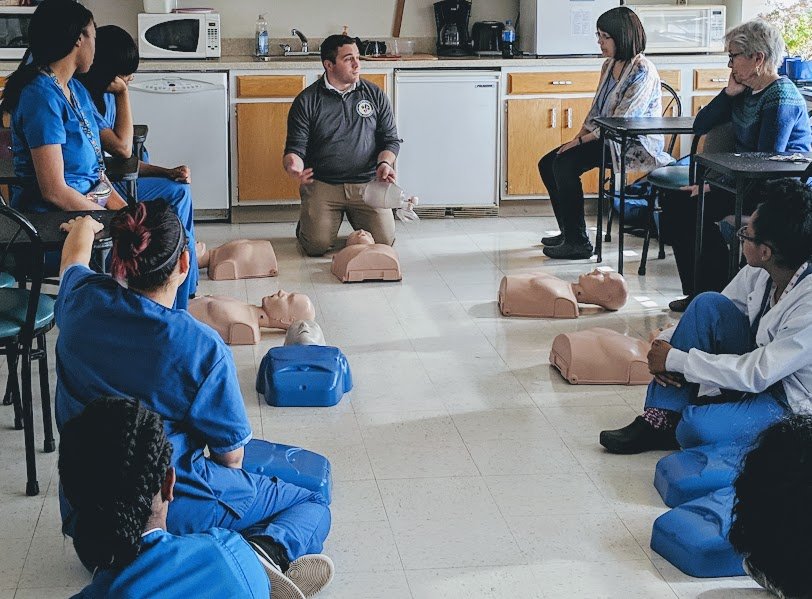
Bayside CPR offers CPR and first aid training for medical providers, non-healthcare professionals, workplaces, and individuals. Complete the online portion of your course first, then attend your hands-on skills session at one of our skills verification stations. After completing all required course components, you can receive your American Heart Association eCard the same day. Our training helps you develop the skills needed to respond appropriately to choking emergencies, cardiac emergencies, and other life-threatening situations.