
Traditional classroom schedules do not work for everyone. Long shifts, family responsibilities, changing work hours, and busy calendars can make it difficult to attend a fixed class. Self-guided CPR learning gives you more control over when and where you complete the learning portion while still meeting certification training requirements.
American Heart Association (AHA) online learning lets you learn at a pace that feels comfortable rather than trying to keep up with a classroom. You can spend extra time on topics that need more attention, review lessons before moving forward, and pause whenever life interrupts. The flexible format allows learning to fit into your routine instead of requiring you to rearrange your schedule around a class.
Healthcare professionals, teachers, childcare providers, fitness instructors, workplace safety teams, and first-time students all benefit from this flexible approach. Certification stays just as valuable when the required online learning and hands-on skills evaluation are completed successfully. The difference comes from the convenience, not the quality of the training.
What Is Self-Directed CPR Learning?
American Heart Association (AHA) self-directed CPR learning combines online coursework with an independent hands-on skills session. The online portion teaches CPR techniques, emergency response, and course-specific knowledge through interactive lessons that you complete on your own schedule. No classroom attendance or live lectures are required during this portion of the training.
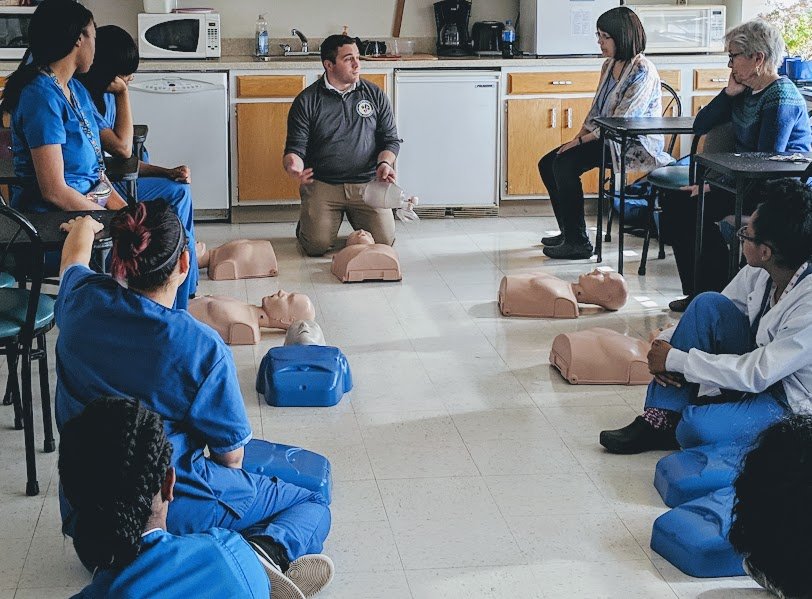
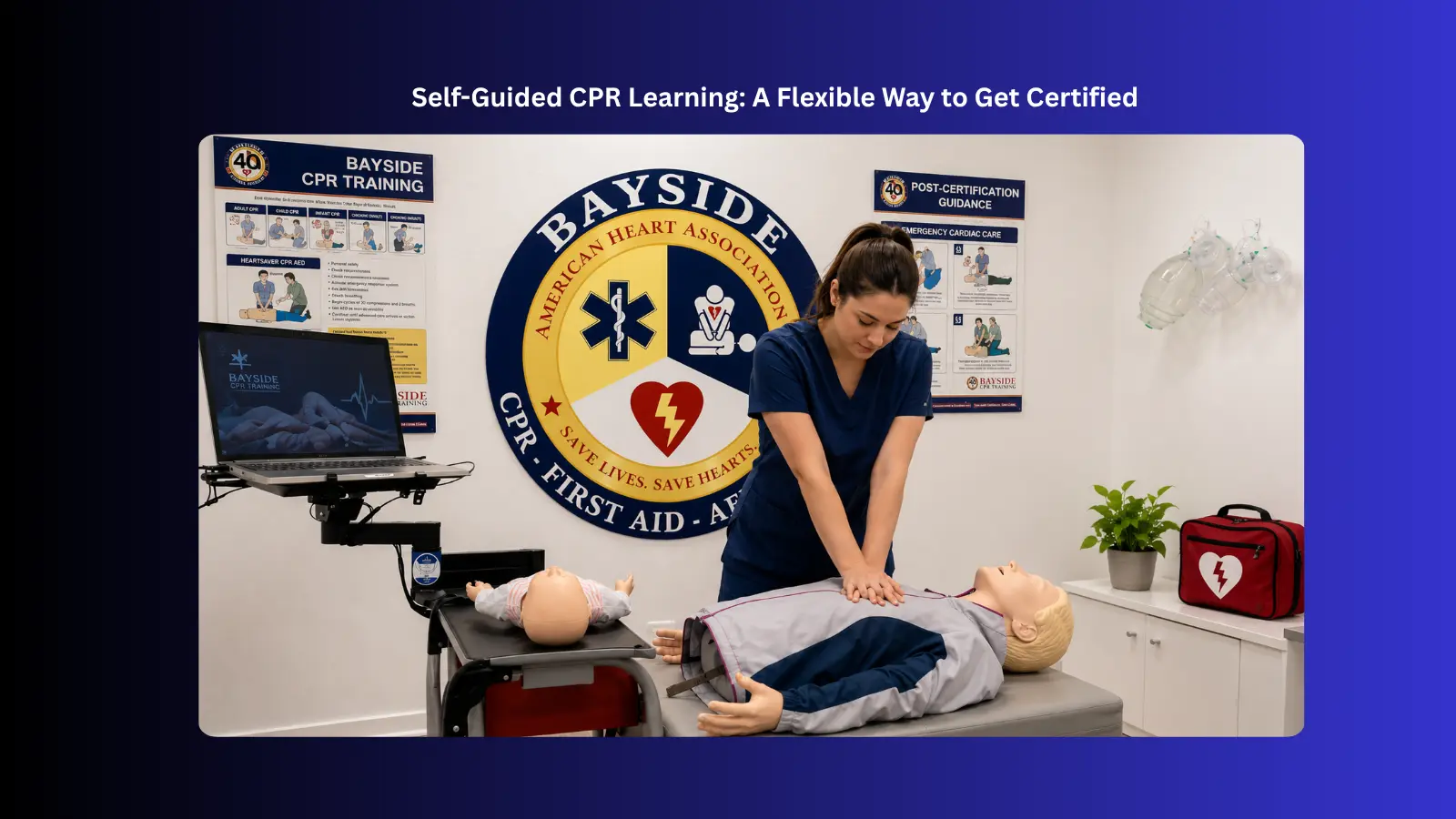
After finishing the online course, you complete an in-person skills evaluation using a voice-assisted feedback mannequin. The system measures compression depth, compression rate, recoil, ventilation quality, and other required skills while guiding you through each step. Successful completion earns the same certification as any other approved training pathway.
How Self-Paced CPR Learning Works
Online learning provides you more flexibility, while all established training requirements remain the same. From enrolling in the appropriate course to completing the final skills assessment, each stage contributes to earning a recognized CPR credential. The sections below explain how the process works from start to finish.
Step 1: Register for the Right Course
Begin by registering for the AHA course that matches your certification requirements. Medical providers often need BLS, ACLS, or PALS, while non-healthcare professionals typically choose Heartsaver CPR AED or Heartsaver First Aid CPR AED for workplace or personal preparedness. Selecting the correct course from the beginning helps ensure you receive the training required for your role.
After registration, you receive access to the required online coursework. Since the course is available online, you can begin learning when it fits your schedule rather than waiting for a scheduled classroom session.
Step 2: Complete the Online Coursework
Access your AHA online lessons from your phone, tablet, or computer. Interactive videos, demonstrations, and learning activities help you build the knowledge needed for CPR techniques, emergency response procedures, and course-specific topics. Complete the coursework over multiple sessions. Your progress is saved after each lesson, allowing you to continue the course whenever your schedule allows.
Hybrid learning gives you the flexibility to review lessons before moving forward. Spending extra time on unfamiliar topics often improves confidence before the final assessment and skills session.
Step 3: Pass the Online Assessment
After completing every learning module, you must finish the final online knowledge assessment. This graded assessment measures your understanding of the concepts covered throughout the course and must be passed before you can continue to the hands-on skills session.
Taking time to understand the material rather than rushing through the lessons helps prepare you for both the assessment and the practical evaluation. Once you successfully pass, your results are recorded within the HeartCode platform, confirming that the online learning requirement has been completed.
Step 4: Schedule Your Hands-On Skills Session
After passing the online assessment, schedule your hands-on skills session for a date and time that works best for you. Flexible appointment availability allows you to complete the practical portion of your training without attending a traditional classroom. Selecting a convenient appointment helps you fit the final requirement into your existing schedule.
Once your session is scheduled, you will receive an email with directions to your selected training location and instructions to help you prepare for your visit. Reviewing this information before you arrive helps you locate the training site, understand what to expect during the skills evaluation, and begin the process without unnecessary delays.
Step 5: Attend the Hands-On Skills Assessment
Bring proof of your online course completion, usually a certificate or digital record from the AHA training portal. During the skills assessment, you will perform the required CPR skills using a voice-assisted feedback mannequin. The system measures key performance elements such as compression depth, compression rate, chest recoil, and ventilation technique while providing immediate feedback on your performance.
The required skills vary depending on the course you selected, whether BLS, ACLS, PALS, Heartsaver CPR AED, or Heartsaver First Aid CPR AED. Once you successfully demonstrate competency in the required skills, you can complete the practical portion of the course and proceed with certification.
Step 6: Receive Your AHA Certification
After completing both the online coursework and the required hands-on skills assessment, you become eligible to receive your certification. Once all requirements have been met, your certification can be used to satisfy employer, licensing, or professional requirements where the credential is accepted.
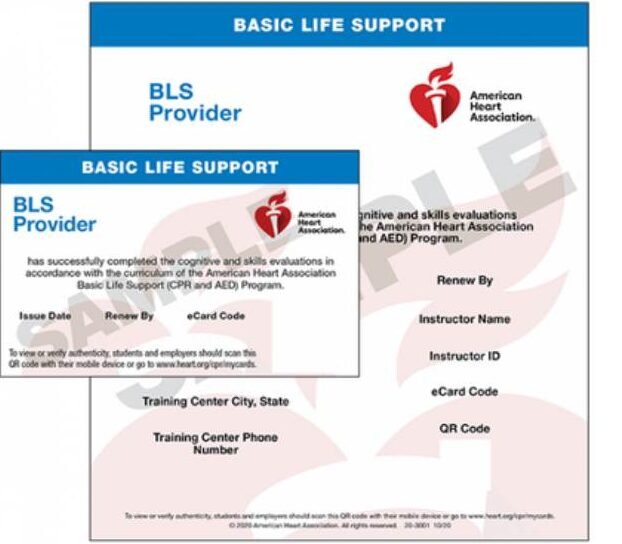
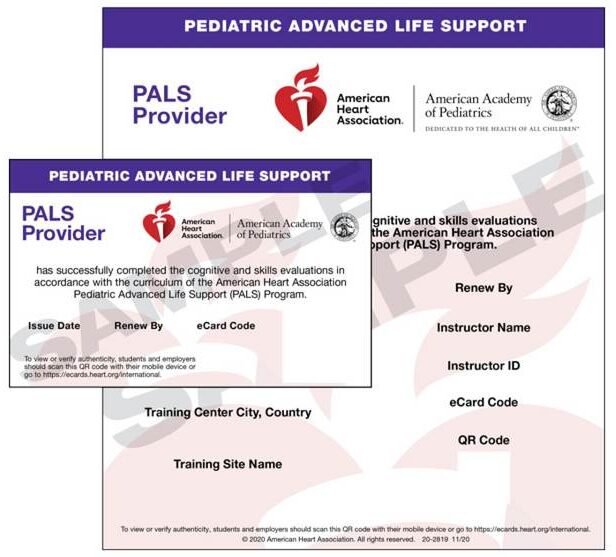
Your certification is issued on the same day after successful completion of all required course components. The credential remains valid for two years and is recognized the same way as a card earned through a traditional classroom-based training pathway. The digital eCard provides proof of your completed training and can be stored with your professional records for verification until renewal is required.
Comparing Self-Guided CPR Training and Traditional Classroom Courses
Self-guided CPR training and traditional classroom courses both provide a pathway to complete CPR certification. However, each format offers a different learning experience based on the way training is delivered and completed.
| Training Element | Self-Guided CPR Training | Traditional Classroom CPR Training |
| Course Format | Complete the AHA online coursework independently before attending the required hands-on skills session. | Attend a scheduled class where online learning, instruction, and practice are completed together. |
| Schedule Flexibility | Allows learners to complete coursework when their schedule allows and arrange the skills session separately. | Requires attendance at a specific class date and time selected by the training provider. |
| Learning Experience | Provides an independent learning approach where learners can review course material and progress through lessons at their own pace. | Provides a structured environment where an instructor guides learners through each part of the course. |
| Hands-On Skills | Complete the practical skills evaluation using a voice-assisted feedback mannequin during the scheduled skills session. | Practice CPR skills with a manikin during the classroom session under instructor supervision. |
| Feedback During Training | Receive performance feedback from the voice-assisted feedback system during skills practice. | Receive direct feedback and guidance from the instructor during practice. |
| Cost | May have lower overall costs compared with traditional classes. | May cost more due to instructor time, classroom space, and in-person training. |
| Best Fit For | Learners who prefer flexibility, independent study, and a separate skills evaluation experience. | Learners who prefer face-to-face instruction, group learning, and a fixed classroom schedule. |
Who Can Benefit From Self-Learning CPR Training?
Self-guided AHA CPR training can benefit individuals who need a flexible approach to complete their certification while balancing professional, academic, or personal responsibilities. The format allows learners to complete training without following a fixed classroom schedule.
Healthcare Providers and Students
Healthcare professionals, clinical students, and individuals preparing for healthcare careers may choose self-guided AHA training for certifications such as BLS, ACLS, or PALS. Nurses, physicians, and other healthcare learners with demanding schedules can complete the online coursework at a time that fits their schedule, then attend the hands-on evaluation to demonstrate the required skills.
Busy Working Professionals
Teachers, childcare providers, coaches, corporate employees, and other workplace professionals may benefit from self-guided training when CPR or first aid certification is part of their role requirements. Courses such as Heartsaver CPR AED and Heartsaver First Aid CPR AED allow learners to complete training while managing work responsibilities and personal commitments.
Professionals With Limited Access to Training Locations
Individuals who live far from regular classroom training options or have limited access to scheduled courses may find self-paced learning more convenient. Completing the online portion remotely can help reduce the time and travel expenses associated with attending a full classroom course. The hands-on skills session is completed separately at a convenient training location after the online coursework is finished. This allows learners to complete the practical skills portion required for certification.
Learners Renewing Existing Certifications
Professionals renewing their CPR credentials may prefer blended AHA training as it allows them to review required material independently before completing the skills assessment. This format can help experienced learners complete their renewal requirements without attending a full classroom-based course.
Individuals Who Prefer Independent Learning
Some learners prefer studying at their own pace rather than following a group classroom schedule. Self-paced CPR training allows learners to review lessons, spend more time on difficult topics, and complete the online coursework according to their schedule before attending the hands-on skills evaluation.
Is Self-Guided CPR Learning Right for Everyone?
Self-guided CPR learning works well for many individuals who prefer flexibility and independent study, but it may not match every learner’s preferred training style. Some people benefit more from a traditional classroom environment with direct instructor guidance, scheduled sessions, and real-time support throughout the course.
- Learners who prefer instructor-led training and want direct guidance, explanations, and support throughout the course.
- Individuals who learn better with a planned schedule and prefer attending a course on a specific date and time rather than completing training independently.
- People who find independent learning challenging and may need additional motivation or reminders to complete online coursework.
- Learners who are not comfortable using online technology and prefer face-to-face instruction instead of completing coursework online.
- First-time CPR learners who want more guided practice with an instructor available throughout the learning process.
- Individuals who learn best through group interaction and prefer practicing skills alongside other participants.
Flexible Learning That Fits Your Schedule
Finding time for CPR training can be challenging when balancing work, education, and personal responsibilities. Self-directed CPR learning allows you to complete the online coursework at your own pace while still completing the required hands-on skills session to develop the practical abilities needed during an emergency.
Bayside CPR provides flexible AHA blended learning courses that combine self-paced online education with convenient skills sessions at multiple training locations. After completing all course requirements, you receive your official AHA eCard the same day, helping you meet employer, licensing, or professional requirements without unnecessary delays. With flexible scheduling options and accessible training locations, completing your CPR certification can fit more easily into your routine.