
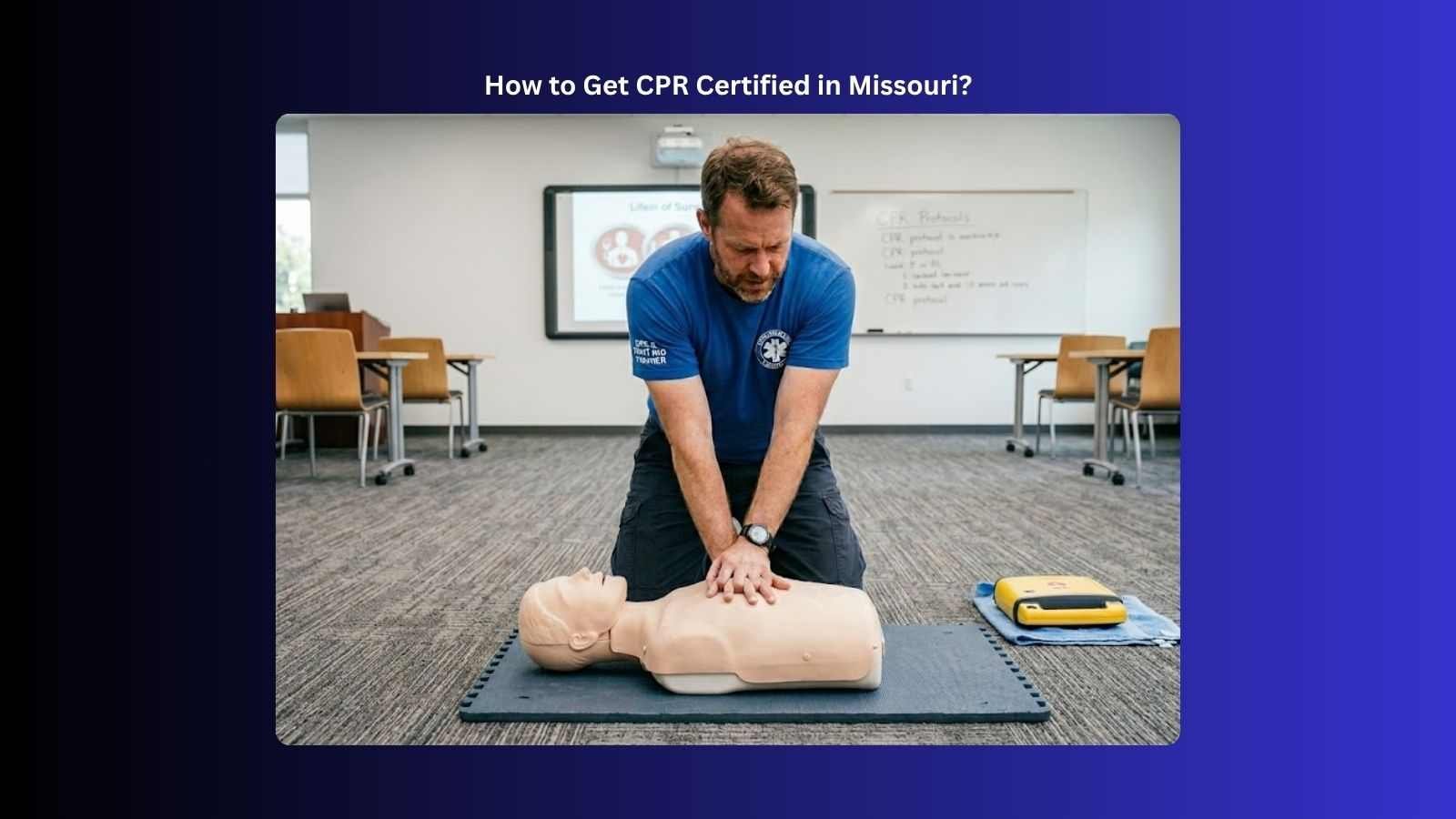
Learning CPR is one of the most valuable skills you can have, and getting certified in Missouri is straightforward when you know where to start. Whether you need certification for a new job, want to meet a licensing requirement, or simply want to be ready if an emergency happens near you, Bayside CPR, an AHA (American Heart Association) Authorized Training Center, offers AHA-approved CPR courses accepted by hospitals, licensing boards, and employers across the state of Missouri. This guide walks you through the types of CPR certifications available, who needs them, where to take a class, and how to renew them when the time comes. By the end, you will know exactly what to do to get certified with confidence.
Types of CPR Certification Available in Missouri
Missouri follows the same nationally recognized CPR certification standards used across the United States. Whether you are a healthcare professional or someone looking to build emergency response skills, there is a certification level developed for your specific role and responsibilities.
1. Basic Life Support (BLS) Certification
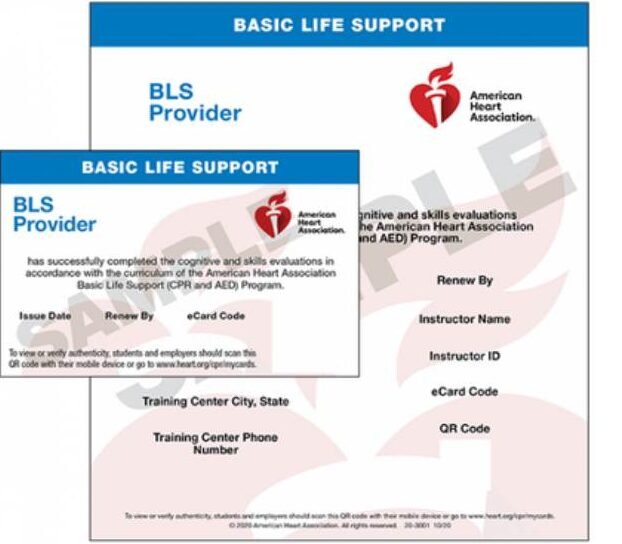
BLS certification is the most widely required CPR credential for healthcare professionals in Missouri. It covers high-quality CPR techniques for adults, children, and infants, along with proper AED (Automated External Defibrillator) use and relief of foreign-body airway obstruction.
Who it’s for: Nurses, doctors, medical students, EMTs, dental professionals, and other clinical staff working in Missouri hospitals, clinics, or care facilities.
2. Advanced Cardiovascular Life Support (ACLS) Certification
ACLS is a higher-level certification prepared for healthcare professionals who lead or participate in the management of cardiopulmonary arrest and other cardiovascular emergencies. It builds on BLS skills and adds advanced airway management, IV access, cardiac rhythm interpretation, and resuscitation pharmacology.
Who it’s for: Physicians, advanced practice nurses, respiratory therapists, and emergency medical personnel working in Missouri acute care or emergency settings.
3. Pediatric Advanced Life Support (PALS) Certification
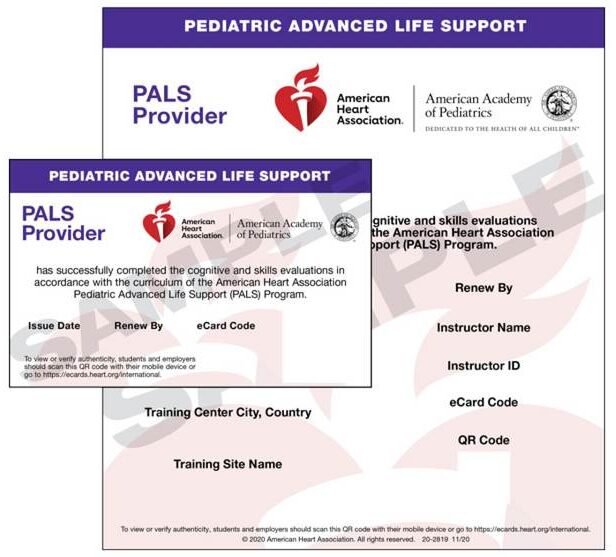
PALS goes beyond basic CPR by training healthcare providers to manage critically ill or injured infants and children. It covers systematic assessment, recognition of respiratory and cardiac emergencies, and coordinated team-based resuscitation specifically for pediatric patients.
Who it’s for: Pediatric nurses, emergency room staff, pediatricians, paramedics, and any Missouri healthcare provider who works directly with critically ill children.
Choosing the right certification ensures you meet Missouri’s specific employment, licensing, or workplace requirements. If you are unsure which level applies to you, check with your employer, licensing board, or healthcare facility before enrolling.
Is CPR Certification Required in Missouri?
CPR certification is not required for every Missouri resident, but certain jobs and roles do require it. If you work in healthcare, education, or childcare, chances are your employer or licensing board expects you to have one.
- Doctors, nurses, and EMTs need a valid CPR certification to meet their licensing standards.
- Teachers and school staff, including coaches and PE teachers, are often required to have it as well.
- Childcare workers at licensed daycare centers must also keep their certification up to date.
- Lifeguards and aquatic staff need both CPR and first aid certification before they can work poolside.
Personal trainers at most gyms and fitness centers are expected to be certified before working with clients.
Even if your job does not require it, getting CPR certified is still a good idea. Parents, caregivers, and volunteers are in situations every day where knowing CPR could save a life. In Missouri, we provide AHA certifications, which are recognized by most employers and licensing boards across the state.
Where to Take CPR Classes in Missouri
If you are looking for a trusted and accredited CPR training provider in Missouri, we offer professional certification courses at multiple convenient locations throughout the state. Whether you need BLS, ACLS, PALS, or a flexible online option, we provide nationally recognized training to fit your schedule and professional requirements.
1. Columbia, MO
Columbia is home to a large concentration of healthcare professionals, medical students, and university staff connected to the University of Missouri Health Care system. Our Columbia location makes it easy for those working or studying in the area to complete their CPR certification without traveling far.
Who we serve: Nurses, medical students, university healthcare staff, and healthcare professionals across central Missouri.
2. Springfield, MO
Springfield has a growing network of hospitals, clinics, and care facilities serving southwest Missouri. Our Springfield location gives local healthcare professionals a straightforward option to get CPR certified or renew their credentials close to where they work.
Who we serve: Nurses, physicians, emergency responders, and healthcare professionals across Springfield and southwest Missouri.
3. St. Louis, MO
St. Louis has one of the highest concentrations of hospitals and healthcare institutions in Missouri. Our St. Louis location offers morning, evening, and weekend class options so that clinical staff and hospital employees can get CPR certified around their shift schedules.
Who we serve: Hospital staff, clinical teams, allied health professionals, and healthcare organizations across the St. Louis area.
4. O’Fallon, MO
O’Fallon and the wider St. Charles County area have seen significant growth in healthcare facilities and working professionals over recent years. Our O’Fallon location gives residents and healthcare workers in this part of Missouri a local option for CPR certification.
Who we serve: Healthcare workers and individuals across O’Fallon, St. Charles County, and the surrounding St. Louis suburbs.
Steps to Get Your CPR Certification in Missouri
Getting your CPR certification in Missouri is easier than you think, and we are here to walk you through every step. We make the process simple so you can feel confident and ready to save a life.
Step 1: Sign Up and Begin Online
Sign up for your AHA CPR course on our website. During registration, select your preferred course type, location, and schedule. After signing up, you’ll receive access to the online course materials by email within about two hours.
Step 2: Complete the Online Training
Begin with the online portion of your course (if required for your selected format).
- BLS: ~1–2 hours
- ACLS: ~2–3 hours
- PALS: ~3–4 hours
This step covers the core knowledge you’ll need before skills practice.
Step 3: Attend the In-Person Skills Session
After completing the online portion (or if you chose skills-only training), attend a short in-person session.
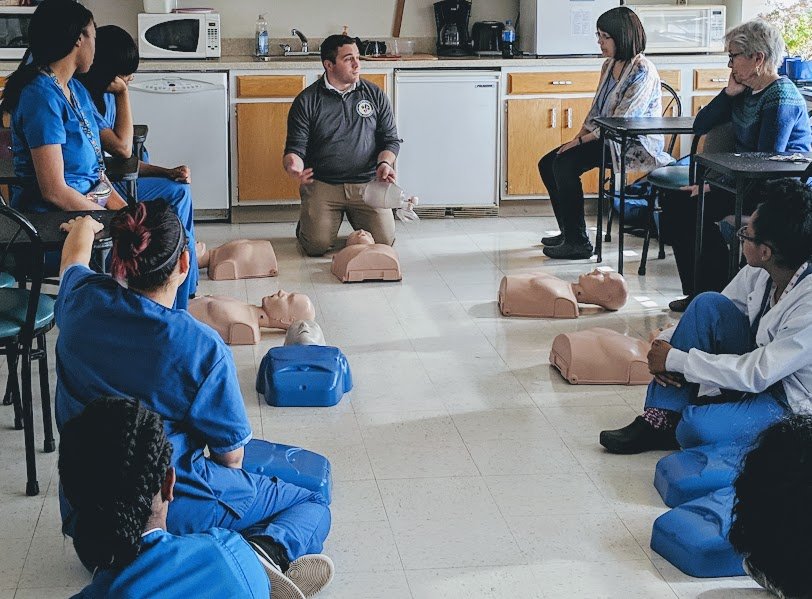
This usually takes about 30 minutes and focuses on hands-on CPR practice and evaluation at a CPR Verification Station.
Step 4: Receive Your Certification
Once you complete both the online and in-person components, you will be issued your official AHA CPR certification.
Step 5: Renew Every 2 Years
Your CPR certification is valid for two years. To stay current, you’ll need to renew before it expires. Most renewals can be completed online, though some employers may require an additional in-person skills check at an approved testing site.
How to Renew Your CPR Certification in Missouri?
Renewing your CPR certification in Missouri does not have to be complicated. We follow AHA guidelines, so your renewal course is shorter than your original and covers only the latest technique updates and protocol changes.
- Check Your Expiration Date: AHA CPR certifications are valid for two years in Missouri. Check your card and plan your renewal before it expires. If your certification has already lapsed, you may need to retake the full course rather than the shorter renewal version.
- Pick the Right Renewal Course: Missouri offers renewal options for BLS, ACLS, and PALS. Choose the course that fits your current certification and job role.
- Complete the Renewal Course: Renewal courses generally run 2 to 4 hours, depending on the level. BLS renewals tend to be quicker, while ACLS and PALS renewals include hands-on practice with advanced real-world scenarios.
- Find Convenient Location: You can find an AHA training center across St. Louis, Springfield, O’Fallon, and Columbia, with both in-person and blended learning options available.
- Get your new AHA certification: After completing the renewal course, you will receive a new AHA certification card valid for two years and accepted at hospitals and healthcare jobs across the country.
Take the Next Step Toward CPR Certification in Missouri
Getting CPR certified in Missouri is a smart step, no matter where you are in your career or personal life. You now know which certification fits your role, whether your job requires one, where to take a class near you, and how to keep your credentials current. The process is straightforward, the training is manageable, and the skill you walk away with can make a real difference when it matters most. At Bayside CPR, we are ready to help you get started. Find a location near you, pick a schedule that works, and take that first step toward becoming someone who knows exactly what to do in an emergency.