
When a person is unresponsive, opening the airway is an important first step in providing care. When a head or neck injury is suspected, modify the usual approach to avoid unnecessary movement of the head and neck.
In this situation, the jaw-thrust maneuver can help open the airway. However, it is not appropriate in every situation, so it is important to know when to use it, how to perform it correctly, and when another method may be needed.
What Is the Jaw-Thrust Maneuver?
The jaw-thrust maneuver is a first aid and medical procedure used to open and maintain the airway of an unconscious or unresponsive person. The technique moves the lower jaw, or mandible, forward, lifting the tongue and surrounding soft tissues away from the back of the throat to help keep the airway open.
Unlike the head-tilt/chin-lift maneuver, the jaw thrust is performed without intentionally tilting the head backward, helping keep the head and neck in a neutral position. This makes it particularly useful when a head or neck injury is suspected, and unnecessary movement should be limited.
When Should You Use the Jaw-Thrust Maneuver?
Use the jaw-thrust maneuver when an unresponsive person requires airway support and there is concern about a possible spinal injury. The technique is especially appropriate when maintaining the patient’s position is a priority.
Common situations include:
- Suspected spinal injury: Consider the jaw thrust after events such as a motor vehicle crash, fall, or sports injury when a spinal injury may be present.
- Need to limit head and neck movement: The maneuver opens the airway by moving the lower jaw forward rather than intentionally tilting the head backward.
- Rescue breathing or CPR with suspected trauma: Trained rescuers may use the jaw thrust when providing breaths to a person with possible head or neck trauma.
- Upper airway obstruction in an unresponsive person: The jaw thrust can help move the tongue and other soft tissues away from the back of the throat when they are blocking the airway.
How to Perform the Jaw-Thrust Maneuver
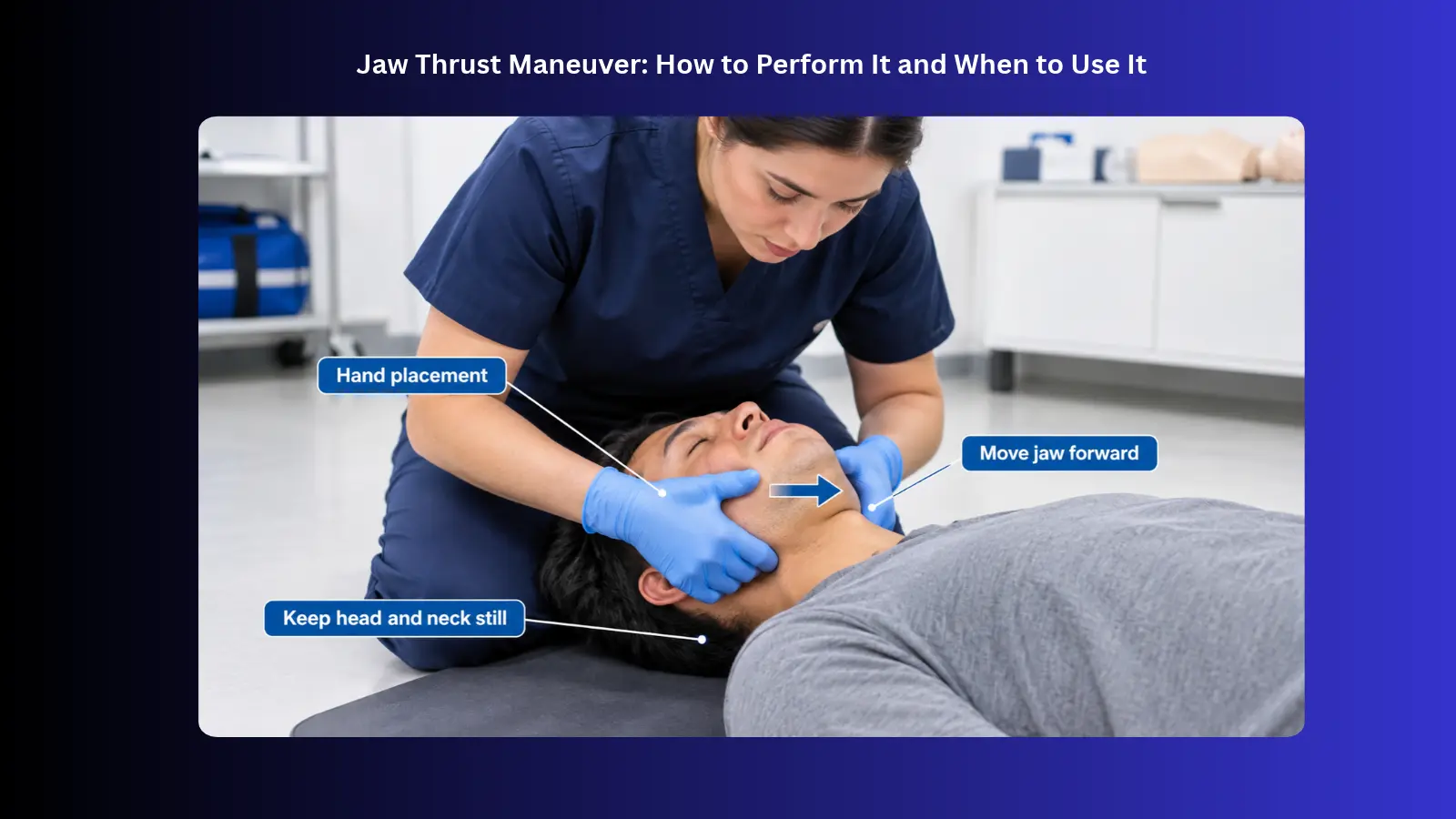
The jaw thrust involves moving the lower jaw forward while keeping the head and neck still. Proper hand placement and controlled movement help open the upper airway without pressing on the soft tissues beneath the jaw.
1. Position Yourself at the Head
Place the person on their back when appropriate. Position yourself at the top of the person’s head, then place one hand on each side of the lower jaw to perform the jaw thrust.
2. Place Your Hands on the Jaw
Place your hands on both sides of the person’s face and locate the angles of the lower jaw. Position your fingers behind these bony points to grasp and lift the mandible. Keep your thumbs lightly on the cheeks if needed to help stabilize your hand position or open the mouth.
Do not place your fingers beneath the chin or press into the soft tissues of the upper neck. Pressure in these areas can interfere with the airway rather than help open it.
3. Lift the Lower Jaw Forward
Use your fingers to grip the lower jaw and gently move it forward. Continue lifting the jaw until the lower teeth are positioned in front of the upper teeth, or until the movement is enough to open the airway.
Move the mandible forward rather than pulling on the soft tissues beneath the chin. Move the lower jaw forward using firm, controlled pressure. After moving the lower jaw forward, hold it in that position with only enough pressure to keep it there.
4. Keep the Head in a Neutral Position
Keep the head and neck still while performing the jaw thrust. Do not tilt, bend, or turn the head or neck when a spinal injury is suspected.
The jaw thrust opens the airway by moving the lower jaw forward while leaving the head and neck in a neutral, stationary position.
5. Maintain the Position and Check the Airway
Hold the lower jaw forward and assess whether the airway is open and whether the person is breathing normally. Look for effective chest movement and signs that air is moving through the airway.
If the person needs rescue breaths or assisted ventilation, maintain the jaw position while providing the appropriate support. If the airway remains obstructed or ventilation is ineffective, reassess the airway and follow the appropriate emergency care protocol.
You can learn the jaw-thrust maneuver and other essential airway management skills through an AHA BLS course, with hands-on practice in performing these techniques correctly during emergencies.
Jaw Thrust vs Head-Tilt/Chin-Lift
The jaw thrust and head-tilt/chin-lift both help open the upper airway, but they use different movements and are selected based on the situation. The main difference is head movement versus jaw movement.
| Feature | Jaw Thrust | Head-Tilt/Chin-Lift |
| Primary action | Moves the lower jaw upward and forward | Tilts the head backward and lifts the chin |
| Head and neck movement | Does not intentionally extend the neck | Requires head extension |
| Typical use | Initial airway opening when cervical spine injury is suspected | Common airway opening technique when cervical spine injury is not suspected |
| Hand placement | Fingers are placed behind the angles of the lower jaw | One hand supports the forehead while the other lifts the bony chin |
| During BVM ventilation | Can help maintain airway patency | Can also help maintain airway patency |
| If the first technique is unsuccessful | Reassess the airway and follow the appropriate airway protocol | Continue to maintain airway patency and provide ventilation as needed |
For an adult with suspected head or neck trauma, trained rescuers should initially use a jaw thrust without head extension. If the jaw thrust technique fails to open the airway, switch to the head-tilt/chin-lift technique. Maintaining an open airway and adequate ventilation remains the priority when the initial maneuver is unsuccessful.
What Should You Avoid During a Jaw Thrust?
Correct hand placement is important for opening the airway without creating additional obstruction. The following errors can make the maneuver less effective or interfere with the overall response.
Pressing on the Soft Tissues
Apply pressure to the bony mandible rather than the soft tissues under the chin or along the neck. Pressure in these areas can obstruct the airway.
Extending the Neck
When cervical spine injury is suspected, do not add head extension to the jaw thrust. This technique opens the airway while limiting neck movement.
Pulling Only on the Chin
The maneuver depends on lifting the mandible. Simply pulling on the skin or soft tissue beneath the chin does not provide the same airway-opening action.
Using Excessive Force
Lift the mandible firmly enough to open the airway without applying unnecessary pressure. Excessive force can cause discomfort or injury and does not improve the airway opening.
Failing to Reassess the Airway
Opening the jaw alone isn’t enough. Check whether the airway is actually patent and whether breathing or assisted ventilation is effective. If the obstruction persists, additional airway management may be needed.
Delaying CPR
Do not spend excessive time repositioning the airway when an unresponsive person is not breathing normally. Airway positioning should support the overall resuscitation response without unnecessarily delaying CPR.
You can reduce common airway management mistakes by enrolling in an AHA ACLS course, where you can practice airway support and ventilation as part of advanced resuscitation.
What If the Jaw Thrust Does Not Open the Airway?
If the airway remains obstructed, reassess the jaw position and check for visible causes of obstruction. Suction may be needed when secretions, vomit, or other material are obstructing the upper airway. Airway adjuncts may also be used when appropriate.
For an adult with head or neck trauma, trained rescuers should use a jaw thrust first. If a jaw thrust and airway adjunct do not establish an open airway, the 2025 AHA guidelines recommend using a head-tilt/chin-lift. The priority remains maintaining an open airway and providing effective ventilation.
Can You Use a Jaw Thrust During BVM Ventilation?
Yes. A jaw thrust can be used during bag-valve-mask ventilation to help maintain an open upper airway. The rescuer maintains the mandible in the forward position while the mask is positioned over the patient’s face and ventilation is provided.
An airway adjunct may also help maintain airway patency during BVM ventilation. If ventilation remains difficult despite proper positioning and airway opening, reassess the airway and consider additional airway management.
Is Jaw Thrust Used During CPR?
Jaw thrust may be used to open the airway when ventilation is required, particularly when head or neck trauma raises concern for cervical spine injury. During cardiac arrest, maintaining an open airway and providing effective ventilation remain priorities.
For trained rescuers treating an adult with head or neck trauma, a jaw thrust is the initial airway opening technique. If it does not provide an open airway, the rescuer should use the airway technique needed to establish effective ventilation.
Can the Jaw-Thrust Maneuver Be Used on Children?
Jaw thrust can be used in infants and children when cervical spine injury is suspected. The 2025 AHA pediatric guidance recommends a jaw thrust without head tilt in this situation. If the jaw thrust doesn’t open the airway, use a head-tilt/chin-lift instead.
Positioning also differs in young children. Infants and young children have a relatively large occiput, so positioning may require support under the shoulders rather than simply elevating the head.
Master Airway Management Skills With Bayside CPR
The jaw-thrust maneuver is an important airway opening technique, particularly when a cervical spine injury is suspected. Using the correct hand position and avoiding common mistakes can help maintain airway patency without unnecessary head and neck movement.
Bayside CPR offers BLS, ACLS, PALS, and Heartsaver CPR/AED courses with flexible learning options. Our self-guided verification stations are available at 100+ locations across the United States. You can complete your required hands-on skills session without traveling to a specific training center. After completing the course, you’ll receive your eCard the same day, recognized by employers nationwide.