
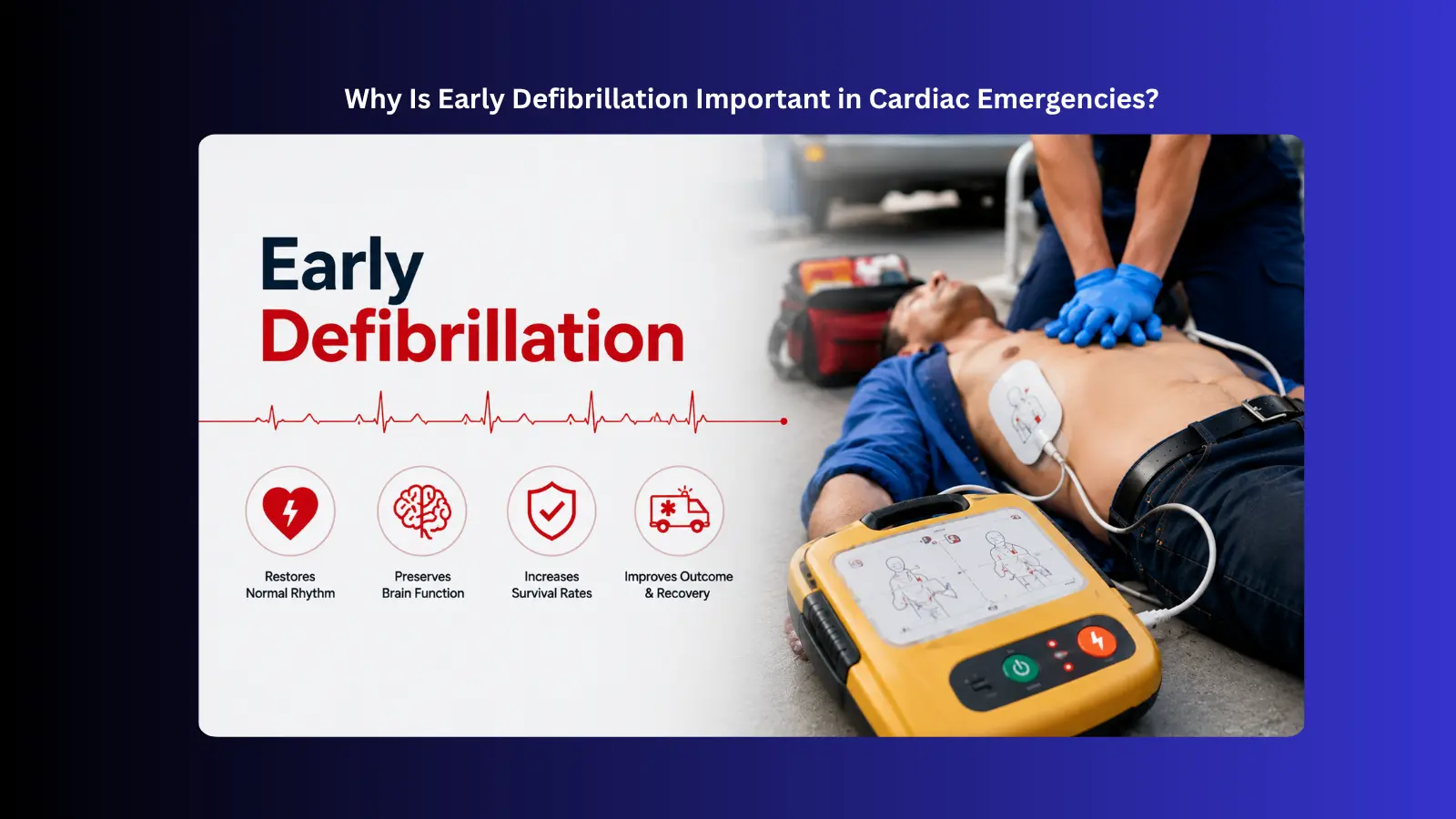
When a person experiences sudden cardiac arrest, rapid action can make a significant difference in the outcome. Early defibrillation provides timely electrical therapy for certain shock-responsive rhythms, helping interrupt irregular electrical activity and support the restoration of an effective heart rhythm.
As time passes, the chances of successful resuscitation can decrease, while the person’s condition can continue to worsen. This guide explains the importance of early defibrillation, how AEDs support its delivery, the role of CPR, the effects of delayed treatment, and the role of early defibrillation in the Chain of Survival.
What Happens During Cardiac Arrest?
Cardiac arrest occurs when the heart suddenly stops pumping blood effectively, preventing the brain and other vital organs from receiving adequate blood flow. A person may suddenly collapse, become unresponsive, stop breathing normally, or show abnormal gasping. Without immediate treatment, the lack of blood flow can quickly cause severe damage to vital organs.
During cardiac arrest, the heart may also enter an abnormal rhythm that prevents it from pumping blood effectively. Ventricular fibrillation and pulseless ventricular tachycardia are two rhythms commonly associated with this condition. Recognizing these signs quickly allows CPR and AED use to begin as part of the emergency response.
What Makes Defibrillation Time-Sensitive?
A shockable rhythm can change as cardiac arrest continues. Ventricular fibrillation and pulseless ventricular tachycardia can become less responsive to defibrillation over time and may progress to a nonshockable rhythm. Once this occurs, an electrical shock is no longer an appropriate treatment for that rhythm.
An AED can identify whether one of these rhythms is present and determine whether a shock is advised. Therefore, reaching an AED quickly can help reduce delays, while CPR can be performed until the device is available and ready to assess the person.
How Do AEDs and Defibrillation Help Restore Heart Function?
Defibrillation uses an electrical shock to interrupt certain abnormal electrical activity in the heart. An automated external defibrillator helps determine whether this heart shock therapy is appropriate and guides the responder through the process.
The steps below explain how the assessment and shock delivery take place.
- Attach the AED pads: Place the electrode pads on the person’s bare chest in the positions shown on the pads.
- Allow rhythm analysis: The AED analyzes the heart’s electrical activity to determine whether defibrillation is appropriate.
- Wait for the instruction: If the device advises a shock, stop CPR and make sure nobody is touching the person.
- Provide the shock: Follow the AED’s instructions to deliver the electrical shock when advised.
- Continue CPR: After the shock, resume CPR as directed by the AED and continue following its prompts.
Can CPR and Defibrillation Work Together?
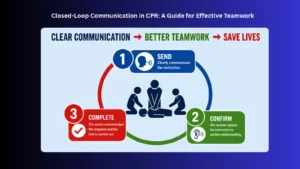
Yes. CPR and defibrillation have different roles during cardiac arrest and complement each other during resuscitation. Chest compressions help maintain blood flow to the brain and other vital organs, while defibrillation addresses certain abnormal rhythms that prevent effective heart function.
CPR and defibrillation should be performed in coordination during a cardiac emergency. Chest compressions may need to pause briefly while the heart rhythm is analyzed and a shock is delivered when advised. CPR should resume promptly once the analysis or shock is complete.
What Can Happen If Defibrillation Is Delayed?
When defibrillation is delayed during a shockable cardiac arrest, the abnormal heart rhythm can become more difficult to treat. Ventricular fibrillation or pulseless ventricular tachycardia may deteriorate over time and potentially progress to a nonshockable rhythm. As the delay increases, restoring an effective heart rhythm can become more difficult.
Delays can occur for several reasons:
- Cardiac arrest is not recognized quickly
- Emergency medical services are not activated promptly
- The nearest AED is difficult to locate
- A responder hesitates to use the AED
- CPR is interrupted for longer than necessary
- AED instructions are not followed correctly
- Responders wait for professional help before starting CPR or using an available AED
The Role of Early Defibrillation in the Chain of Survival
Early defibrillation is a critical part of the response to sudden cardiac arrest, particularly when a shockable rhythm is present. Its role within the Chain of Survival emphasizes the importance of providing the right intervention at the right stage of an emergency.
The Chain of Survival includes several connected stages:
- Recognition and Activation: Identify the emergency and activate emergency medical services.
- Early CPR: Begin CPR to help maintain circulation until further care is available.
- Rapid Defibrillation: Provide defibrillation as soon as possible when a shockable rhythm is identified.
- Advanced Resuscitation: Emergency medical professionals provide additional interventions when indicated.
- Post-Cardiac Arrest Care: Ongoing medical treatment helps stabilize the person after circulation returns.
- Recovery: Follow-up care and rehabilitation address the person’s needs after cardiac arrest.
The Chain of Survival differs for adults, children, and infants, with each age group requiring a specific approach to emergency response.
Who Should Learn AED and Defibrillation Skills?
An AED may be available in healthcare facilities, workplaces, schools, fitness centers, recreational areas, and other community settings where cardiac emergencies can occur. Healthcare professionals, employees, teachers, coaches, childcare workers, fitness professionals, public safety personnel, and other community members can benefit from learning AED and defibrillation skills.
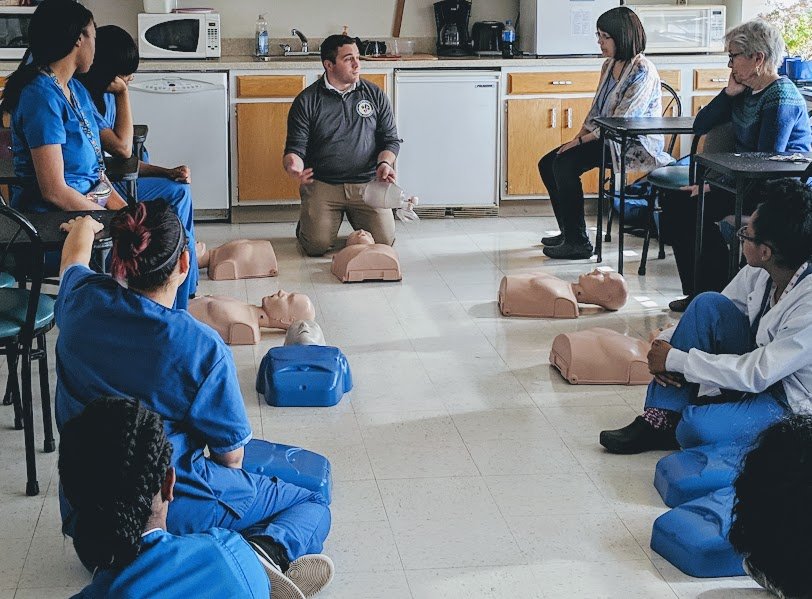
Taking a Heartsaver CPR AED course can help participants develop the skills needed to respond to sudden cardiac arrest. The course covers CPR and AED use, helping participants recognize cardiac emergencies, perform appropriate lifesaving actions, and provide early defibrillation when a shock is advised.
Save Lives With Early Defibrillation
Early defibrillation can be a critical part of responding to sudden cardiac arrest when a shockable rhythm is present. Recognizing the emergency, starting CPR, accessing an AED promptly, and following its instructions can help support the person during a cardiac emergency.
Bayside CPR offers BLS, ACLS, PALS, Heartsaver CPR AED, and Heartsaver First Aid CPR AED courses for healthcare professionals, workplace personnel, and community members. Our flexible training options fit your schedule and make certification more convenient. We provide same-day certification upon successful completion of the required training, and your credentials remain valid for two years. Our certifications are nationally recognized and accepted across the United States.