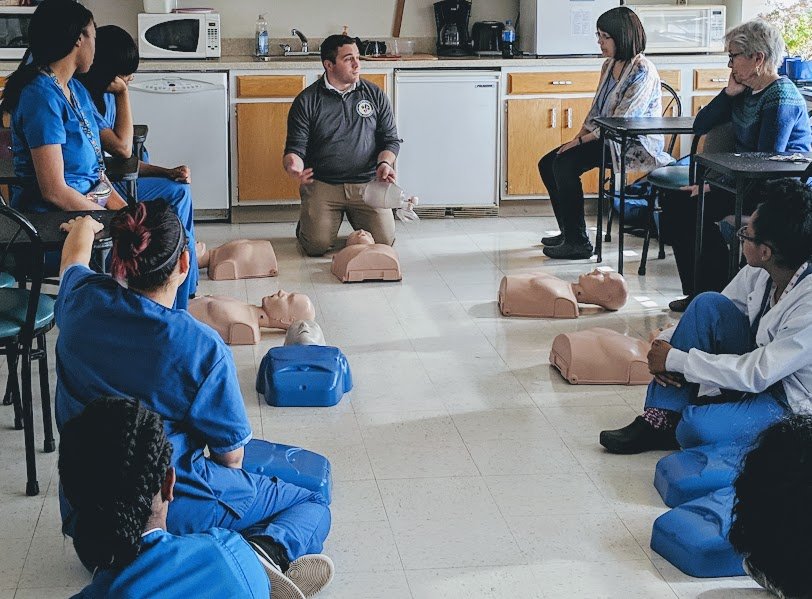

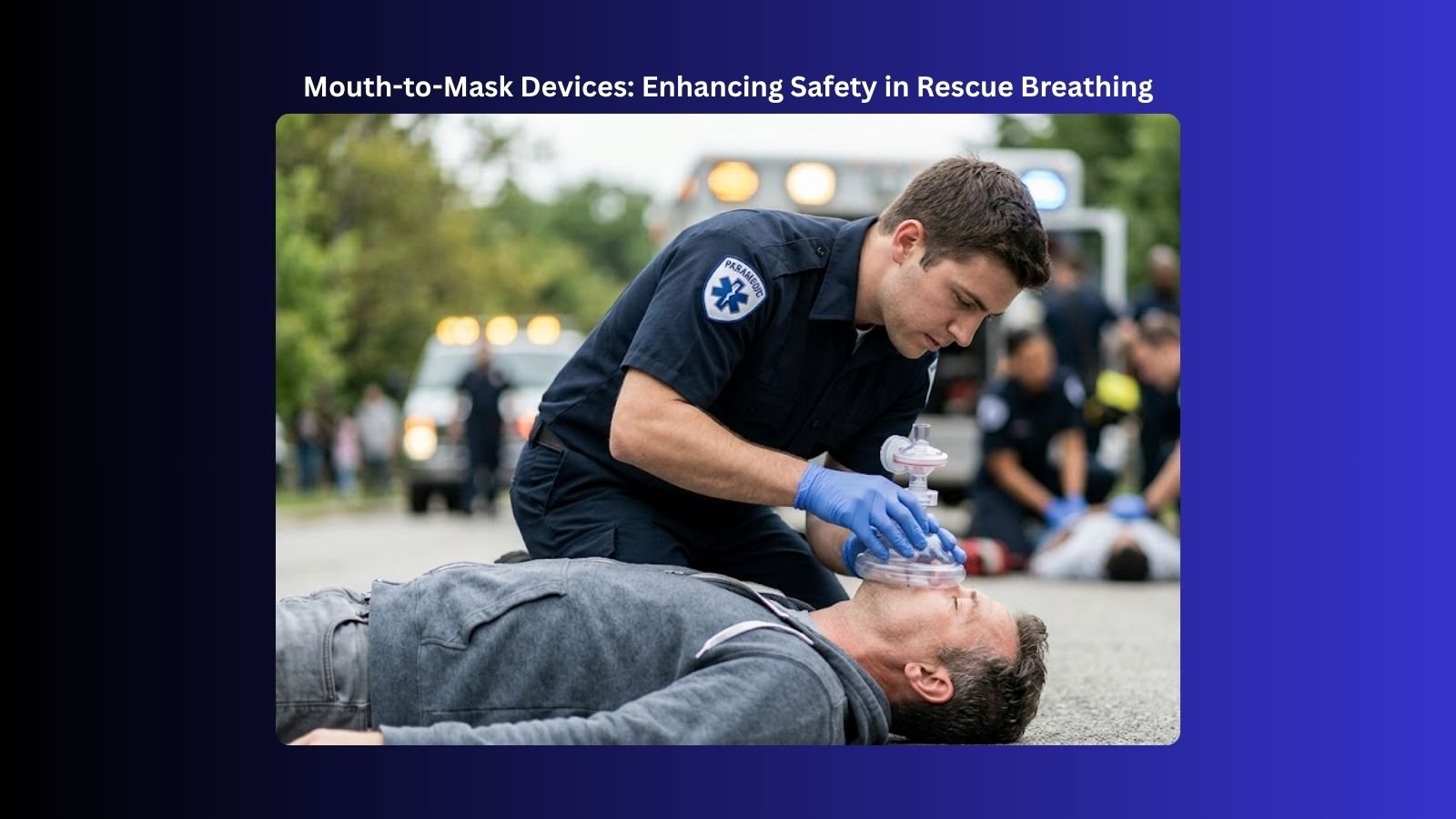
A mouth-to-mask device is a small tool that helps you give rescue breaths to someone who has stopped breathing. Instead of placing your mouth directly on the other person’s mouth, you use a protective mask that covers their nose and mouth. This creates a safe barrier between you and the person you are helping, reducing the risk of spreading germs or infections during an emergency. The mask has a one-way valve that lets your breath flow into the patient while blocking any air or fluids from coming back toward you. Many first responders, lifeguards, and everyday people keep one of these devices in their first aid kit so they are always ready to act quickly when someone needs help. Learning how to use it properly can make a real difference and give you the confidence to step in during a life-threatening situation.
Understanding the Mouth-to-Mask Device
When someone stops breathing, a mouth-to-mask device gives you a safe and effective way to deliver rescue breaths without direct contact. These tools are easy to use, simple to carry, and built to help both trained responders and everyday people act confidently in an emergency.
1. Pocket Mask
A pocket mask is a compact and portable breathing device that you can carry with you almost anywhere. It folds down into a small case that fits right in your pocket, bag, or first aid kit, so you always have it within reach during an emergency. When someone stops breathing, you unfold the mask and place it over their nose and mouth to create a secure seal. Then you breathe through the built-in valve to deliver air directly into their lungs. Most pocket masks are made from clear, soft material, so you can see the person’s face clearly while you work. Some versions also come with an oxygen inlet port, which lets emergency responders connect supplemental oxygen for even better care. Its simple structure makes it easy for both trained professionals and everyday people to use quickly and effectively.
2. Rescue Mask
A rescue mask works much the same way as a pocket mask, but it is often built with a slightly sturdier frame and a wider seal to fit different face shapes more comfortably. It sits firmly over the nose and mouth, giving you a tight grip so that each breath you deliver actually reaches the person’s lungs without leaking out. The one-way valve at the center is a key feature because it pushes your air forward while keeping the patient’s exhaled air from coming back to you. Rescue masks are commonly found in public spaces like gyms, schools, and swimming pools because they are reliable and fast to set up. Many of them are also compatible with bag-valve-mask systems, allowing medical teams to upgrade care on the spot. Whether you are a trained responder or a concerned bystander, a rescue mask gives you a safer and more effective way to help someone breathe again.
Advantages of Mouth-to-Mask Devices
Mouth-to-mask devices give rescuers a safer, cleaner, and more confident way to deliver rescue breaths during an emergency. From protecting against infection to improving air delivery, these tools offer real and practical benefits that can truly save lives.
1. Safer Rescue Breathing
A mouth-to-mask device creates a protective barrier between you and the person you are helping. The one-way valve blocks any fluids or exhaled air from reaching you, which greatly lowers the risk of spreading infections. This added layer of protection makes rescue breathing feel much safer for everyone involved.
2. More Effective Ventilation
Using a mask helps you deliver a fuller and more consistent breath into the patient’s lungs. The secure seal around the nose and mouth prevents air from escaping, so each breath you give actually counts. This leads to better oxygen delivery compared to other methods that lack a proper fit.
3. Reduces Hesitation
Many people freeze during emergencies because they feel uncomfortable with direct mouth contact. A mouth-to-mask device removes that worry and gives you the confidence to take action right away. When you feel prepared and protected, you are far more likely to step in and help without delay.
4. Faster Response
These devices are compact and easy to set up, which means you can start rescue breathing within seconds of reaching someone in need. Most masks unfold and fit into place quickly, even under pressure. That speed can make a critical difference in keeping someone alive while waiting for professional help to arrive.
5. Works in Many Situations
A mouth-to-mask device is useful in a wide range of emergencies, from cardiac arrests to drowning incidents. It works well in tight spaces, outdoors, and in clinical settings alike. Its flexible design allows rescuers to adapt quickly, no matter where or how an emergency unfolds.
A Step-by-Step Guide to Operating a Mouth-to-Mask Device
Knowing how to operate a mouth-to-mask device correctly can mean the difference between life and death in an emergency. Follow these clear and simple steps to deliver rescue breaths with confidence and give someone the best possible chance of survival.
Step 1: Assess the Scene and the Person
Before you do anything, make sure the area around you is safe to approach. Check if the person is responsive by tapping their shoulders and calling out to them loudly. If they do not react and are not breathing normally, you know it is time to act right away.
Step 2: Call for Help
Ask someone nearby to call emergency services immediately, or do it yourself if you are alone. The sooner professional help is on the way, the better the chances of a full recovery. Do not waste time and move quickly to the next step.
Step 3: Position the Person
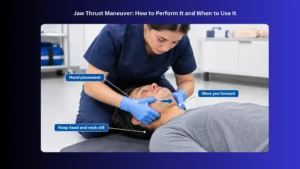
Gently lay the person flat on their back on a firm and stable surface. Tilt their head back slightly and lift their chin to open the airway. This position allows air to flow freely into the lungs without obstruction.
Step 4: Prepare the Mask
Take out your mouth-to-mask device and unfold or assemble it according to its design. Make sure the one-way valve is in place and facing upward toward you. A properly assembled mask ensures that every breath you deliver goes in the right direction.
Step 5: Place the Mask on the Face
Position the top of the mask over the bridge of the nose and press the bottom edge below the lower lip. Use both hands to hold the mask firmly in place, forming a tight seal around the nose and mouth. A secure fit prevents air from leaking out during ventilation.
Step 6: Open the Airway
With the mask in place, use your fingers to maintain the head tilt and chin lift position. This keeps the airway open and ready to receive air. Proper alignment of the head and neck is a key part of successful rescue breathing.
Step 7: Deliver Rescue Breaths
Take a normal breath, place your mouth over the valve, and breathe out steadily for about one second. Watch the chest rise as you deliver each breath, which tells you the air is reaching the lungs. Give two breaths and then check for any signs of normal breathing.
Step 8: Begin CPR if Needed
If the person still shows no signs of breathing or circulation, start chest compressions right away. Follow the standard CPR ratio of 30 compressions to 2 rescue breaths. Keep going until emergency responders arrive or the person begins to breathe on their own.
Step 9: Continue Monitoring
Stay with the person and keep a close eye on their breathing and responsiveness throughout the process. Adjust the mask seal if you notice air escaping during ventilation. Your steady focus and calm presence can make all the difference while help is on the way.
Best Practices and Common Mistakes in Mouth-to-Mask Rescue Breathing
Knowing what to do and what to avoid helps you deliver effective care with confidence when it matters most.
| Best Practices | Common Mistakes |
| Check the Scene First Confirm the area is safe before approaching. A calm, aware rescuer is always more effective. | Skipping the Seal Check A loose mask lets air escape, so little reaches the lungs. Always confirm the fit before you begin. |
| Assemble the Mask in Advance Practice setting up your device so you can do it quickly under pressure. Preparation saves critical seconds. | Breathing Too Hard or Too Fast Excessive force pushes air into the stomach, risking vomiting and blockage. Use slow, gentle breaths. |
| Create a Tight Seal Every Time Press the mask firmly with both hands so every breath reaches the lungs, not the edges of the mask. | Forgetting to Tilt the Head Without a proper head tilt and chin lift, even well-delivered breaths cannot reach the lungs. |
| Maintain the Correct Head Position Keep the head tilted back and the chin lifted throughout. Any shift in position can block the airway. | Panicking and Rushing Fear leads to poor technique. Take a brief moment to steady yourself before starting. |
| Breathe Slowly and Steadily Give each breath over one full second and watch for the chest rise to confirm air is reaching the lungs. | Stopping Too Soon If results aren’t immediate, keep going. Consistency is key until professional help arrives. |
| Combine Rescue Breathing with CPR If there is no pulse, pair breaths with chest compressions. Both together give the best chance of survival. | Neglecting Personal Protection Always verify the one-way valve is secure before starting. Your safety matters too. |
Appropriate Situations for Mouth-to-Mask Device Use
A mouth-to-mask device is a versatile tool used in many emergencies when a person has stopped breathing or requires assistance with breathing. Knowing when to use it correctly allows you to respond quickly and effectively in situations where every moment matters.
1. Cardiac Arrest
When someone’s heart suddenly stops beating, rescue breathing becomes a critical part of keeping them alive. A mouth-to-mask device allows you to deliver consistent and protected breaths while performing CPR. Acting quickly in this situation greatly improves the person’s chances of survival until emergency responders arrive.
2. Drowning Incidents
A person pulled from the water often needs immediate rescue breaths to restore normal breathing. The mouth-to-mask device creates a reliable seal even in wet conditions, making it especially useful near pools, beaches, and open water. Starting ventilation as soon as possible helps push water out and bring oxygen back into the lungs.
3. Drug or Alcohol Overdose
Overdoses can slow or completely stop a person’s breathing, making rescue ventilation necessary. A mouth-to-mask device protects the rescuer from potential exposure to harmful substances during the process. Delivering steady breaths keeps oxygen flowing to the brain while help is on the way.
4. Choking After Obstruction Removal
Once you successfully remove a blockage from someone’s airway, they may still need help resuming normal breathing. A mouth-to-mask device lets you support their ventilation safely and effectively right after clearing the obstruction. This follow-up step can be just as important as removing the blockage itself.
5. Smoke Inhalation and Carbon Monoxide Poisoning
Victims of smoke or toxic gas exposure often lose the ability to breathe on their own. Using a mouth-to-mask device helps you ventilate them without putting yourself at direct risk of inhaling residual toxins. Getting fresh air into their lungs quickly is essential to preventing serious and lasting damage.
6. Traumatic Injuries
Severe accidents involving the head, chest, or neck can disrupt a person’s ability to breathe normally. A mouth-to-mask device allows rescuers to support ventilation while being mindful of potential spinal injuries. Its hands-on structure gives you control and precision even in complex and high-pressure trauma situations.
7. Respiratory Emergencies
Conditions like severe asthma attacks, allergic reactions, or respiratory failure can leave a person struggling or unable to breathe. A mouth-to-mask device provides immediate breathing support while you wait for medical professionals to take over. Stepping in early during these events can prevent the situation from becoming life-threatening.
Different Varieties of Mouth-to-Mask Devices
Mouth-to-mask devices come in several types, each built to meet different needs and emergencies. Knowing the options available helps you choose the right tool and feel fully prepared to act when someone needs your help.
1. Standard Pocket Mask
The standard pocket mask is one of the most widely used tools in emergency rescue breathing. It features a rigid or semi-rigid dome shape that sits securely over the nose and mouth, creating a dependable seal for effective ventilation. A built-in one-way valve sits at the center, directing your breath toward the patient while blocking any fluids or exhaled air from coming back to you. Most versions are made from clear material so you can monitor the person’s face and watch for any changes during the rescue. This mask is commonly found in first aid kits, ambulances, and training centers because it is durable, easy to clean, and simple to use. Its straightforward design makes it a reliable choice for both professional responders and everyday people who want to be prepared.
2. Foldable Rescue Mask
The foldable rescue mask is designed with portability in mind, making it a popular choice for people who want to carry emergency gear without added bulk. It collapses flat into a compact case that slips easily into a pocket, wallet, or keychain pouch, so you always have it close at hand. When an emergency strikes, you unfold it within seconds, and it snaps into a usable shape ready for immediate rescue breathing. Despite its small size, it still provides a firm seal and a protective one-way valve just like larger models. Many foldable masks also include a strap or headband to help hold the mask in place without requiring constant manual pressure. This variety is ideal for lifeguards, teachers, parents, and anyone who wants to stay prepared throughout their daily routine.
3. CPR Mask with Oxygen Inlet
The CPR mask with an oxygen inlet takes rescue breathing a step further by allowing supplemental oxygen to be connected directly to the mask. This feature is especially valuable for trained medical responders who carry portable oxygen tanks and need to deliver higher concentrations of oxygen to a patient quickly. The inlet port connects to an oxygen supply line while the rescuer continues to ventilate through the standard valve, creating a powerful combination of support. These masks typically have a more secure and adjustable fit to accommodate the added equipment and maintain a tight seal during use. The clear dome design allows the responder to watch the patient closely for any signs of improvement or complications. For situations involving cardiac arrest, severe respiratory distress, or trauma, this variety offers a significant upgrade in the level of care a rescuer can provide on the spot.
The Importance of Mouth-to-Mask Devices for All Rescuers
In short, mouth-to-mask devices play an important role in emergency care because they help rescuers give safe and effective breaths when someone cannot breathe on their own. They offer protection, improve airflow, and make it easier for people to step in without fear during stressful moments. When used correctly, they support faster action and better outcomes in many life-threatening situations. Learning how to use them builds confidence and prepares you to respond when immediate help is needed. With the right knowledge and a calm approach, anyone can help save a life and provide vital support until professional help arrives.
Don’t just read about lifesaving, equip yourself with the skills to do it. Enroll in a CPR course at Bayside CPR and learn exactly how to use a mouth-to-mask device and perform effective rescue breaths. We also offer BLS, ACLS, and PALS courses. Choose your course, location, and time. Complete self-directed online training anywhere and perform your skills assessment in a 30-minute in-person session via the AHA CPR Verification Station and receive your AHA course completion card on the same day.