
Pediatric Advanced Life Support (PALS) certification is one of the most valuable certifications a healthcare professional can have. Whether you’re a nurse, emergency medical technician, physician, or respiratory therapist, being PALS certified means you’re ready to respond quickly and confidently when a child’s life is on the line.
But earning it isn’t always easy. Many people start PALS training unsure of what to expect, and soon realize that it requires both solid knowledge and strong hands-on skills. From understanding how children’s physiology differs from adults to applying emergency algorithms under pressure, the process comes with real challenges.
Today, PALS programs are usually offered in a hybrid format, combining self-paced online learning with an in-person skills session. While this offers flexibility, it also puts more responsibility on you to prepare. Walking into the skills session without fully understanding the online material can make things much harder than necessary.
This article will help you stay ahead of those challenges. By understanding where most learners struggle, what areas need the most focus, and which strategies actually work, you’ll be much more confident completing your PALS certification. Whether you’re preparing for the first time or renewing your certification, this guide will help you overcome the challenges in your way.
What PALS Certification Actually Tests (Flexible Hybrid Format)
PALS certification, offered by the American Heart Association (AHA), evaluates both your clinical knowledge and your ability to apply it in real-time pediatric emergencies. The Flexible Hybrid PALS format divides this assessment into two parts: self-paced online learning and a focused in-person skills evaluation.
Part 1: Online PALS Coursework (~3–4 Hours)
This portion tests your understanding of core pediatric emergency concepts through interactive modules and built-in assessments. Instead of a traditional classroom exam, your knowledge is evaluated continuously as you progress.
1. Systematic Approach to Pediatric Assessment
You are assessed using the Pediatric Assessment Triangle (PAT), which evaluates appearance, work of breathing, and circulation to the skin. This rapid visual framework is used to assess a child’s condition within seconds.
2. Recognition of Respiratory Emergencies
The coursework evaluates your ability to distinguish between upper airway obstruction, lower airway obstruction, lung tissue disease, and disordered control of breathing, along with selecting the correct intervention for each.
3. Shock Recognition and Classification
You are assessed on identifying compensated versus decompensated shock and classifying types such as hypovolemic, distributive (septic, anaphylactic, neurogenic), obstructive, and cardiogenic. Each type follows a specific treatment pathway.
4. Cardiac Rhythm Recognition
Through case scenarios and rhythm interpretation, you must correctly identify rhythms such as sinus tachycardia, SVT, ventricular fibrillation, ventricular tachycardia, asystole, and PEA, and apply the appropriate response.
5. Medication Knowledge
You are tested on weight-based dosing (mg/kg), indications, and correct use of key medications like epinephrine, amiodarone, adenosine, and atropine within AHA algorithms.
Part 2: In-Person PALS Skills Session (~30 Minutes)
After completing the knowledge component, the in-person session focuses entirely on hands-on performance. Instructors assess how effectively you apply what you have learned under realistic conditions.
1. High-Quality CPR
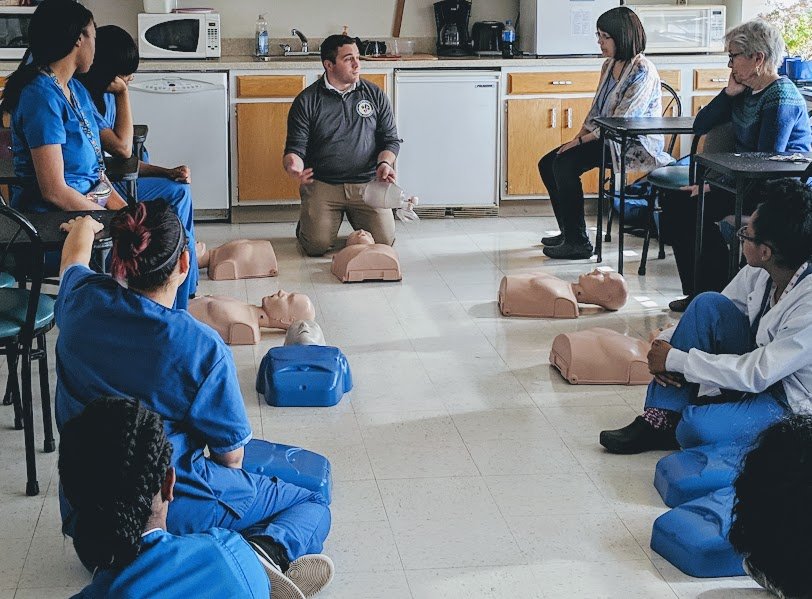
You are evaluated on compression rate (100 to 120 per minute), depth (at least one-third of chest diameter), full recoil, and minimizing interruptions. All skills are performed on a manikin.
2. Airway Management
Your ability to perform effective bag-mask ventilation, maintain proper airway positioning, and achieve a good seal is assessed in real time.
3. Megacode Simulation
You participate in a simulated pediatric emergency, such as cardiac arrest or respiratory failure. Instructors evaluate your clinical decision-making, adherence to algorithms, and ability to act under pressure.
What This Format Does Not Fully Test
While the Flexible Hybrid PALS format effectively evaluates protocol-based decision-making using AHA algorithms, it does not fully assess deeper clinical judgment or complex diagnostic reasoning. It provides a strong, standardized foundation, but real-world expertise develops through hands-on experience with critically ill children.
What Makes PALS Certification Challenging for Learners?
PALS certification is demanding for good reason. The skills and knowledge it requires are directly tied to life-saving decisions in high-pressure pediatric emergencies. Understanding what makes it challenging is the first step toward effective preparation.
1. Pediatric Physiology Differences
One of the first challenges is recognizing that children are not simply small adults. Pediatric patients have distinct physiological characteristics that affect how emergencies are assessed and treated. Heart rate, respiratory rate, blood pressure ranges, and anatomy vary widely from infants to adolescents. Learners need to understand, not just memorize, these differences and how they influence clinical decisions in real situations.
2. Mastering Emergency Algorithms
PALS training relies on structured algorithms that guide providers through emergencies such as respiratory distress, shock, and cardiac arrest. These algorithms are meant to simplify decisions under pressure, but learning them takes time and effort. Many learners struggle to move from memorizing the steps to applying them smoothly in fast-moving scenarios.
3. From Online Learning to Hands-On Skills
Modern PALS programs are usually hybrid, combining online learning with an in-person skills session. Moving from online modules to hands-on practice is a common challenge. What feels clear on a screen can be much harder in a real simulation setting with an AHA Voices Assistant Manikin (VAM) observing.
4. Building Confidence in Real-Time Scenarios
Confidence is critical in PALS performance. Even well-prepared learners can struggle when asked to lead, communicate, and make decisions all at once in a simulated emergency. The pressure of being evaluated can affect performance, so confidence must be actively built throughout training.
5. Adapting Quickly During Skills Demonstration
The skills session moves quickly and requires rapid adaptation. Instructors may change scenarios, switch roles, or introduce unexpected developments. For those used to structured online learning, this fast-moving environment can feel overwhelming at first. Staying composed and adjusting in real time is part of the challenge.
The Most Difficult Areas Learners Struggle With in PALS Training
While every learner comes to PALS training with different experience levels, a few areas tend to challenge most people. Knowing where these difficulties show up can help you prepare more effectively and feel more confident going into your certification.
1. Medication Dosage Awareness for Children
One of the more technically challenging parts of PALS training is pediatric medication dosing. Unlike adult care, where dosages are more standardized, pediatric doses depend on weight, age, and clinical condition. Learners need to be comfortable with common emergency medications, typical dosage ranges, and how to calculate and administer them accurately under pressure. Even experienced clinicians who don’t often work with children may need extra review in this area.
2. ECG Rhythm Recognition Basics
Interpreting cardiac rhythms is another common struggle. PALS requires learners to recognize rhythms such as normal sinus rhythm, bradycardia, tachycardia, ventricular fibrillation, and pulseless electrical activity. For those who don’t regularly interpret ECGs in practice, building speed and confidence takes time and repetition. Even a short pause during a scenario can affect how smoothly the response unfolds.
3. Airway and Breathing Management Techniques
Airway management is a core part of PALS and often one of the most hands-on challenges. Learners must demonstrate skills like bag-mask ventilation, proper airway positioning, and identifying signs of respiratory distress or failure in children. The difficulty is not just learning the steps, but performing them confidently on a pediatric manikin during simulation. Small anatomical differences in children also make correct technique more critical.
4. Applying Algorithms in Scenario-Based Learning
PALS algorithms give a structured way to manage emergencies, but using them in real-time scenarios is much more demanding than reviewing them on paper. Learners have to quickly recognize the situation, choose the right algorithm, follow the steps in order, and still communicate effectively with the team while monitoring changes. It takes both familiarity with the algorithms and strong situational awareness to do this smoothly.
5. Retaining Key Steps From Online Modules
The online portion of a hybrid PALS course covers a lot of information in a short time. While self-paced learning is helpful, it also means learners need to take extra responsibility for retention. Moving through modules too quickly can make it easy to miss important details. Reinforcing learning through notes, review, and self-testing is what helps the information actually stick.
Strategies to Successfully Complete the Hybrid PALS Program
Completing the hybrid PALS program takes preparation, focus, and showing up ready for your skills session. It is not something you can passively get through. What you put into the online work directly affects how confident you will feel during the hands-on portion. With the right approach, though, you can get through it smoothly and earn your certification.
1. Completing the Online Portion Thoroughly Before the Skills Session
The online portion of the hybrid PALS program is essential. It introduces all the algorithms, clinical concepts, and decision-making steps you will need during your skills session.
If you rush through it, you will likely feel unprepared later. Take your time with each module, pause to understand key points, and jot down notes as you go. The goal is not just to finish it, but to actually understand the material before moving on.
By the time you reach your skills session, you should already be familiar with the content so you can focus on applying it instead of trying to recall it for the first time.
2. Rewatching Key Modules for Reinforcement
Going through the material once is usually not enough, especially with more complex topics. Rewatching certain modules can make a big difference in how well you retain the information.
Pay extra attention to sections like ECG rhythm interpretation, treatment algorithms, or airway management. Revisiting these topics a couple of times can help things stick and make you feel more confident when you are under pressure.
Think of the platform as a tool you can return to anytime, not just something you use once and move on from.
3. Practicing CPR Fundamentals Beforehand
Solid CPR skills are expected in the PALS skills session. You do not want to be thinking about basic technique while also trying to manage more advanced scenarios.
If you have not practiced recently, spend some time reviewing compression depth, rate, hand placement, and ventilation basics. If you have access to a manikin, practice a few rounds before your session.
Being comfortable with the basics makes it much easier to stay focused on the rest of the assessment.
4. Reviewing Algorithms Step by Step
The PALS algorithms are the core of the program. Instead of trying to memorize them all at once, break them down into smaller steps and learn them one by one.
It also helps to understand why each step exists, not just what it is. That makes it easier to stay on track during scenarios and adjust when something changes.
A good way to test yourself is to write the algorithms out from memory and check your accuracy. Keep practicing until you can go through them without stopping or second-guessing yourself.
How to Perform Your Best During the 30-Minute PALS Skills Session
The 30-minute PALS skills session is where everything you have studied and prepared for comes together in real time. It is fast-paced, hands-on, and prepared to assess whether you can apply your knowledge effectively in a simulated pediatric emergency. While the time limit can feel intimidating, going in with the right mindset and a clear understanding of what is expected can make a big difference. Here is how to perform at your best when it matters most.
1. Stay Calm and Focused During Hands-On Practice
The most important thing you can bring into the skills session is a calm and focused mindset. Anxiety is normal, but letting it take over can make it harder to think clearly, recall information, and perform skills accurately. Before the session begins, take a moment to breathe, settle yourself, and remind yourself that you have prepared for this.
Once the session starts, focus on one step at a time instead of thinking too far ahead or worrying about what comes next. Staying present helps you apply what you already know and keeps your performance steady throughout the session.
2. Follow AHA VAM Guidance Carefully
VAM is one of your most valuable resources during the skills session. They are there to evaluate your performance and guide you through the process so you have the best chance to succeed.
Listen closely to instructions, pay attention to any corrections, and adjust your actions as needed. Students who stay engaged with VAM feedback tend to perform better than those who try to work everything out alone. Trust the guidance you are given and use it to improve your performance in real time.
3. Demonstrate Confidence in CPR Techniques
CPR is a key part of the PALS skills session and one of the clearest areas where confidence shows. Hesitation, incorrect hand placement, shallow compressions, or inconsistent rhythm are all things VAM notices right away.
Perform each CPR skill with steady, deliberate technique. Keep compressions at the correct depth and rate, and make sure ventilations are done properly. If you have practiced beforehand, your muscle memory should support you here. Let that preparation show through in your actions.
4. Think Through Scenarios Logically
During scenario-based exercises, you will be given a simulated pediatric emergency and asked to assess and respond appropriately. Instead of reacting quickly under pressure, take a brief moment to understand what is happening and identify the correct algorithm.
Ask yourself what the patient’s condition suggests, what needs to be addressed first, and what the next step should be. A calm, structured approach will always be more effective than rushing through decisions.
Common Mistakes to Avoid in PALS Training
Even well-prepared learners can fall into habits that hurt their performance and put their certification at risk. Knowing what not to do is just as important as knowing what to do. By recognizing these common mistakes early, you can avoid them and move through the process with more confidence and clarity.
1. Skipping or Rushing the Online Portion
This is one of the most serious mistakes in PALS training. The online portion of the hybrid program is not extra material. It is the foundation for everything you will be expected to do in the skills session.
Learners who rush through modules, skip difficult sections, or try to finish as quickly as possible often end up with gaps in their understanding. Those gaps usually show up during the skills session when they are asked to apply the material in real time.
Take the online portion seriously. Give it the time and attention it needs, because everything else builds on it.
2. Not Practicing CPR Skills Beforehand
Many learners assume their previous CPR training is enough without reviewing it before the skills session. This can be a mistake.
CPR guidelines can be updated, and the skills expected in a PALS session are very specific. Things like compression depth, rate, hand placement, and ventilation technique all matter, and small errors are noticeable.
Even a short practice session before your assessment can help refresh your technique and make you more comfortable when it counts.
3. Panicking During the Hands-On Session
Panic is one of the biggest barriers to performing well. When stress takes over, it becomes harder to think clearly, remember steps, or perform skills correctly.
This often happens not because learners are unprepared, but because the pressure of being evaluated affects their thinking in the moment.
Preparation helps reduce this, but so does staying focused on one step at a time. The skills session is structured to guide you through the process, not to overwhelm you.
4. Ignoring Feedback From AHA VAM
AHA VAM feedback is meant to help you improve, not to criticize you. It is there to guide you toward a successful performance.
Some learners miss out by becoming defensive, ignoring corrections, or failing to adjust in real time. That can quickly affect their overall performance.
Stay open to feedback and apply it immediately. Being able to adjust based on instruction is an important part of the evaluation.
5. Overthinking Scenarios Instead of Following Steps
PALS algorithms are developed to guide you through emergencies step by step. They remove the need to improvise under pressure.
A common mistake is overthinking the scenario instead of following the algorithm. When this happens, learners can lose their place or make avoidable errors.
If you feel unsure, go back to the algorithm. Trust the process, follow the steps in order, and let the structure guide your response.
Final Thoughts on Overcoming PALS Certification Challenges
In summary, PALS certification is challenging, but it is absolutely within your reach. Now that you know what to expect, where most learners struggle, and how to prepare, you are already ahead of the curve.
The key is simple: take the online portion seriously, practice your CPR skills, learn the algorithms step by step, and walk into your skills session with a calm and focused mindset. When you stay present and trust your preparation, everything clicks into place.
Whether this is your first time earning your PALS certification or you are coming back to renew it, the effort you put in now will pay off when it matters most. Children and families count on providers like you to show up ready. With the right preparation, you will do exactly that. Get certified at Bayside CPR. We provide PALS courses along with CPR, BLS, and ACLS courses. Earn your PALS Provider Card the same day you complete both courses!