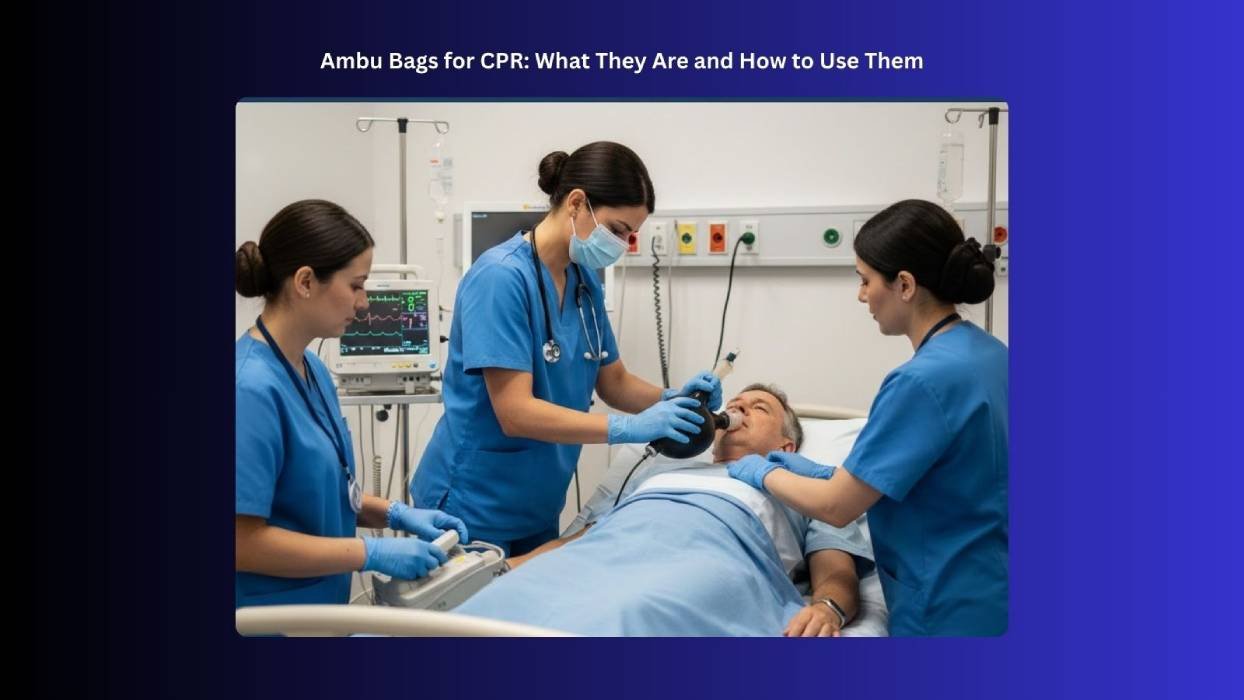

Even though it’s commonly written as “Ambu,” do you know what it stands for? It means “artificial manual breathing unit” and refers to bag-valve masks (BVMs). The name is shortened to Ambu because the original Ambu bag was developed by a co...
Read More ›Your heart rate changes throughout the day as your body responds to physical activity, rest, emotions, and other factors. A reading after exercise, for example, can be very different from one taken while you are sitting quietly. Knowing what a typica...
Read More ›An electrocardiogram (ECG) is a simple, non-invasive test that records the electrical activity of the heart. It is a crucial tool for monitoring heart function, detecting rhythm abnormalities, and guiding clinical decisions. A normal heart rate in ad...
Read More ›Emergencies can happen anywhere and at any time, from car crashes and cardiac arrest to choking, heavy bleeding, or electrical shocks. Knowing how to respond can save lives, prevent injuries, and keep you and others safe. That’s where the Three Câ€...
Read More ›CPR (cardiopulmonary resuscitation) is a crucial life-saving procedure that greatly increases survival chances during cardiac arrest. The acronym “CAB,” which stands for Compressions, Airway, and Breathing, highlights the importance of beginning ...
Read More ›Healthcare workers encounter blood and bodily fluids daily, exposing them to ongoing dangers from bloodborne pathogens (BBP) and infectious microorganisms such as Hepatitis B (HBV), Hepatitis C (HCV), and Human Immunodeficiency Virus (HIV). These pat...
Read More ›