
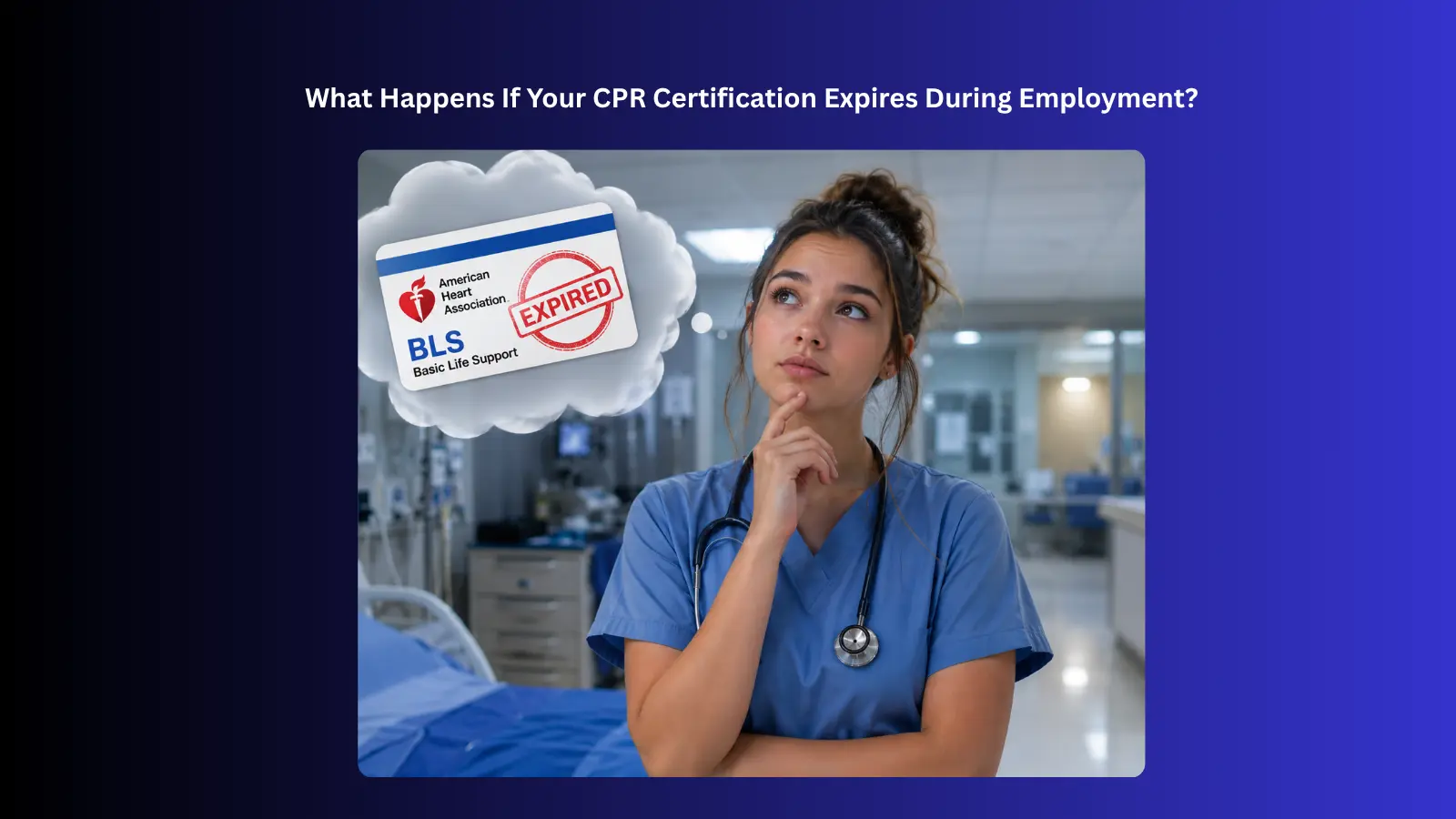
Healthcare professionals, childcare providers, teachers, lifeguards, and many other workers are often required to maintain a valid CPR certification. Employers view CPR training as an important qualification that helps employees respond appropriately during medical emergencies. Yet, with busy schedules and workplace responsibilities, keeping track of renewal dates can become challenging.
Many employees assume a recently expired CPR card will not create any immediate concerns. While some organizations may allow a short grace period, others enforce strict credentials requirements. Workplace policies often depend on industry regulations, licensing standards, insurance requirements, and employer expectations.
In this blog, we will explain what happens when your CPR certification lapses during employment, the consequences you may face at work, and tips for avoiding future certification expiration.
Why Employers Require Current CPR Certification
Healthcare facilities, schools, fitness centers, nursing homes, and childcare centers expect staff members to hold an active CPR card. A valid certification demonstrates that an employee has completed recent training and understands current AHA CPR guidelines.
Employers also enforce CPR credentials rules to comply with regulatory standards and workplace policies. Furthermore, maintaining current certification helps organizations ensure staff members can respond quickly and appropriately during medical emergencies.
How Long Does a CPR Card Remain Valid?
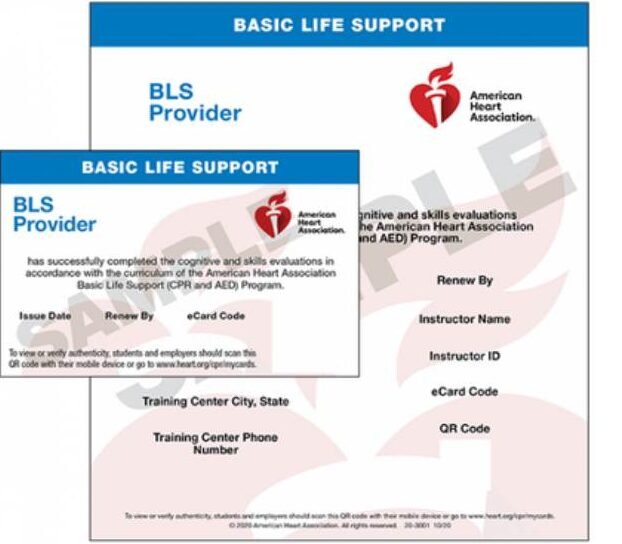
Your AHA-approved CPR credentials remain valid for two years from the date of completion. This standard time frame ensures skills and knowledge remain aligned with updated emergency care guidelines and best practices. Once this period ends, the credentials are no longer considered active.
What Happens When Your CPR Credential Expires?
The outcome depends largely on your employer’s policies and the requirements of your profession. Once your card is out of date, some employers may issue a reminder and allow time to complete a renewal course, while others may require employees to update their credentials immediately.
The consequences you have to face are:
Job Restrictions
Employers temporarily restrict certain job duties once CPR training validity expires. This is common in healthcare, childcare, and fitness settings where active credentials are part of job requirements. Employees are not allowed to participate in tasks that require emergency response skills until an updated card is provided.
Licensing Impact
Some professional licenses require a valid CPR certification for renewal or continued practice. If the card lapses, it affects license status or delays renewal processes. This also affects roles that require employees to maintain multiple active credentials simultaneously.
Outdated Training Status
An inactive card indicates that CPR knowledge is not aligned with the latest guidelines. CPR standards are updated periodically, and refresher training helps ensure familiarity with current techniques, equipment use, and emergency response procedures.
Workplace Compliance
Employers are often required to maintain compliance with internal policies and external regulations. When staff certifications lapse, it may create gaps in regulatory documentation. This can lead to administrative follow-ups or temporary adjustments in staff responsibilities.
Impact on Career Growth
Career progression can also be affected when CPR certification expires. Some roles require an active credential for internal promotions, role upgrades, or transitions into specialized positions. Without a valid card, eligibility for such opportunities can be delayed until requirements are updated.
Recertification Requirement
Employees with lapsed CPR cards are typically required to complete a renewal course before resuming full duties. Completing recertification helps restore compliance and ensures readiness to perform required job functions.
Can You Get Fired for an Expired CPR Card?
Some employers may allow employees to continue working while completing a renewal course, depending on company policies, role requirements, and local regulations. In many cases, an outdated CPR certification does not result in immediate termination, especially when the employee is in the process of updating their credentials.
However, employers, particularly in healthcare and similar regulated settings, follow strict standards. In such cases, employees may be temporarily reassigned, removed from specific duties, or restricted from patient-facing roles until a valid certification is provided. Persistent non-compliance also affects continued employment, depending on workplace policies.
How Employers Usually Discover an Inactive Certification
Most organizations track employee certifications through human resources systems, credential management software, or compliance departments. Automated reminders are commonly sent before expiration dates arrive.
Managers review your credentials during performance evaluations, annual compliance checks, or accreditation audits. Once an inactive card is identified, employees are generally notified and instructed to complete renewal requirements. Additionally, employers verify certification status during the hiring process, and any invalid certification results in restrictions or delays in job eligibility.
What Should You Do If Your CPR Credential Has Lapsed?
You should take action quickly. Contact your supervisor, human resources department, or compliance coordinator as soon as you become aware of the expiration. Open communication also demonstrates professionalism and helps prevent misunderstandings.
After notifying the appropriate department, enroll in a CPR renewal course through an AHA-compliant provider. Once the course is completed, submit your updated certification documentation in accordance with your employer’s procedures.
Will You Need a Full CPR Course or a Renewal Course?
Training requirements vary depending on the certifying organization and the time elapsed since expiration. When the expiration period is longer, individuals are typically required to complete the full certification training again rather than the renewal program. This entire credential course requires additional time and planning for professionals with busy schedules or urgent job requirements. In such situations, finding a faster and more flexible training option becomes important. Bayside CPR solves your timing problem and certifies you in a single day without disrupting your schedule.
Tips for Avoiding Future CPR Certification Expiration
Proactive planning helps reduce stress and prevents last-minute scheduling challenges. You can keep your credentials valid by following a few simple habits:
- Set reminders 90, 60, and 30 days before expiration
- Track all credential dates in one place for easier management
- Save digital copies of the certification for quick access
- Check online accounts regularly to confirm card status
- Understand that a lapsed card requires full course completion
- Register for renewal or recertification courses early
- Respond quickly to employer renewal or expiration notices
- Use blended and flexible learning options
How to Get Recertified Quickly
An expired CPR certification does not always lead to immediate disciplinary action, but it can create complications depending on your workplace and profession. Employers often require active certifications to satisfy compliance standards and ensure employees remain qualified for their responsibilities.
At Bayside CPR, we make renewing your certification simple, fast, and convenient. Whether your CPR certification has recently expired or you need to renew before a workplace deadline, our streamlined training programs help you get recertified quickly and return to work with valid credentials. Complete the online portion of the course from any device at your own pace, then visit our verification station for a short hands-on skills session. Once completed, you’ll be recertified quickly and ready to meet workplace requirements without unnecessary delays. Schedule your course today and keep your certification active with confidence.