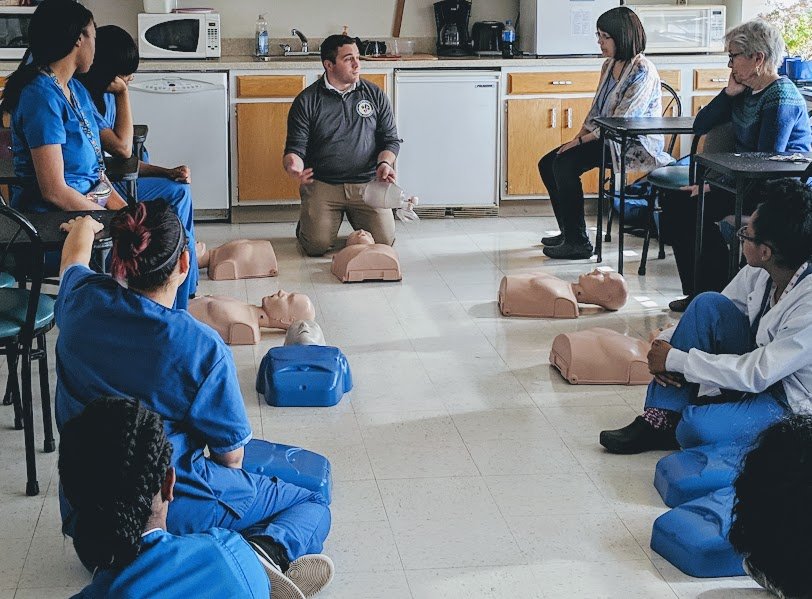

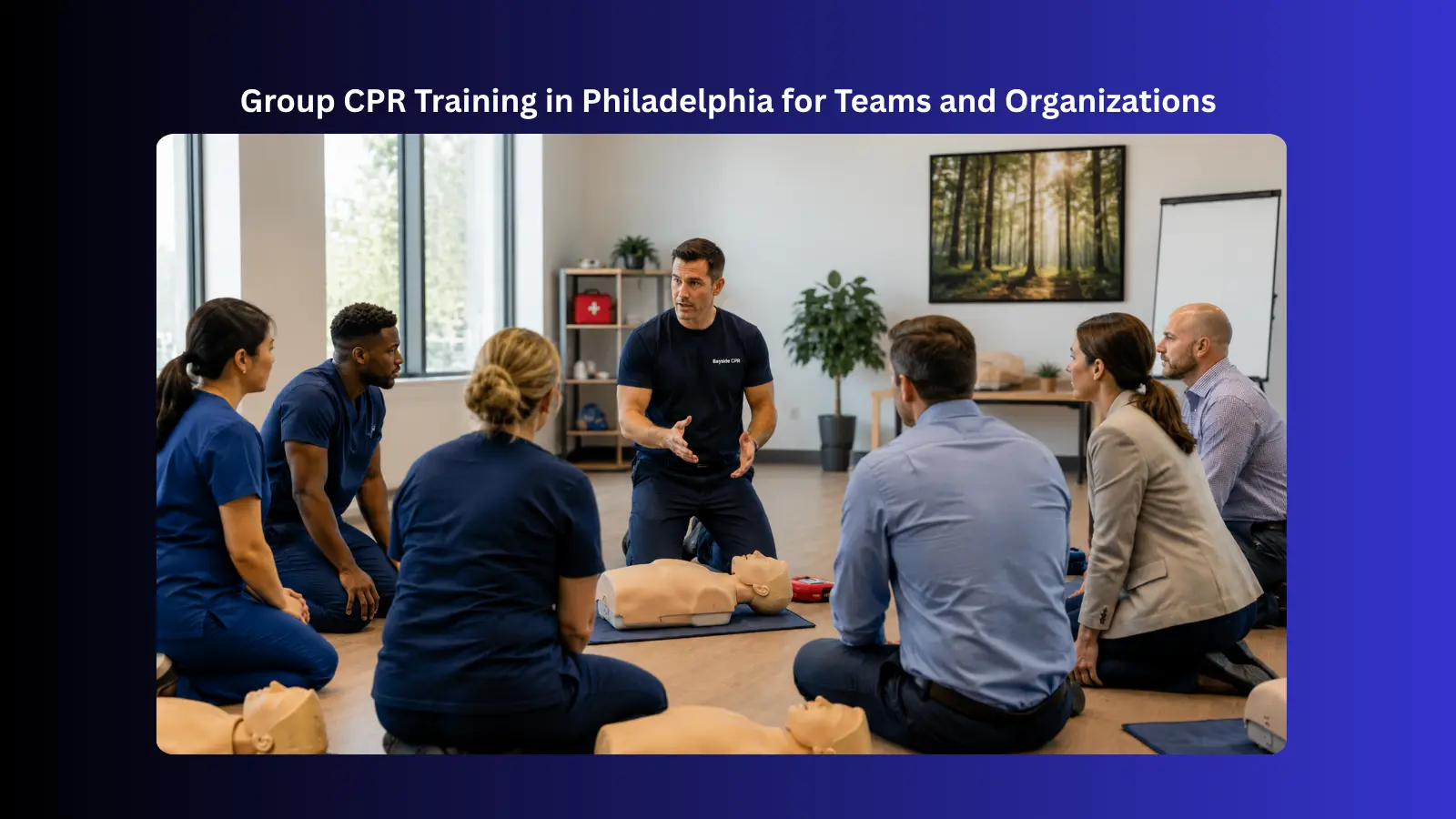
Sudden cardiac arrest and breathing emergencies can occur without warning, making immediate response a practical requirement rather than an optional skill. Emergency preparedness across workplaces, schools, fitness centers, and public-facing organizations helps to make the Philadelphia community safer. Group CPR training brings multiple participants into a shared learning environment where life-saving techniques are taught in a structured and repeatable format.
In Philadelphia, Training sessions conducted at a group level allow participants to build familiarity with emergency procedures collectively. Shared instruction removes uncertainty around roles during critical scenarios, since everyone follows the same protocol and practices the same techniques. Coordination improves when teams are trained together rather than individually, especially in situations where multiple responders may be present.
In this blog, we will explain the importance of group CPR training for Philadelphia organizations, the core skills taught during sessions, available training formats, and the industries that benefit most.
Importance of Group CPR Training for Organizations
Work environments function more effectively during emergencies when staff members operate with shared knowledge. Group CPR instruction reduces hesitation and confusion by establishing a common response framework across all participants. Repetition of the same procedures during training helps reinforce muscle memory and decision-making speed.
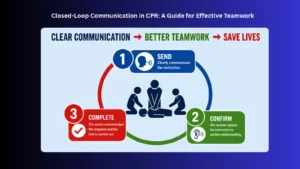
Another significant advantage lies in communication efficiency. Teams trained together tend to coordinate more smoothly during emergencies because terminology, steps, and responsibilities are already familiar. This reduces delays in initiating life-saving actions such as chest compressions or AED deployment.
Additional organizational benefits include:
- Effective team dynamics and emergency coordination across departments and shifts
- Faster activation of emergency medical services
- Reduced reliance on single trained individuals
- Greater workplace safety compliance readiness
- Increased confidence during high-pressure situations
Core Components of CPR Group Training
Group CPR instruction focuses on practical application rather than theoretical explanation alone. Participants engage in hands-on practice sessions that reinforce correct technique and timing. Training is structured to simulate real-world emergencies.
Instruction typically progresses from recognition of cardiac emergencies to execution of life-saving interventions. Emphasis is placed on repetition and correction to ensure proper technique is retained.
Key learning areas include:
- High-quality chest compressions with correct depth and rhythm
- Rescue breathing techniques for adults, children, and infants
- Identification of cardiac arrest and respiratory failure symptoms
- Choking response procedures using abdominal thrusts
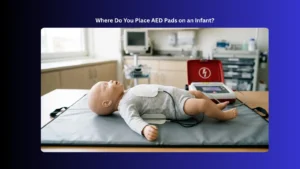
- Proper AED operation and pad placement
- Emergency scene assessment and safety precautions
- Coordination with emergency dispatch services
CPR Group Training Options Available in Philadelphia
Organizations in Philadelphia can choose the group training format that best fits their schedule and operational needs. Bayside CPR offers flexible group training solutions for businesses, healthcare facilities, schools, community organizations, and other teams seeking certification together.
On-Site Group Training at Your Location
Teams can complete CPR training at their own workplace or facility. An instructor travels to your location and conducts the skills session on-site, allowing employees to train in a familiar environment without leaving the workplace. This group training option helps reduce scheduling challenges and minimizes disruptions to daily operations.
Group Training at Our Skill Verification Station
Organizations may also schedule group training at our Philadelphia skill verification station. This option provides access to a dedicated training environment equipped for hands-on practice and certification requirements. Many workplaces choose this format when they prefer an off-site setting for staff development and training events.
Industries That Benefit Most from Group CPR Training
Certain sectors face higher exposure to emergencies due to physical activity, public interaction, or caregiving responsibilities. In such environments, group CPR training becomes part of operational safety planning rather than an optional certification. Training multiple staff members ensures that emergency response does not depend only on a single trained individual.
Organizations that commonly prioritize group CPR certification include:
- Educational institutions such as schools and colleges
- Fitness centers, gyms, and sports organizations
- Healthcare facilities and assisted living centers
- Hospitality businesses, including hotels and restaurants
- Corporate offices with high employee density
- Community centers and volunteer organizations
Uniform training across teams improves response reliability, particularly in environments with rotating shifts or high public traffic.
What Are the Other Courses We Provide in Philadelphia
Bayside CPR also offers advanced certification courses for teams that require specialized training beyond standard CPR. These programs focus on higher-level emergency response skills used in clinical and hospital environments.
BLS Certification
Basic Life Support (BLS) teaches essential life-saving techniques such as high-quality CPR, AED use, and coordinated team response during cardiac and respiratory emergencies. This training helps participants respond quickly and effectively in critical situations where immediate action can impact patient survival. This life-supporting course is primarily for nurses, doctors, medical assistants, EMTs, and other healthcare providers working in hospitals, clinics, and emergency care settings.
ACLS Certification
Advanced Cardiovascular Life Support (ACLS) focuses on managing cardiac arrest, stroke, and other life-threatening cardiovascular emergencies. This course builds on core CPR skills by adding advanced airway management, rhythm recognition, and medication protocols used in emergency care. This course is intended for physicians, nurses, paramedics, and other clinical professionals involved in advanced resuscitation and emergency response teams.
PALS Certification
Pediatric Advanced Life Support (PALS) prepares healthcare providers to manage life-threatening conditions in infants and children. This course teaches participants how to assess pediatric patients, recognize early signs of deterioration, and apply appropriate resuscitation and stabilization techniques. This training is required for pediatricians, nurses, paramedics, and healthcare providers who care for infants and children in emergency or clinical settings.
When Should Your Team Renew CPR Certification?
Your team’s AHA CPR certification remains valid for two years from the date of completion. Scheduling group renewal training before certifications expire helps organizations maintain compliance requirements and ensures employees remain prepared to respond during workplace emergencies.
Group renewal sessions provide a convenient way to keep multiple certifications current at the same time. Many employers schedule renewal training in advance to avoid certification lapses and simplify training management across their workforce.
Fast and Convenient Group CPR Certification for Philadelphia Teams
Group CPR training strengthens emergency readiness by aligning multiple individuals under a shared response framework. However, many organizations struggle to coordinate CPR training around shifting schedules, varying team sizes, and daily operational demands, which often leads to delays in completing required certification and keeping staff fully prepared. These scheduling challenges can also interrupt consistent training across departments and slow down compliance timelines.
At Bayside CPR, AHA-approved group training follows a streamlined process that includes hands-on instruction and same-day certification upon completion. No matter your team size, training can be arranged for small groups or larger staff. Teams can choose on-site training at their workplace or sessions at our skill verification station, with flexible scheduling and quick turnaround for certification. We also offer group discounts. Contact us today to learn more about pricing and booking options.