
Cardiopulmonary resuscitation, commonly known as CPR, is one of the most valuable life-saving skills anyone can learn. A few minutes of immediate action can help keep oxygen-rich blood flowing to the brain and other vital organs until medical services arrive. Whether you encounter a critical situation at home, at work, at school, or in a public place, knowing how to respond can make a meaningful difference.
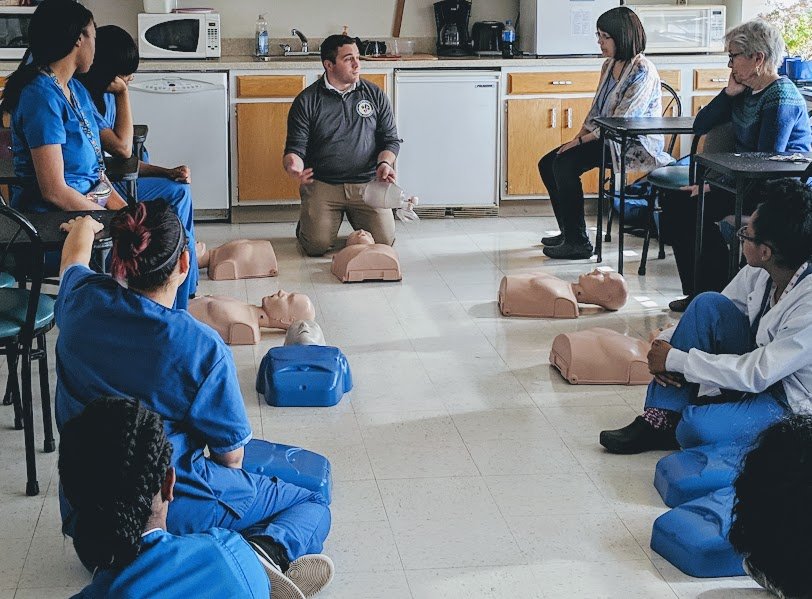
Many people assume CPR is only for healthcare professionals. In reality, anyone can learn this life-saving skill and assist in a critical situation. Parents, teachers, coaches, office workers, caregivers, fitness instructors, and community members can all benefit from life support training. Modern courses are straightforward, hands-on, and suitable for individuals with little or no medical experience.
This guide explains everything you need to know about CPR, including what it is, when to perform it, the step-by-step process, common mistakes to avoid, and common myths. By the end, you will have a clear understanding of why this life-saving skill is worth learning.
What Is CPR?
Cardiopulmonary resuscitation (CPR) is an emergency procedure performed when a person’s heart has stopped beating or they are not breathing normally. Cardio refers to the heart, pulmonary relates to the lungs, and resuscitation means restoring or supporting vital body functions during a life-threatening situation. This life-saving skill uses chest compressions and, when appropriate, rescue breaths to help maintain the flow of oxygen-rich blood to the brain and other vital organs during cardiac arrest.
CPR does not restart the heart. The primary goal is to maintain blood circulation and oxygen delivery while waiting for defibrillation or other advanced medical treatment. Early, high-quality chest compressions can improve the chances of survival and reduce the risk of permanent brain damage.
Why CPR Is So Important
A medical crisis requiring CPR can happen without warning at any age. Every minute without prompt resuscitation and defibrillation significantly reduces the chance of survival. Quick action from a nearby bystander can help save a life.
Learning CPR benefits both individuals and communities. More trained responders help create safer homes, workplaces, schools, sports facilities, and public spaces by increasing the number of people prepared to act during critical situations.
Types of Cardiopulmonary Resuscitation Techniques
CPR techniques may vary based on the situation and the rescuer’s level of training. The two most common approaches are Hands-Only CPR and Conventional CPR. While both methods aim to maintain blood circulation during cardiac arrest, the techniques differ in their approach.
Hands-Only CPR
Hands-Only CPR, also known as compression-only CPR, involves performing continuous chest compressions without rescue breaths. This technique is recommended for untrained bystanders who witness an adult or teenager suddenly collapse and become unresponsive.
Chest compressions should be performed in the center of the chest at a rate of 100 to 120 compressions per minute. Continuous compressions help maintain blood flow to the brain and other vital organs until an automated external defibrillator (AED) becomes available or trained responders take over.
Conventional (Traditional) CPR
Conventional CPR, also known as Traditional CPR, combines chest compressions with rescue breaths to support both blood circulation and oxygen delivery. Trained rescuers perform 30 chest compressions followed by 2 rescue breaths while continuing the cycle until advanced medical care takes over.
This technique is recommended for infants, children, drowning victims, choking emergencies, drug overdoses, and other situations where cardiac arrest results from breathing failure. Healthcare providers and individuals who complete training learn Conventional CPR as part of their certification course.
When Should You Perform CPR?
CPR should be performed when a person is unresponsive and is not breathing or is only gasping. These signs may indicate sudden cardiac arrest, where the heart has stopped pumping blood effectively. Starting resuscitation as quickly as possible helps maintain blood circulation until more advanced care is available.
Situations when CPR may be needed:
- Sudden cardiac arrest
- Heart attack leading to cardiac arrest
- Drowning incidents
- Choking after the airway becomes completely blocked
- Drug overdose
- Severe trauma
- Electrocution
- Suffocation
- Respiratory arrest
Step-by-Step CPR Guide for Adults
CPR helps maintain blood flow to the brain and other vital organs during cardiac arrest. Follow these steps:
Step 1: Check the Scene
Make sure the area is safe before approaching the person. Look for hazards that could put you or the victim at risk.
Step 2: Check for Responsiveness
Tap the person on the shoulders firmly and ask, “Are you okay?” If the person does not respond, check for signs of normal breathing and prepare to provide emergency assistance.
Step 3: Call for Medical Assistance
Call 911 or your local emergency number right away. If another person is nearby, ask them to contact medical services and bring an automated external defibrillator (AED) if one is available.
Step 4: Check Breathing and Pulse
Look for normal breathing and check for a pulse for no more than 10 seconds. Gasping is not normal breathing. If the person is not breathing normally and has no pulse, begin CPR immediately.
Step 5: Start Chest Compressions
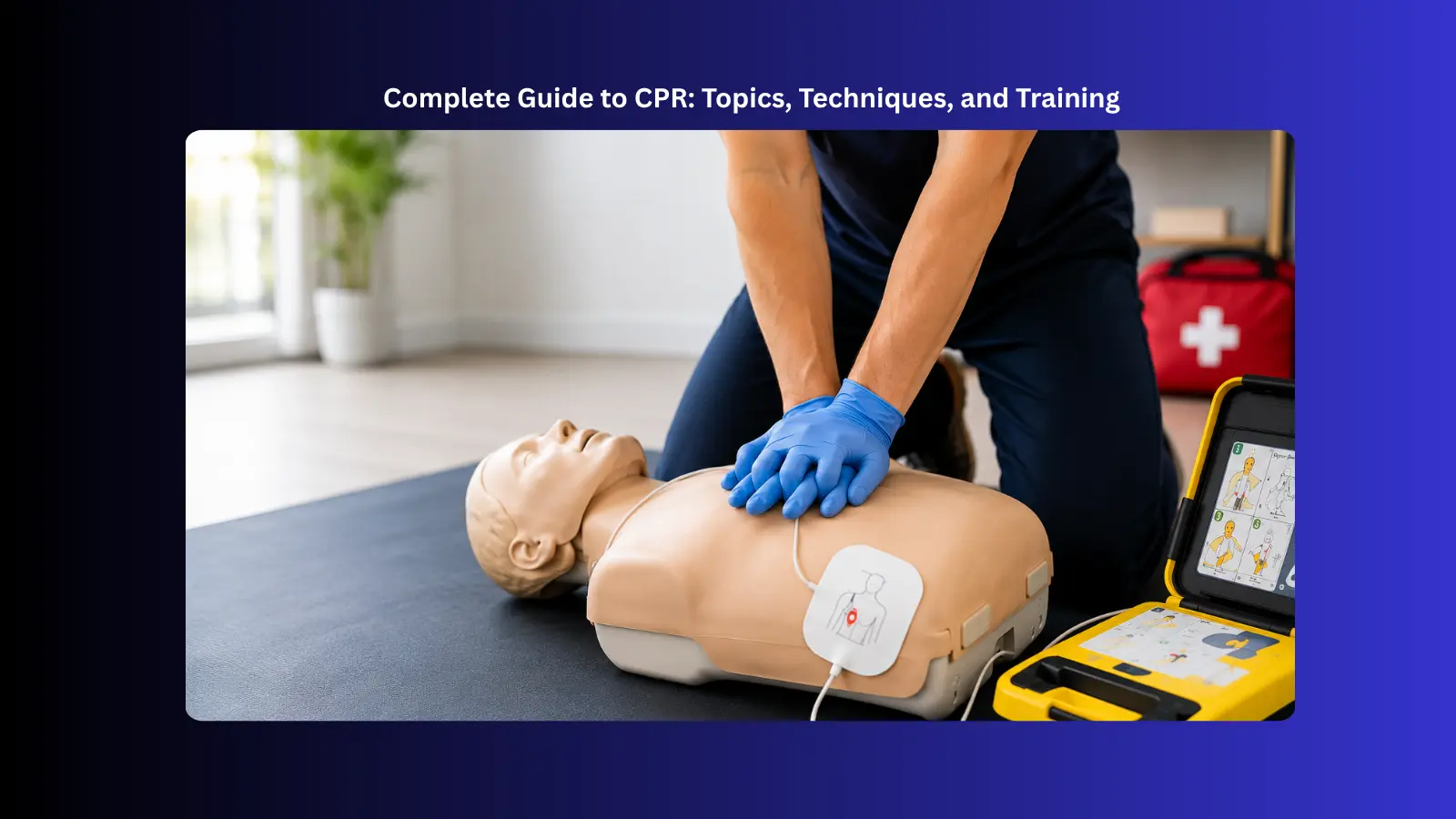
Place the person on a firm, flat surface. Kneel beside their chest and position the heel of one hand in the center of the chest. Place your other hand on top and keep your arms straight.
Press the chest at least 2 inches deep at a rate of 100 to 120 compressions per minute. Allow the chest to rise fully after each compression and avoid leaning on the chest between compressions.
Step 6: Give Rescue Breaths
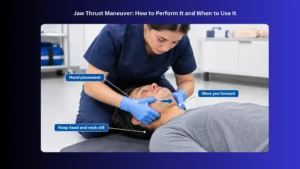
If you are trained in CPR, open the airway using the head tilt chin lift technique. Pinch the nose closed, create a complete seal over the person’s mouth, and give 2 rescue breaths. Each breath should last about 1 second and cause the chest to rise visibly. Resume chest compressions immediately after the rescue breaths.
Step 7: Continue CPR
Repeat cycles of 30 chest compressions followed by 2 rescue breaths. Continue CPR.
How to Use an AED During Emergency Response
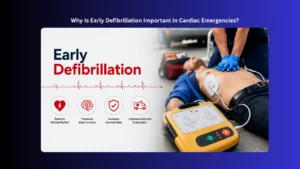
An automated external defibrillator (AED) can significantly improve the chances of survival during sudden cardiac arrest. Use an AED as soon as one is available while continuing chest compressions. When using an AED, it is important to remain calm, follow the device instructions, and allow the AED to analyze the heart rhythm without unnecessary interruptions. The following steps explain how to use an AED:
- Turn on the AED immediately and follow the device’s voice or visual instructions.
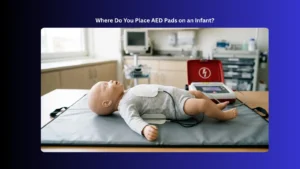
- Expose the person’s chest and attach the electrode pads exactly as shown on the pad illustrations.
- Stop chest compressions only when the AED instructs you to pause for heart rhythm analysis.
- Make sure no one is touching the person when the AED advises a shock. Allow the device to deliver the shock before resuming care.
- Resume CPR immediately after the shock or when the AED tells you to continue chest compressions.
- Continue following the AED prompts until emergency medical personnel take over or the person shows clear signs of life.
Key Differences Between Infant, Child, and Adult CPR
Cardiopulmonary resuscitation is not performed the same way for every age group. There are important differences between infant, child, and adult CPR, including compression depth, hand placement, compression-to-breath ratio, and rescue breathing techniques. Using the correct method helps provide effective care while reducing the risk of injury.
Adult CPR
Adult CPR is performed on anyone who has reached puberty. Place two hands in the center of the chest and compress at least 2 inches deep at a rate of 100 to 120 compressions per minute. Trained rescuers provide 30 chest compressions followed by 2 rescue breaths.
Child CPR
Child CPR is used for children from about 1 year of age until they reach puberty. Apply pressure to the center of the chest to a depth of about one-third of its depth, or about 2 inches. The correct target compression rate is 100 to 120 compressions per minute, which helps maintain circulation during resuscitation. Use one or two hands depending on the child’s size, and when two trained rescuers are present, the compression-to-breath ratio changes to 15 compressions and 2 breaths.
Infant CPR
Infant CPR is performed on babies younger than 1 year. Compress the chest about one-third of its depth, or about 1.5 inches. Use two fingers when performing CPR as a single rescuer, or use the two-thumb encircling hands technique when two rescuers are present. Rescue breaths play an especially important role for infants, as cardiac arrest in this age group is often linked to respiratory emergencies.
When to Stop Resuscitation
CPR should be continued without unnecessary interruptions to help maintain blood flow. Stop only when:
- The person begins to breathe normally, cough, move purposefully, or show other clear signs of life.
- An AED instructs you to pause for rhythm analysis or shock delivery. Resume chest compressions immediately if instructed by the device.
- Emergency medical professionals arrive and tell you to stop while they take over patient care.
- Another trained rescuer is available to replace you if you become tired, helping maintain high-quality chest compressions.
- The scene becomes unsafe, such as during a fire, gas leak, or another hazard that puts your safety at risk.
- You become physically exhausted and cannot continue providing effective chest compressions, and no one else is available to take over.
After resuscitation ends, continue monitoring the person’s condition if they are breathing, or provide emergency responders with a summary of what occurred, including when care began and whether an AED was used.
Common CPR Mistakes
Even trained rescuers can encounter difficulties during CPR, especially in stressful situations. Compressing too slowly, not allowing the chest to fully recoil, using incorrect hand placement, interrupting compressions too often, or delaying AED use can reduce the quality of resuscitation and affect effective blood circulation. So, understanding common mistakes helps rescuers improve their skills and perform higher-quality care during cardiac emergencies.
Legal Considerations for Emergency Assistance
Many people hesitate to perform CPR due to concerns about legal consequences if the person does not survive. To encourage bystanders to help in critical situations, the United States provides legal protection for those who act in good faith.
Legal Considerations
- Good Samaritan laws in all 50 states protect people who provide emergency assistance in good faith to someone in need. The exact protections vary by location.
- Call 911 or your local emergency number as soon as possible before or while CPR is being performed.
- Provide care only within the scope of your training and avoid procedures you are not qualified to perform.
- For children and infants, obtain consent from a parent or guardian when possible. During a life-threatening situation, consent is generally implied if no guardian is available.
- Healthcare professionals and workplace responders should follow their organization’s safety policies and applicable local regulations.
Common Myths and Facts About CPR
Many misconceptions about CPR can affect how people respond during an emergency. Some people believe it can restart a stopped heart, while others think it should only be performed by trained healthcare professionals. This life-saving technique does not restart the heart but helps maintain circulation to the brain and other vital organs until further medical care is available. While injuries such as broken ribs can occur during chest compressions, providing it when someone is unresponsive and not breathing normally is often the right action. Clearing up common CPR misconceptions helps build confidence and improve understanding of effective techniques.
CPR vs First Aid vs AED
CPR, First Aid, and an automated external defibrillator (AED) are all important parts of immediate medical care, but they serve different purposes. They are often used together during a life-threatening situation to increase a person’s chances of survival.
| Emergency Response Method | Purpose | When It Is Used |
| CPR | Maintains blood circulation and oxygen delivery through chest compressions and, when appropriate, rescue breaths. | Used when a person is unresponsive, not breathing normally, and is in cardiac arrest. |
| First Aid | Provides immediate care for injuries and sudden illnesses. | Used for situations such as bleeding, burns, scalds, fractures, choking, allergic reactions, and other common medical emergencies. |
| AED | Analyzes the heart’s rhythm and delivers an electrical shock when needed to restore a normal heartbeat. | Used during sudden cardiac arrest as soon as an AED becomes available while compressions continue. |
Careers That Require Emergency Response Certification
CPR certification is required or recommended in many professions where employees may need to respond to critical situations. Requirements vary by employer and industry, but life support training is common across healthcare, education, fitness, public safety, and rescue services.
Healthcare
Healthcare professionals often need emergency response certification as part of their job requirements. Common roles include nurses, physicians, medical assistants, dental professionals, and respiratory therapists.
Emergency Response
First responders rely on CPR skills during life-threatening situations. This workforce includes EMTs, paramedics, firefighters, and law enforcement officers.
Childcare and Education
Many schools and childcare facilities require staff to maintain CPR certification, especially for infant and child care situations. Teachers, childcare providers, coaches, and camp counselors commonly complete this training.
Fitness and Public Safety
Personal trainers, lifeguards, swim instructors, flight attendants, security personnel, and other public-facing professionals often maintain life-support certification to respond quickly during critical situations.
Some professions require life support certification by law or employer policy, while others list it as a preferred qualification. Always verify the credential requirements for your specific role before enrolling in a course.
Stay Prepared for Emergencies
Learning cardiopulmonary resuscitation techniques is an investment in a life-saving skill that can help protect family members, friends, coworkers, and even strangers during unexpected critical situations. Knowing when to act, how to perform quality chest compressions, and how to use an AED can significantly improve the chances of survival for someone experiencing cardiac arrest. A few hours of preparation today can give you the confidence to respond when every action truly matters.
Bayside CPR makes it easier to learn essential emergency response skills through flexible training options that fit your schedule. Whether you need certification for work, school, or personal preparedness, our AHA courses provide the knowledge and hands-on practice needed to respond confidently during a critical situation. Explore our CPR training programs to find the course that best meets your needs.