
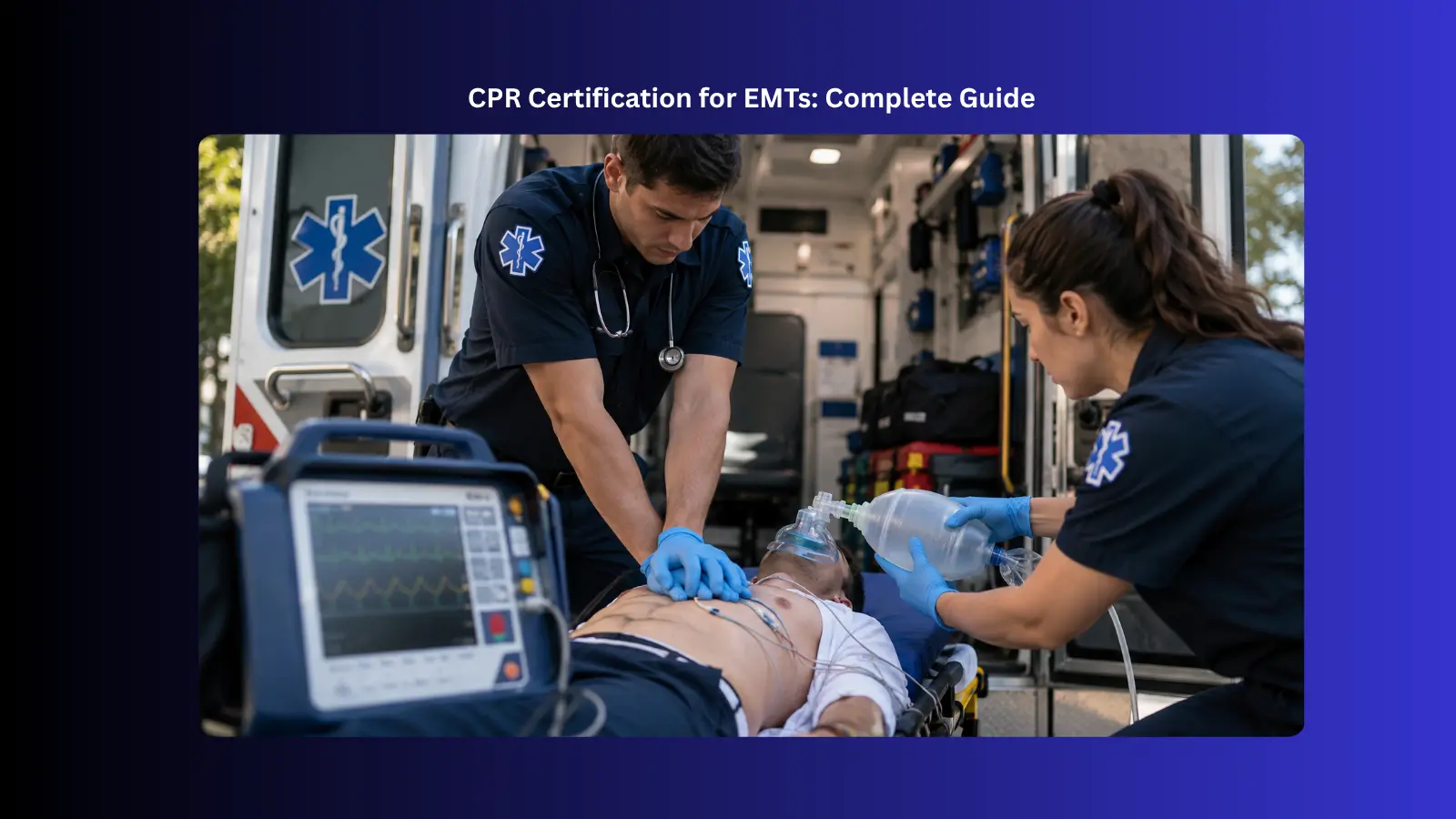
Emergency Medical Technicians are often among the first healthcare professionals to arrive during a medical emergency. Every call can involve a different situation, from cardiac arrest and respiratory distress to trauma and choking.
CPR certification is one of the core qualifications that prepares EMTs to assess patients and deliver timely care. Training builds essential skills such as high-quality chest compressions, proper use of an automated external defibrillator, and effective teamwork during resuscitation. Maintaining current credentials also helps rescue squads meet employer requirements and work confidently alongside other healthcare professionals.
This guide explains why CPR certification is important for EMTs, which certification is commonly required, what training includes, how certification and renewal work, and answers common questions about maintaining credentials throughout an EMS career.
Why CPR Certification Matters for EMTs
Every emergency response begins with the ability to provide immediate care. CPR is often the first lifesaving intervention an EMT performs when a patient experiences cardiac arrest or stops breathing. Early, high-quality CPR helps maintain blood flow to vital organs until advanced care becomes available.
Many EMS agencies, ambulance services, hospitals, and fire departments require ambulance technicians to hold a current CPR certification that meets employer and state requirements. Maintaining an active certification demonstrates that an EMT has completed recognized training and is prepared to respond during emergencies.
Do EMTs Need CPR Certification in the United States?
Yes. CPR certification is a standard requirement for Emergency Medical Technicians across the United States. Most EMS agencies, ambulance services, fire departments, hospitals, and other healthcare employers require EMTs to maintain a current healthcare provider level CPR certification as part of their employment and credentialing requirements. State EMS licensing requirements and employer policies may vary, so you should verify the certification accepted for their role before enrolling in a course.
What Ambulance Attendants Learn During CPR Training
CPR training prepares ambulance technicians to recognize life-threatening emergencies and respond using current resuscitation guidelines. The course combines knowledge with practical skill development to help EMTs provide safe and effective patient care.
Adult, Child, and Infant CPR
EMTs learn age-appropriate CPR techniques for adults, children, and infants. The course covers how to recognize cardiac arrest, perform high-quality chest compressions, and apply the correct depth, rate, and hand placement for each age group.
Delivering Rescue Breaths
Participants learn how to provide rescue breaths using the correct technique while maintaining an open airway. Proper ventilation supports oxygen delivery when a patient is not breathing adequately.
Using an AED Safely
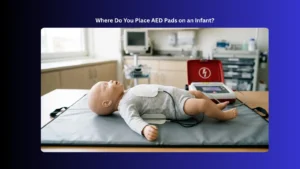
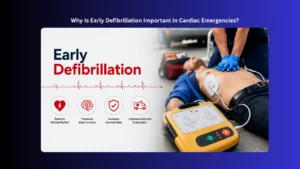
Participants learn how to use an automated external defibrillator (AED) safely and recognize when it is needed during a cardiac emergency. Training also covers following voice prompts and coordinating AED use with continuous CPR.
Coordinating Two Rescuer CPR
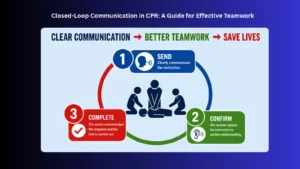
Many emergency responses involve more than one provider. Rescue teams learn how to switch roles efficiently, communicate clearly, and maintain high-quality CPR while working together during resuscitation.
Managing Airway Support
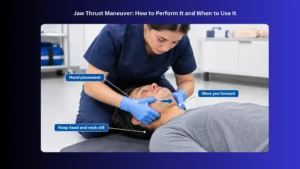
Training introduces airway management techniques, including effective bag-mask ventilation. Participants practice delivering CPR ventilations while maintaining a proper mask seal and coordinating with chest compressions.
Responding to Choking Emergencies
The course covers how to recognize partial and complete airway obstruction in adults, children, and infants. Individuals learn the appropriate techniques to relieve choking based on the patient’s age and condition.
Working as Part of a Resuscitation Team
Effective resuscitation depends on strong team dynamics and clear communication. Participants learn how to assign roles, share information, and coordinate with other emergency responders to deliver effective patient care.
What CPR Certification Do EMTs Need?
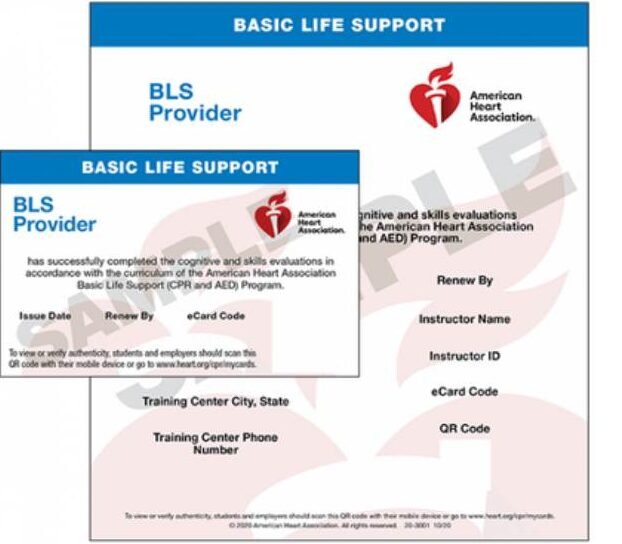
Basic Life Support (BLS) certification is the standard CPR certification for Emergency Medical Technicians in the United States. Most EMS agencies, ambulance services, hospitals, and fire departments require EMTs to maintain a current BLS certification for employment. This life-saving training provides the foundational resuscitation skills needed to deliver emergency care in prehospital settings.
Depending on the role, EMTs and paramedics need additional certifications:
ACLS Certification
Advanced Cardiovascular Life Support (ACLS) is generally intended for healthcare professionals who manage cardiovascular emergencies or work in advanced life support settings. Paramedics and other advanced EMS providers are commonly required to maintain ACLS certification, while some EMTs may need it depending on their employer and job responsibilities.
PALS Certification
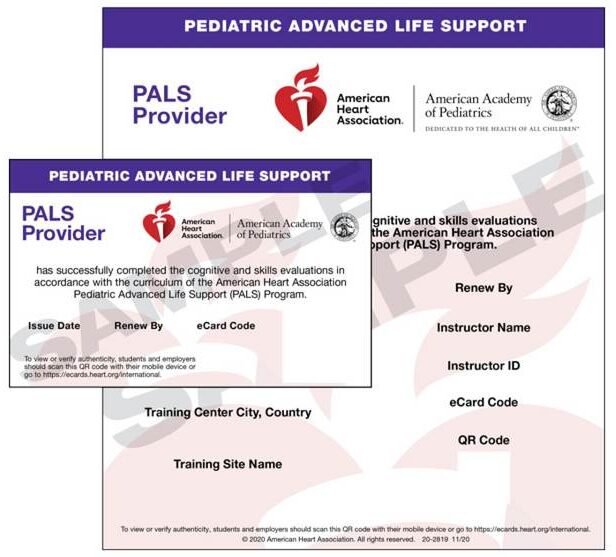
Pediatric Advanced Life Support (PALS) focuses on the recognition and management of pediatric emergencies. Paramedics and EMS professionals who frequently care for infants and children may be required to maintain PALS certification, depending on their role, patient population, and employer requirements.
CPR Certification Training Options
You can choose from different CPR training formats depending on your learning preferences and employer requirements. Many training providers offer both instructor-led and blended learning options that lead to the same certification when all course requirements are completed.
Instructor-Led Training
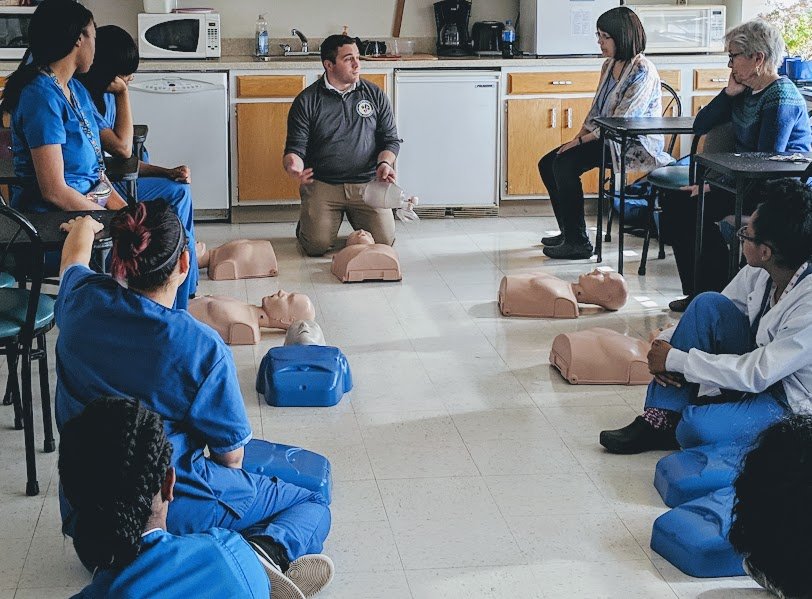
Instructor-led training takes place in a classroom or training center under the guidance of a certified instructor. Participants complete the course in a scheduled session that combines hands-on practice, skills evaluation, and any required knowledge assessments. This option is a good fit for EMTs who prefer direct instruction and real-time feedback throughout the course.
Blended Learning
Blended learning combines self-paced online coursework with an in-person hands-on skills evaluation. Participants can complete the online portion at a time that fits their schedule before attending the required skills session. This format offers greater flexibility while still allowing participants to demonstrate competency and earn certification after meeting all course requirements.
How Long Does CPR Certification Last?
Your American Heart Association (AHA) or American Red Cross (ARC) CPR certification typically remains valid for two years. Some employers may also require periodic skills reviews or competency evaluations between renewal periods.
Renewing certification before it expires helps avoid interruptions in employment eligibility and ensures continued familiarity with the latest resuscitation recommendations and best practices.
How to Choose a CPR Certification Course
Selecting the right CPR certification course helps ensure you meet employer expectations and state EMS requirements. Before enrolling, verify that the course aligns with your job requirements.
Consider the following when choosing a course:
- Training from a nationally recognized organization
- Course content based on the latest AHA CPR guidelines
- Learning options that fit your schedule
- Convenient training locations for skills check
- A hands-on skills evaluation to demonstrate CPR competency
- Certification accepted by your employer or EMS agency
- A simple renewal process to help keep your certification current
Advance Your EMS Career with CPR Certification
Maintaining a current CPR certification helps EMTs meet employer requirements while staying prepared to respond during medical emergencies. Choosing a nationally recognized BLS course that aligns with your EMS role helps ensure your certification is widely accepted and supports your professional responsibilities.
At Bayside CPR, EMTs can complete American Heart Association BLS certification through blended learning options. Our training format allows you to complete the online coursework at your own pace before attending a self-guided, hands-on skills check using a voice-assisted mannequin that provides real-time feedback. Flexible scheduling, multiple skills check locations, and same-day AHA eCard issuance make it easy to complete certification or renewal while keeping up with the demands of an EMS career.