
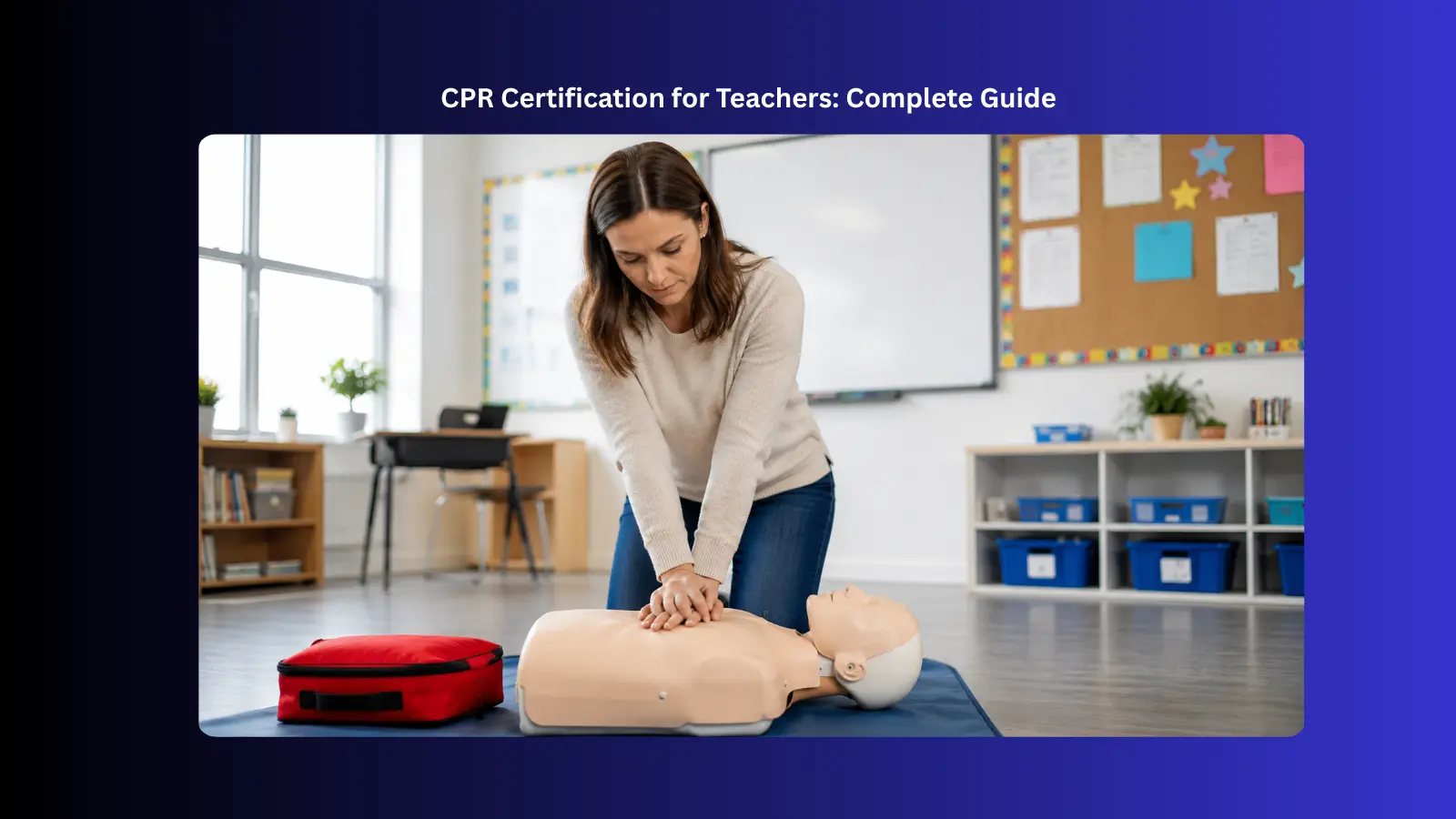
Teachers are responsible for the safety and well-being of students throughout the school day. From classroom activities and recess to field trips and sporting events, medical emergencies can happen without warning. CPR training equips educators with the skills to respond confidently until emergency medical services arrive.
This guide explains everything teaching professionals need to know about CPR certification. You will learn what the course covers, how long it remains valid, renewal requirements, and how these lifesaving skills help create a safer learning environment for everyone in the school community.
Why CPR Certification Is Important for School Teachers
Schools bring together hundreds of students, teachers, staff members, parents, and visitors every day. Medical emergencies can occur in classrooms, cafeterias, playgrounds, gymnasiums, school buses, or during extracurricular activities. Education professionals are often among the first adults available to respond.
CPR certification provides the knowledge and practical skills needed to recognize life-threatening emergencies, perform high-quality CPR, assist someone who is choking, and use an AED when necessary. These skills improve emergency preparedness, increase confidence during emergencies, support compliance with school requirements, and help create a safer environment for students, coworkers, and visitors. Lifesaving skills gained through certification can also be applied outside the school setting.
Do Educators Need CPR Certification?
Across the United States, CPR certification requirements vary by state, school district, and employer. Some school systems require every teaching professional to maintain current certification, while others require it only for specific positions, such as physical education teachers, coaches, special education staff, or childcare providers.
Even when certification is not mandatory, many schools strongly encourage educators to complete CPR training. Having more trained staff on campus improves emergency preparedness and creates a safer environment for students and employees.
Who Should Get CPR Certified?
CPR certification benefits many professionals who work in educational settings. Training helps staff respond effectively to emergencies involving children, coworkers, parents, or visitors.
The following school professionals should consider CPR certification:
- Preschool educators
- K through 12 teachers
- Substitute teaching staff
- Special education professionals
- Physical education teachers
- Athletic coaches
- School administrators
- Teacher assistants
- Childcare providers
- After-school program staff
- Camp counselors
- School volunteers
Common Emergencies Educators May Face
Medical emergencies can occur anywhere on school property or during school-sponsored activities. Being prepared allows teachers to respond quickly and confidently.
- Sudden cardiac arrest can cause a person to collapse and stop breathing normally.
- Choking blocks the airway and prevents normal breathing.
- Asthma attacks make breathing difficult and may require immediate assistance.
- Severe allergic reactions can quickly become life-threatening.
- Seizures may cause convulsions or a temporary loss of awareness.
- Diabetic emergencies can result from dangerously low or high blood sugar.
- Head injuries may occur from falls, sports, or other accidents.
- Playground accidents often lead to cuts, sprains, or fractures.
- Heat-related illness can progress from heat exhaustion to heat stroke.
- Drowning incidents during swimming activities require an immediate emergency response.
What Does CPR Certification for Teachers Include?
CPR certification equips educators with the knowledge and skills to respond confidently during medical emergencies in a school setting. The training focuses on developing essential lifesaving skills while improving emergency preparedness. Course content varies by provider, and many programs also include First Aid training alongside CPR and AED instruction.
Adult, Child, and Infant CPR
Education professionals learn age-appropriate CPR techniques for adults, children, and infants. The course covers how to recognize cardiac arrest, perform high-quality chest compressions, provide rescue breaths when appropriate, and use the correct compression depth, rate, and hand placement for each age group.
Rescue Breathing
Rescue breathing is an important CPR skill for certain breathing emergencies. Participants learn how to provide effective breaths and when to combine them with chest compressions.
Choking Relief
Recognition of a blocked airway and response to choking emergencies involving adults, children, and infants are covered. Age-appropriate techniques to clear the airway safely while reducing the risk of further injury are also included.
AED Use
Many schools have an Automated External Defibrillator available on campus. CPR certification teaches participants how to operate an AED safely, apply the pads correctly, follow the device prompts, and continue CPR after a shock is delivered or when no shock is advised.
Scene Safety and Emergency Assessment
Before providing care, participants are taught how to assess the scene for potential hazards and determine whether it is safe to help. The course also explains how to check responsiveness, evaluate breathing, and identify signs of a life-threatening emergency.
Activating Emergency Medical Services
Calling for professional medical help is one of the first steps during an emergency. Educators learn when to call 911, what information to provide, and how to coordinate with other staff members while care is being given.
Team-Based CPR
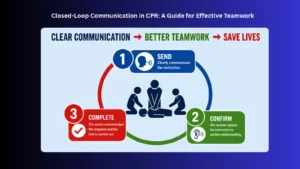
Medical emergencies at school often involve more than one responder. This part of the training teaches educators how to communicate effectively, rotate chest compressions to reduce fatigue, and work as a team to provide continuous, high-quality CPR.
Many programs also include First Aid training that covers bleeding, burns, seizures, allergic reactions, fractures, and other common school emergencies. Guidance also includes how to assess injuries and provide appropriate care based on the situation.
What CPR Certification Do Teaching Professionals Need?
Requirements vary by state, school district, and employer. Many schools require CPR and AED certification, while some also require First Aid training. Always confirm the accepted certification with your employer before enrolling.
CPR and AED Certification
CPR and AED certification is the most common requirement for educators. The course teaches how to recognize cardiac arrest, perform high-quality CPR, and use an automated external defibrillator during an emergency. These skills help teachers take prompt action during life-threatening emergencies.
CPR, AED, and First Aid Certification
Many schools require CPR, AED, and First Aid certification as a single course. In addition to CPR skills, participants learn how to respond to common school emergencies such as bleeding, burns, fractures, allergic reactions, and seizures. This option provides broader emergency preparedness for a wide range of situations that may occur on school grounds.
BLS Certification
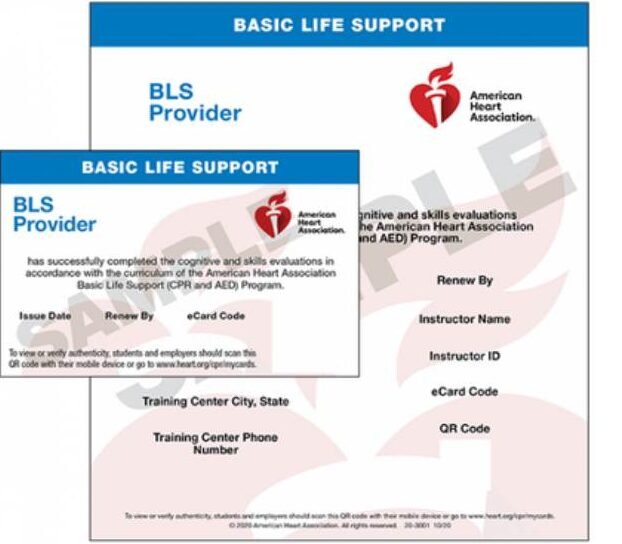
Basic Life Support certification may be required for school nurses, athletic trainers, or other healthcare professionals working in schools. Compared with a standard CPR course, this life-saving training includes team-based resuscitation, two-rescuer CPR, and additional skills used in healthcare settings. BLS certification follows healthcare-focused guidelines and is intended for professionals involved in patient care.
CPR Certification Training Options
Teachers can choose from different CPR training formats based on employer requirements and personal preferences. Before enrolling, confirm which course format is accepted by your school or employer.
Instructor-Led Training
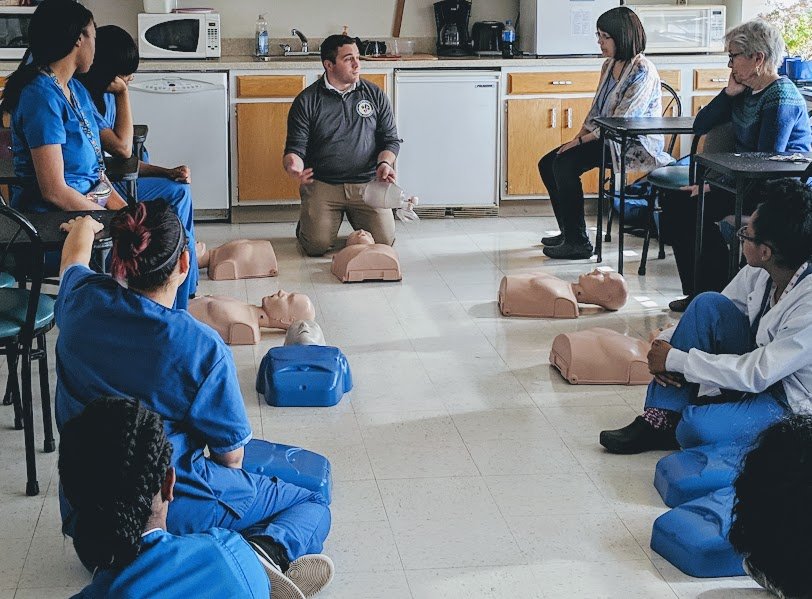
Instructor-led courses are completed in a classroom with a certified instructor who teaches CPR techniques, demonstrates skills, and provides hands-on practice. Participants receive guidance throughout the course and complete a practical skills assessment before certification.
Blended Learning
Blended learning combines self-paced online coursework with an in-person hands-on skills evaluation. Participants complete the knowledge portion at their own pace, then schedule a practical skills session to demonstrate CPR competency. This format offers greater flexibility while meeting the requirements of many nationally recognized certification programs.
How Much Does CPR Certification Cost?
The cost of CPR certification depends on the course type, training provider, certification organization such as the American Heart Association (AHA) or American Red Cross (ARC), and whether First Aid is included. Course fees may also vary based on the training format.
Bayside CPR offers affordable AHA CPR certification courses. The table below shows the available courses and pricing.
| Course Type | Blended Learning (Online + Skills Check) | Skills Check Only |
| Heartsaver CPR AED | $125 | $95 |
| Heartsaver First Aid CPR AED | $135 | $100 |
| BLS Certification | $120 | $90 |
How Long Is CPR Certification Valid?
Your CPR certification issued by organizations such as the American Heart Association or the American Red Cross is generally valid for two years from the date of completion. The expiration date is listed on your certification card or digital credential. Some employers or school districts may have additional renewal requirements, so it is important to verify their policies.
How Often Should Educators Renew CPR Certification?
Teachers should renew their CPR certification before it expires to maintain an active credential. Renewal courses refresh CPR and AED skills, provide hands-on practice, and cover the latest CPR guidelines. A valid certification also helps meet school or employer requirements and ensures continued readiness to respond during emergencies.
How to Choose a CPR Certification Course
Choosing the right CPR certification course helps ensure your certification is accepted by your employer and meets your workplace requirements. Before enrolling, consider the following factors:
- A nationally recognized certification from a trusted organization.
- Training that follows the latest CPR guidelines.
- A course format that fits your schedule.
- Convenient locations for any required skills evaluation.
- Certification accepted by your employer or school district.
- A practical skills evaluation to confirm CPR competency.
- Same-day or timely certification after successful course completion.
- A straightforward renewal process.
Protect Your School Community with CPR Certification
CPR certification helps education professionals prepare for unexpected medical emergencies that may occur in classrooms, playgrounds, cafeterias, or during school activities. Choosing a nationally recognized course that meets employer requirements ensures you have the knowledge and practical skills needed to respond with confidence.
At Bayside CPR, educators can complete American Heart Association certification through a convenient blended learning format that combines self-paced online coursework with a hands-on skills evaluation. Our flexible scheduling, convenient skills check locations, and same-day eCard issuance help teachers complete certification efficiently while meeting school and employer requirements.