
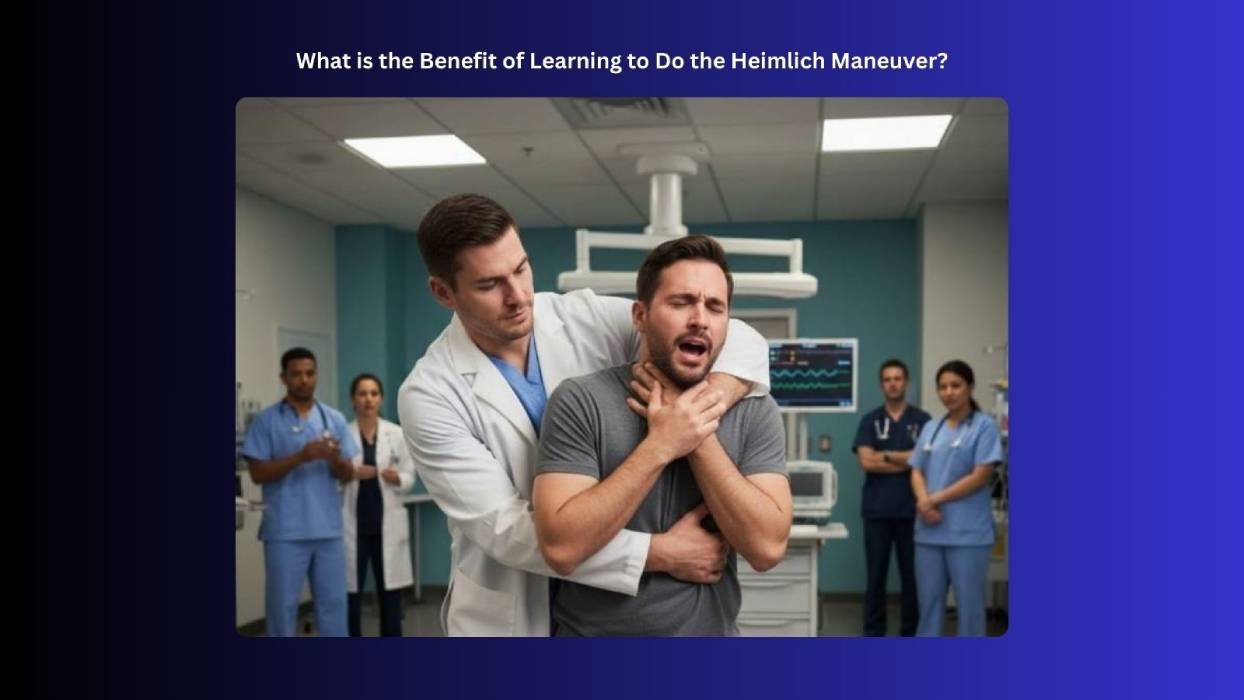
The benefit of learning the Heimlich maneuver is that it equips you with a simple, effective way to save a life during a choking emergency. Choking can happen suddenly while eating, and knowing how to respond gives you the confidence to act quickly. This essential life-saving skill allows you to help someone who cannot breathe, potentially preventing serious injury or death. With practice, the steps become easier to remember, helping you stay calm and focused in a high-stress situation. Everyone can benefit from learning the Heimlich maneuver, whether at home, at work, or in public settings, and it is equally important to understand what to do if you are choking while alone.
Benefits of Learning the Heimlich Maneuver
Learning the Heimlich maneuver gives you the power to help someone choking before help arrives. It is an easy skill that can make a real difference in emergencies.
1. Saving Lives Through Rapid Airway Clearance
The most critical benefit of learning the Heimlich maneuver is its ability to quickly clear a blocked airway and restore breathing during a choking emergency. Abdominal thrusts apply upward pressure below the ribcage, forcing the diaphragm upward and creating a sudden burst of air from the lungs. This rapid increase in chest pressure can dislodge the object obstructing the airway, allowing oxygen to flow again within seconds.
Choking can occur without warning during everyday activities such as eating at home, dining out, or attending social events. Because a choking person may lose consciousness within minutes, immediate action is essential. Knowing how to perform the Heimlich maneuver enables bystanders to intervene right away, often before emergency medical services can arrive, preventing serious injury, brain damage, or death.
2. Building Confidence and Reducing Panic
Another important benefit of learning the Heimlich maneuver is the confidence it gives individuals to respond calmly in high-stress situations. Witnessing someone choke can be overwhelming, often causing panic or hesitation. Training provides a clear, step-by-step response, reducing uncertainty and helping bystanders take action without delay.
When people know what to do, they are less likely to freeze or wait passively for help. Confidence gained through practice allows responders to recognize the signs of severe choking and act decisively. This calm, controlled response improves the effectiveness of the maneuver and increases the likelihood of a successful outcome.
3. Protecting High-Risk and Vulnerable Populations
Learning the Heimlich maneuver enhances safety for individuals who face a higher risk of choking, including children, older adults, pregnant women, and individuals with disabilities. These populations may have smaller airways, weaker swallowing muscles, or limited ability to cough effectively, making rapid intervention especially important, especially when responders understand how to treat a pregnant choking victim safely and appropriately.
Understanding how choking relief techniques are adapted for different individuals allows caregivers, family members, and coworkers to respond safely and appropriately. Being prepared to assist vulnerable populations not only reduces the risk of severe complications but also promotes safer environments at home, in schools, workplaces, and public settings.
4. Integrating with CPR and First Aid Response
The Heimlich maneuver plays a vital role in comprehensive CPR and first aid training. While CPR focuses on maintaining circulation and breathing when a person becomes unresponsive, the Heimlich maneuver addresses airway obstruction in conscious choking victims. Knowing when and how to transition between these skills, including how CPR differs in an unresponsive adult choking victim, is essential during emergencies.
If a choking victim becomes unresponsive, responders must recognize that abdominal thrusts alone are no longer sufficient and that CPR should begin immediately. Learning the Heimlich maneuver alongside CPR and first aid ensures individuals are prepared to manage the full progression of a choking emergency until professional help arrives.
5. Simplicity and Long-Term Skill Retention
One of the greatest advantages of the Heimlich maneuver is its simplicity. The technique is easy to learn, requires no equipment, and can be performed almost anywhere. This accessibility makes it practical for people of all ages and backgrounds. Because the steps are straightforward, the skill can be retained with minimal refresher training. Regular practice through first aid or BLS (basic life support) courses helps reinforce proper technique and maintain readiness. This combination of simplicity, accessibility, and long-term retention makes the Heimlich maneuver a powerful life-saving skill with lasting impact.
Be Ready to Save a Life with the Heimlich Maneuver
In summary, learning the Heimlich maneuver gives you a chance to step in when it matters most and help someone breathe again. This skill helps you stay calm, act fast, and feel ready during a scary moment instead of feeling helpless, while also understanding what you should do before giving breaths to an unresponsive choking person if the situation changes. With clear steps and simple practice, you build confidence that carries into everyday life. Knowing how to respond can protect family, friends, and even strangers in public places. In the end, this knowledge turns an ordinary person into someone who can make a life-saving difference.
Preparedness starts with the first step. Bayside CPR offers fast, convenient CPR training that fits into hectic routines. Complete a short online course, followed by a 30-minute skills session at any of our 60+ locations, to earn your AHA course completion card the same day. We also offer other courses, including BLS, ACLS, PALS, CPR, and First Aid.
Learn which foods commonly cause choking and how to prevent it.